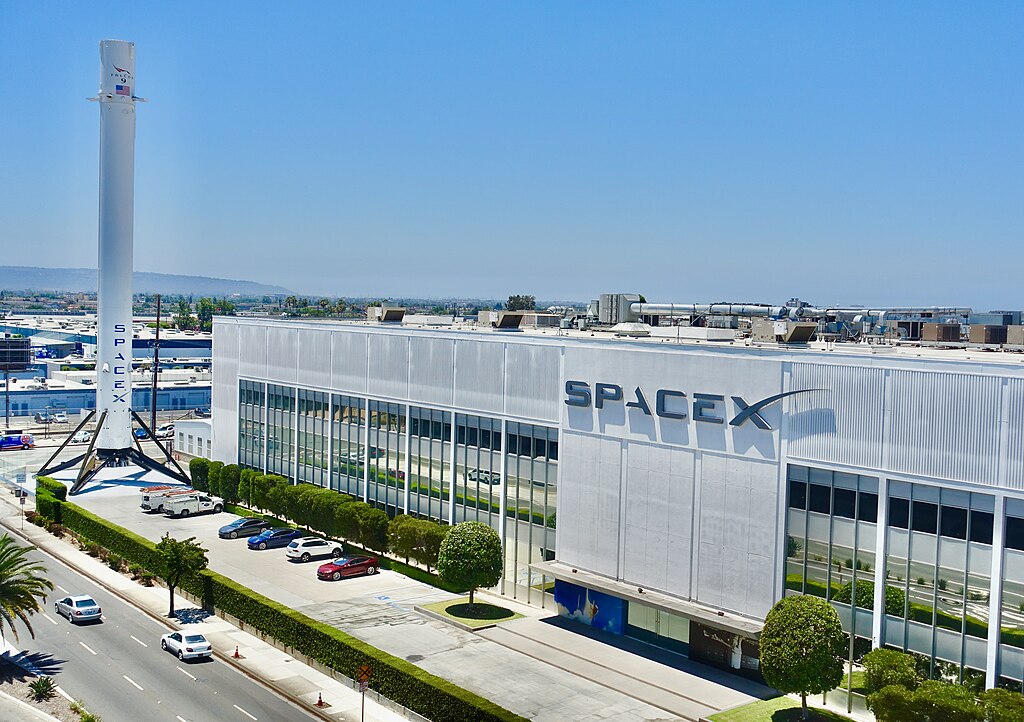
SpaceX (NASDAQ: SPCX) recovered modestly on Tuesday, closing 0.9% higher at $156.06 after briefly falling below its post-IPO opening price during intraday trading. The stock touched a low of $147.11, slipping beneath the $150 opening price recorded on June 12. Despite the recent decline, shares remain above the IPO price of $135, although investors who purchased the stock in the open market after its debut are now facing minimal gains or losses.
The rebound follows a steep 16.4% decline on Monday after KeyBanc initiated coverage of SpaceX with a Sector Weight rating, citing concerns that the company’s valuation has become stretched following its strong post-IPO rally. Since its market debut, SPCX shares have traded as high as $225.64 before retreating sharply.
Broader market weakness also weighed on sentiment. The Nasdaq 100 dropped nearly 2.9%, while the S&P 500 fell 1.6% as a selloff in semiconductor stocks sparked concerns about the sustainability of the artificial intelligence investment boom. Investors also monitored developments in U.S.-Iran nuclear negotiations.
KeyBanc acknowledged SpaceX’s leadership position in commercial space launches and related industries but argued that much of the company’s long-term growth potential is already reflected in its share price. Among analysts covering the stock, six maintain Buy ratings, while CFRA remains the only firm with a Sell recommendation.
According to KeyBanc, SpaceX trades at approximately 29 times projected 2027 sales and 71 times estimated EV/EBITDA, significantly above industry peers. The firm believes future stock performance will depend heavily on progress in Starship development, particularly as the next-generation rocket is crucial for deploying advanced Starlink satellites and reducing launch costs.
SpaceX currently operates across three primary business segments: Connectivity, Space, and AI. Starlink remains the company’s largest profit generator, contributing roughly 61% of 2025 revenue and delivering strong EBITDA margins. Analysts view the Connectivity business as a major source of long-term value that helps support the company’s valuation.
The AI division, created following the merger with Elon Musk’s xAI, is expected to become a significant growth engine. The segment recently secured major computing contracts with Anthropic and Google, and KeyBanc forecasts AI revenue could exceed $50 billion by 2027. However, analysts caution that Grok, the company’s AI chatbot, still trails competitors such as OpenAI and Anthropic in enterprise adoption.
Investors are also watching SpaceX’s balance sheet and funding strategy. The company recently launched a senior unsecured notes offering and reported approximately $100.8 billion in cash and cash equivalents as of June 19. Management said the proceeds will be used to repay bridge financing and support general corporate operations.
With Starship Flight 13 scheduled for June 29, market attention is increasingly focused on whether SpaceX can meet ambitious development goals and justify its premium valuation in the years ahead.