


 Trump Administration to Launch Autism Initiatives Targeting Acetaminophen Use and New Treatment Options
  Apple Supplier Luxshare Sees Limited Impact From US Patent Probe
  Is space worth the cost? Accounting experts say its value can’t be found in spreadsheets
  Blue Origin New Glenn Rocket Explodes During Launch Pad Test, Delaying Space Ambitions
  Trump and Merck KGaA Partner to Slash IVF Drug Costs and Expand Fertility Coverage
  OpenAI Annualized Revenue Hits $50 Billion, Below Earlier Estimates
  Samsung, SK Hynix Shares Plunge as China Chip Competition Grows
  Trump Signs Executive Order to Boost AI Research in Childhood Cancer
  NASA Resumes Cygnus XL Cargo Docking with Space Station After Software Fix
  Neuralink Plans High-Volume Brain Implant Production and Fully Automated Surgery by 2026
  Eli Lilly’s Inluriyo Gains FDA Approval for Advanced Breast Cancer Treatment
  Tencent Shares Fall as $5 Billion AI Bond Sale Weighed
  Amazon Cuts More Jobs as AI Investment Expands
  Apple Supplier Luxshare Faces US Patent Probe, Sees Limited Impact
  US Suspends Microsoft, Adobe From Green Card Program
  SpaceX’s Starship Completes 11th Test Flight, Paving Way for Moon and Mars Missions


 Add as a preferred source on Google
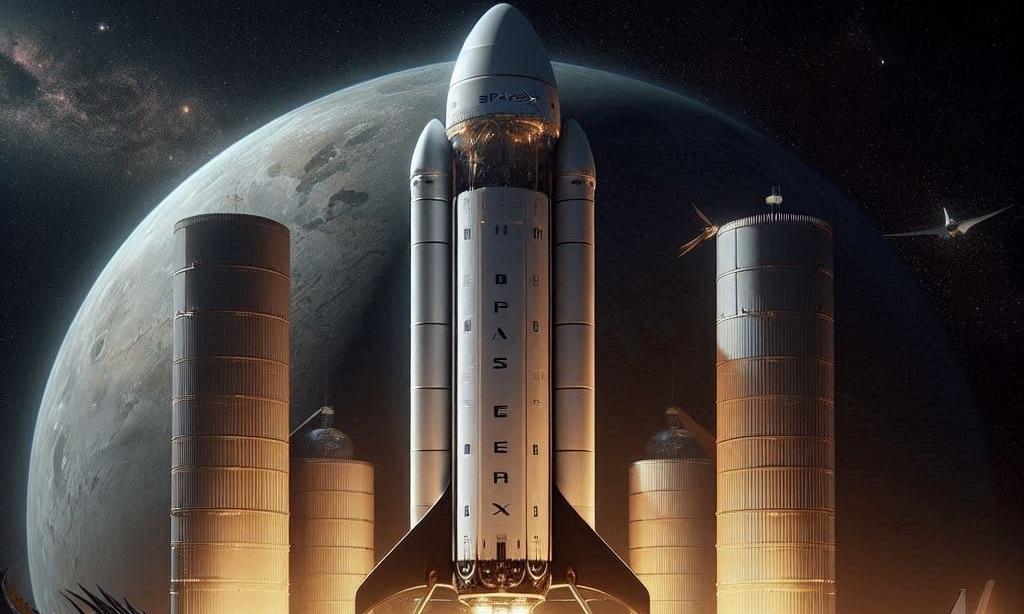
NASA's decision to entrust SpaceX with constructing the ISS deorbit vehicle marks a significant milestone in space technology. SpaceX recently revealed a rendering of the car based on its Dragon spacecraft, which features an extended trunk filled with thrusters.
NASA Selects SpaceX for ISS Deorbit Vehicle Construction, Unveiling Dragon-Based Design
NASA's groundbreaking decision to entrust SpaceX with the vehicle construction responsible for deorbiting the International Space Station in the 2030s heralds a new era in space technology. The car, constructed using Dragon heritage hardware, is not just based on it but is essentially a long Dragon, as demonstrated in a recent rendering by SpaceX.
In a render released last week in conjunction with a press conference, SpaceX unveiled its ISS deorbit vehicle. The Dragon spacecraft, with an extended trunk filled with thrusters, boasts spacious cargo that can accommodate a frenzy of Draco thrusters, as SpaceX announced during the press conference. This design ensures thorough planning and execution of the mission.
The enhanced Dragon trunk will be twice as long as a standard trunk section and contain six times the fuel. After the final crew departs the station, NASA will passively permit the station's orbit to decay for approximately six months. The thrusters that protrude from the back of the station will be responsible for most of the deorbiting. The station's orbit will be reduced to 330 km before the final crew departs; the current orbit is approximately 400 km.
The Dragon 2 cargo spacecraft appears to be the front portion of the deorbit vehicle. Although the vehicle's ability to detach, effectively reenter, and splash down in the ocean, as with other Dragons, still needs to be addressed, it could be advantageous to possess this capability.
NASA to Independently Operate SpaceX’s ISS Deorbit Vehicle, Seeks Separate Launch Solution
In contrast to the current commercial services contracts, NASA will acquire SpaceX's deorbit vehicle outright and operate it independently. According to Space Explored, the agency will also develop a launch vehicle separately, as the Falcon 9 rocket cannot launch the deorbit vehicle due to its increased weight.
SpaceX stated that it would be delighted to launch it if chosen, but it did not indicate the type of rocket it would propose. The Falcon Heavy is the most logical option, given its similarities to the Falcon 9. However, this would result in an unusual photograph, as the Dragon could never fly on the Falcon Heavy otherwise. Nevertheless, it would not be unreasonable to propose Starship.
NASA intends to secure the transportation to space for its deorbit vehicle by three years before launch.







