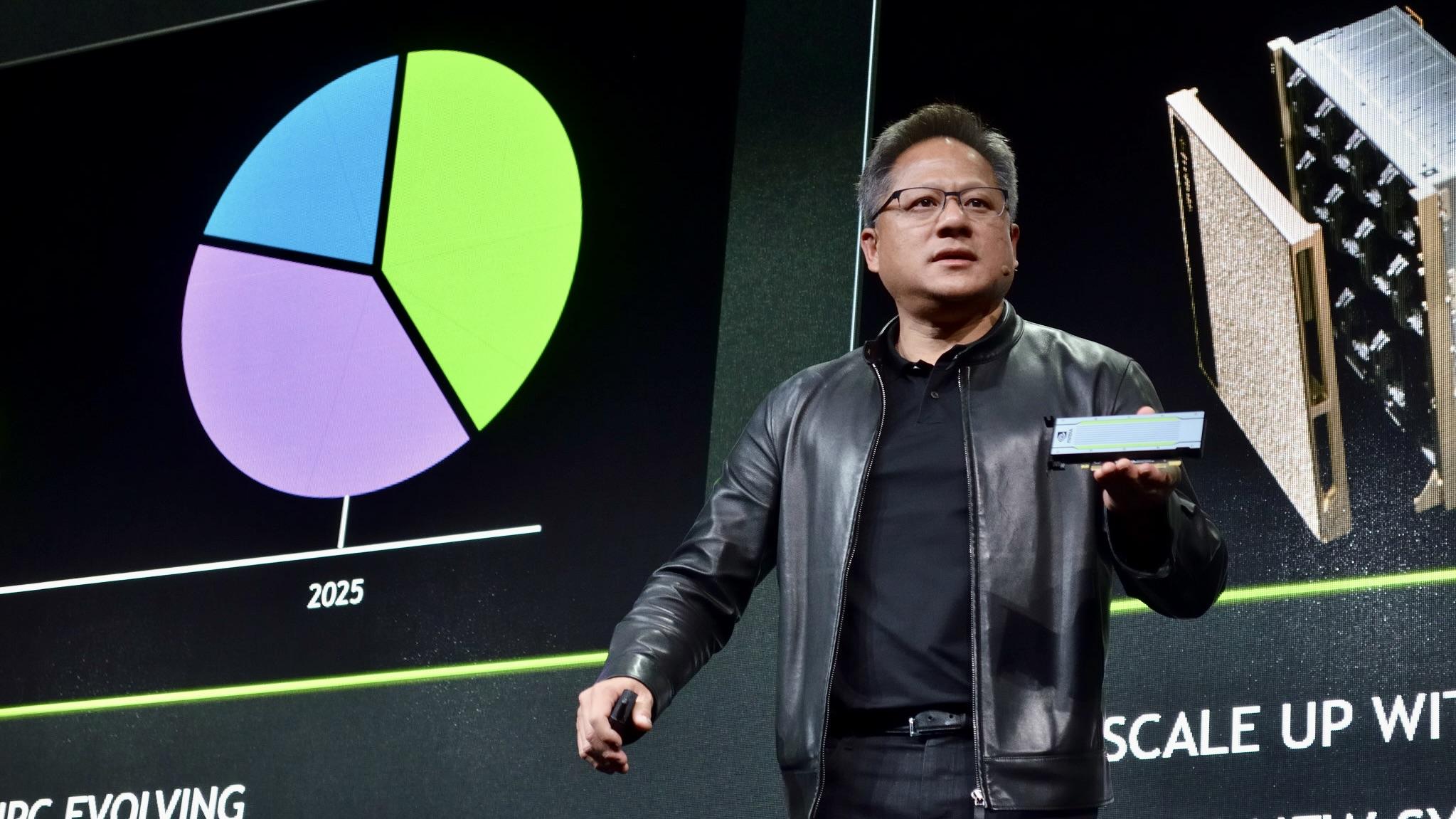
Nvidia (NASDAQ:NVDA) plans to spend hundreds of billions of dollars on U.S.-made chips and electronics over the next four years, CEO Jensen Huang revealed in an interview with the Financial Times. The company expects to procure around $500 billion worth of electronics, with several hundred billion produced domestically.
Huang noted that Nvidia now manufactures its latest AI systems using U.S. suppliers, including TSMC (NYSE:TSM) and Foxconn, reinforcing its commitment to bolstering domestic production. He also acknowledged growing competition from Chinese tech giant Huawei.
Nvidia’s strategy aligns with a broader push by major tech firms to localize supply chains amid rising geopolitical tensions and U.S. trade policies. Companies like Apple (NASDAQ:AAPL) have also pledged substantial investments in the U.S. to reduce dependence on foreign manufacturers.
Huang expressed confidence that the Trump administration could support the U.S. AI sector, particularly as Nvidia ramps up production of its Blackwell AI chips domestically. His comments come as the U.S. implements strict trade tariffs, prompting firms to seek alternative supply sources.
TSMC, a key Nvidia partner, has significantly expanded its U.S. manufacturing under the Biden-era CHIPS Act, securing billions in government incentives to strengthen semiconductor production.
Earlier this week, Huang introduced Nvidia’s next-gen Vera Rubin AI chips, further solidifying the company’s leadership in the booming artificial intelligence sector.
Nvidia’s massive investment underscores its commitment to U.S. manufacturing, AI innovation, and securing a competitive edge in the evolving global tech landscape.