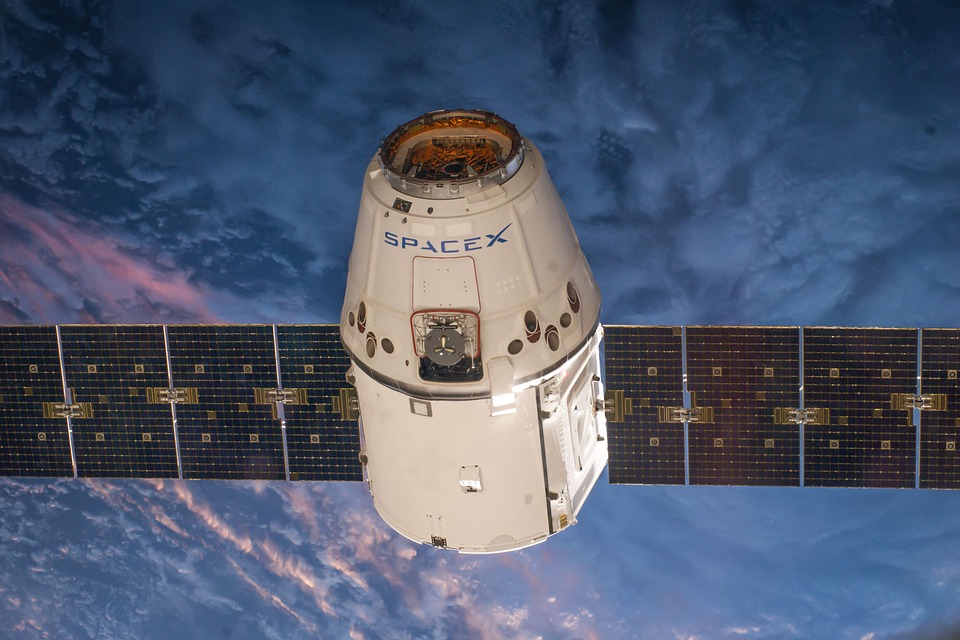
Elon Musk’s private space company, SpaceX is planning on launching a Falcon 9 rocket on Thursday from the Vandenberg Air Force Base in California. Officially, the rocket will be carrying a satellite called Paz, which is a Spanish radar unit. However, the company is also throwing in two smaller satellites to test the viability of their idea.
Called Microsat-2a and Microsat-2b, SpaceX was granted permission by the Federal Communications Commission to launch these units to test the viability of providing high-speed internet access from space, Business Insider reports. If proven successful, they could be the first of 12,000 spacecraft that are intended to beam down wireless online connection all over the world.
The initiative is temporarily known as Starlink and it apparently involves 4,425 interlinked satellites that will fly around in orbit, roughly 800 miles above the Earth’s surface. There will also be about 7,500 lower-orbit spacecraft, which will serve to support the whole distribution network. Those are just the initial estimates, as well.
Depending on how well the launch goes, the planned number could go up or down since this has never been attempted before. If SpaceX actually succeeds in pulling this off, people could be looking at a much brighter future that involves fast internet speeds wherever they go and without having to worry about coverage.
As CNET also notes, this launch is a relatively secret affair for the private space company. SpaceX has never really been one to advertise its launches, but the firm has been particularly reticent to broadcast details about Starlink.
This is understandable since it’s an unproven project that has a good chance of failure. With the numerous explosions that the company has experienced since its inception, it would have likely learned by now that it will need a proof of concept before it really gives the initiative the publicity it deserves.