


 Moscow Exchange to Launch Crypto Trading on December 1
  EU Gives Crypto Platforms Three Months to Remove USDT Under MiCA Rules
  OpenAI Annualized Revenue Hits $50 Billion, Below Earlier Estimates
  OpenAI Revenue Hits $50 Billion, Below Earlier $70 Billion Estimate
  TSMC Q3 Revenue Beats Estimates as AI Chip Demand Surges
  Ledger Investigates Alleged $86 Million Crypto Wallet Theft
  Anthropic Launches Claude Dashboards and Motion AI Tools
  Starbucks Explores Chipotle Acquisition as Shares Swing
  Stellar Overtakes Ethereum in RWA Fund Inflows as XRP Leads Commodities
  Tencent Shares Fall as $5 Billion AI Bond Sale Weighed
  XRP Ledger Activates New Security Feature for Banks and Stablecoins
  Polkadot Launches dotUSD Stablecoin as DOT Price Falls
  David Schwartz to Reveal XRP Ledger Future at Ripple Swell 2026
  Trump Buys Up to $25M in Meta Stock, Invests in SpaceX Debt
  Xiaomi Shares Surge 7.6% as SkyNomad EV Orders Hit 70,000
  DWF Labs Sues BitGo for $114 Million Over Alleged Token Sales Breach
  US Suspends Microsoft, Adobe From Green Card Program


 Add as a preferred source on Google
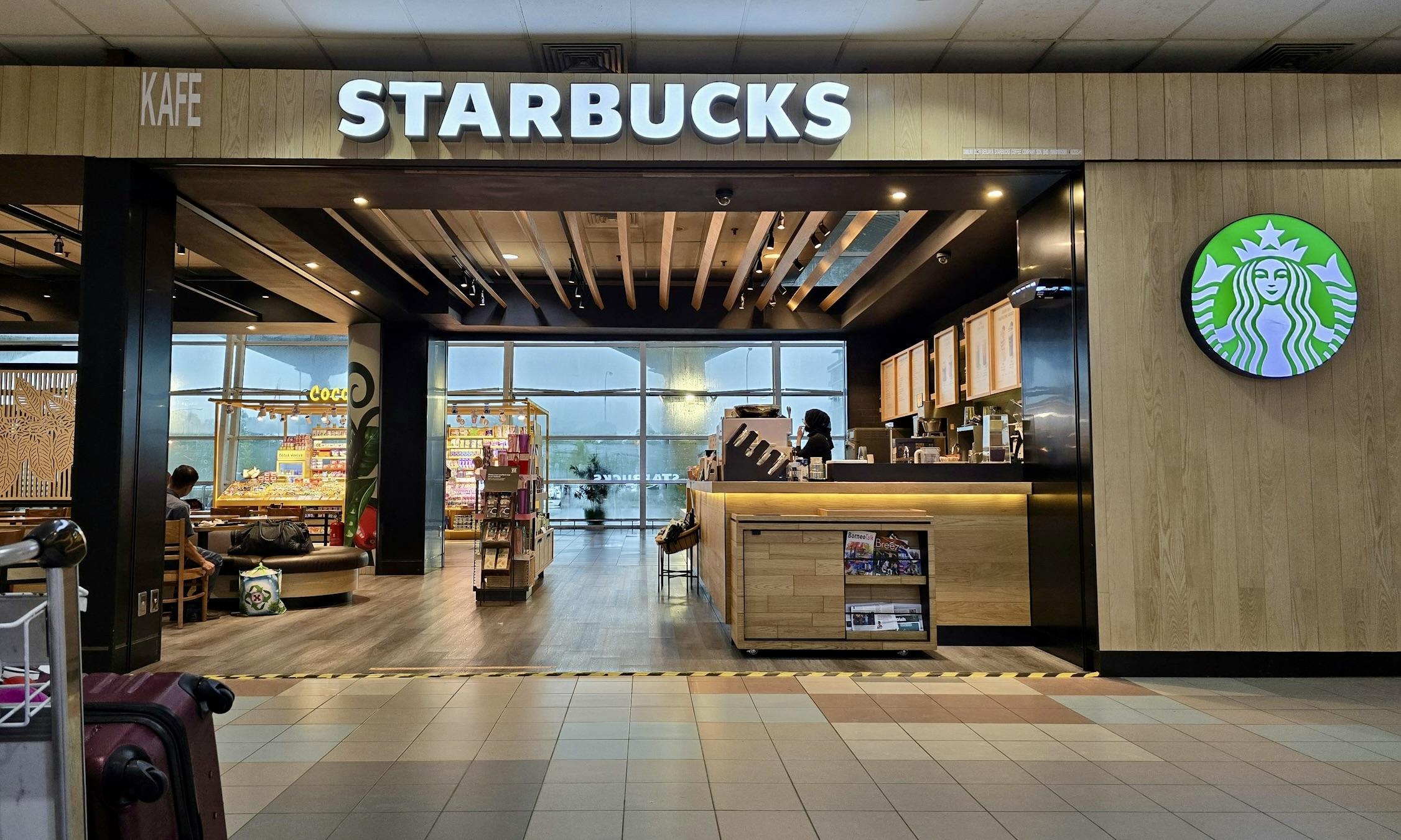
Luckin Coffee surpassed Starbucks in China sales, marking a competitive shift. Simultaneously, NAVER 1784 has deployed 100 robots to enhance service efficiency for Starbucks and other tasks.
Challenges from Cotti and Luckin Coffee
Luckin Coffee outpaced Starbucks in annual sales in China for the first time. This marked a substantial challenge for the Seattle-based company, underscoring the need for strategic responses.
According to WION, contrary to the perception of a potential price war, Starbucks has strategically shifted its approach. Industry experts and Chinese customers have noticed increased discount coupons distributed through various channels such as mini-programs, Douyin livestreams, and third-party delivery services.
These coupons, often offering 30% off or two-for-one deals, indicate a shift towards sales-driven strategies rather than direct price reductions.
In January, Belinda Wong, CEO of Starbucks China, said, "We are not interested in entering the price war." Founder Howard Schultz said the same thing in March when he went to Shanghai. He stressed how important it is for the company to grow in a way that makes money over the long run.
Discount Strategies as Starbucks' Response to Competitors
Although the extent of Starbucks' increased discounting remains undisclosed, the company had not previously employed such strategies.
Jason Yu, managing director of Kantar Worldpanel for Greater China, asserts that Starbucks is compelled to engage in price competition in a market where "the new normal" is low-cost competition. He observes that promotional offers must be strengthened to maintain market share, and social media activity must increase.
Price pressure is exacerbated by rivals, including Cotti, a chain established by former Luckin Chairman Charles Lu, and Luckin Coffee, which consistently offers espresso at significantly reduced prices. Luckin's rapid expansion, which has resulted in more than 18,590 locations by 2025, in contrast to Starbucks' intended 9,000, presents an additional obstacle for the latter.
NAVER 1784's Robot Deployment
Naver 1784 tower is the world's largest robotics testbed and the headquarters of the South Korean technology firm Naver. Interesting Engineering shares that Naver's autonomous service robot, Rookie, serves as a bearer at Starbucks and other services in the 36-storey building on the southern outskirts of Seoul.
On a regular day, approximately 100 Rookie service bots move around all floors of NAVER 1784, delivering packages, coffee, and lunch boxes. Rookie is a self-driving, brainless, cloud-based robot, a technology being promoted by Naver for its range of service bots.
"It is amazing that so many robots are providing services non-stop in such a huge space. In 1784, daily service becomes daily testing, and each day's issues become the next day's updates," a post on the firm's website stated.
Photo: Zeq Qayong/Unsplash







