


 Trump Plans White House Shake-Up of Key AI Safety Agency
  US Recalls Nicaragua Envoy After Ambassador Rejection
  US Authorities Raid Ilhan Omar’s Home Amid Immigration Fraud Probe
  North Korea Fires Ballistic Missiles as Tensions With South Korea Escalate
  Pakistan Declares Emergency in Khyber Pakhtunkhwa, Suspends Imran Khan’s PTI Government
  Mahmoud Abbas Postpones Palestinian Elections to September 2027
  Trump Denies China, Russia Are Helping Iran in War
  European Auto Stocks Rise as EU-China Trade Deal Targets Hybrid Imports
  MI5 Warns of Rising Iran, Russia Threats and AI Bioweapon Risks
  Most Americans Oppose Election Betting on Prediction Markets, Poll Finds
  Kim Jong Un Showcases ICBM Ahead of Possible Trump Meeting
  India Voter List Protests Reach Supreme Court as Opposition Demands Election Chief's Resignation
  Trump Defends Russian Diesel Deal Amid US Sanctions Backlash
  Flavio Bolsonaro Backs Brazil’s 40-Hour Workweek Reform Ahead of Runoff
  NATO Commander Warns Russia of Devastating Response to Attack
  Trump Announces Russia-Ukraine Energy Ceasefire as Zelenskiy Awaits Details
  Elon Musk Donates $366 Million to 2026 US Midterms


 Add as a preferred source on Google
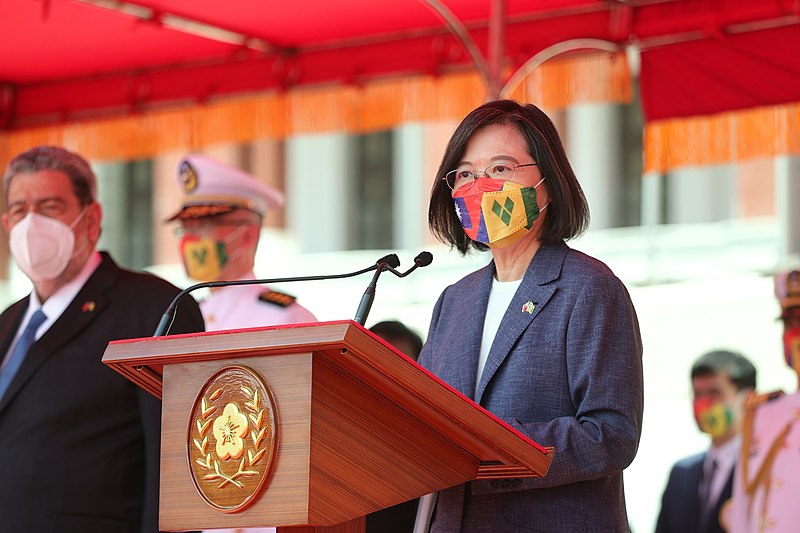
The island nation of Taiwan this week commemorated the anniversary of a more than 60-year confrontation between the island and China. Taiwanese President Tsai Ing-wen warned that Beijing would have a “heavy price” to pay for an invasion.
In remarks Tuesday, Tsai reiterated that the island nation is determined to defend itself and, in an apparent swipe at China, warned that invaders would pay a “heavy price.” Taiwan marked the anniversary of a confrontation between Taiwanese and Chinese forces, where Taiwanese forces repelled the Chinese 64 years ago.
“This battle defended Taiwan for us, and it also declared to the world that no threat can shake the determination of the Taiwanese people to defend their country,” said Tsai in remarks released by her office.
“What we have to do is to let the enemy understand that Taiwan has the determination and preparation to defend the country, as well as the ability to defend itself.”
“A heavy price will be paid for invading Taiwan or attempting to invade Taiwan, and it will strongly be condemned by the international community,” said Tsai.
During Tsai’s meeting with another US delegation which included former deputy US national security adviser Matt Pottinger, the Taiwanese leader said the 1958 confrontation paved the way for Taiwan the world knows today.
At the time, Taiwan also fought with the support of the United States, and Washington sent military equipment, including Sidewinder anti-aircraft missiles which gave the island an advantage in the aspect of technology.
Retired US Navy admiral James O. Ellis, who was also part of the delegation, said the group’s presence reaffirmed the US commitment to strengthening cooperation.
Several US delegations have arrived on the island following the visit of House Speaker Nancy Pelosi, which triggered increased military drills by China near Taiwan. Tsai met with US Republican Governor Eric Holcomb Monday, where she said that Taiwan wants to make sure its partners have reliable suppliers for semiconductor chips.
In her meeting with Holcomb, Tsai reiterated that China has increased its military activities in and around the Taiwan Strait, which Beijing also claims as its territory. Tsai stressed that democracies must stand together and increase cooperation in all aspects.







