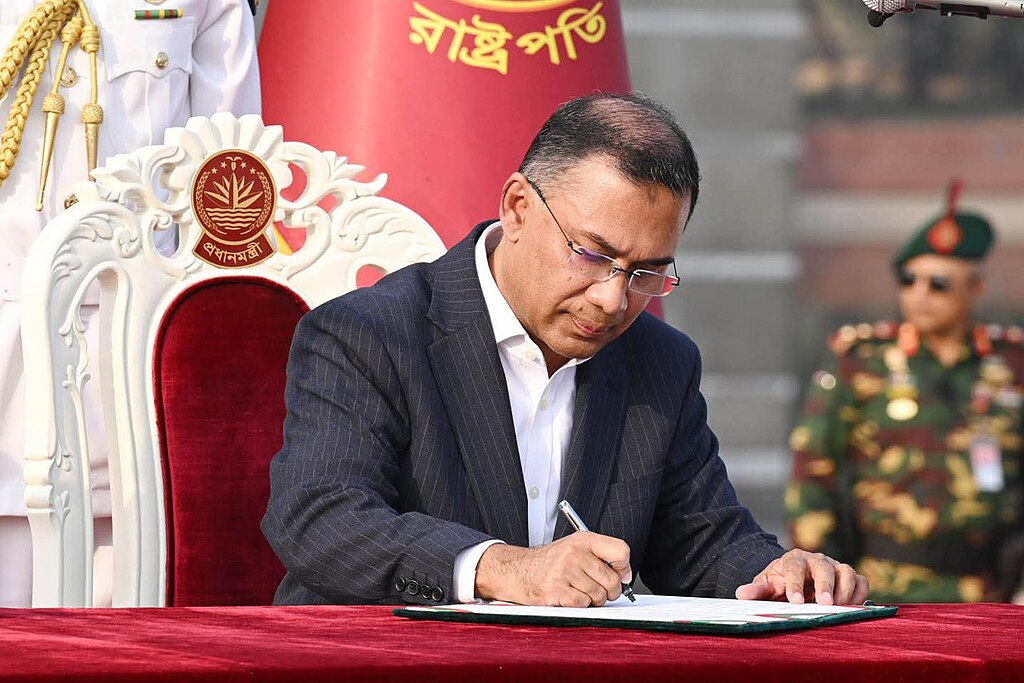
Bangladesh Nationalist Party (BNP) leader Tarique Rahman has been sworn in as the new Prime Minister of Bangladesh, marking a significant political shift following months of instability. The 60-year-old son of former Prime Minister Khaleda Zia and assassinated President Ziaur Rahman assumed office after the BNP secured a sweeping two-thirds majority in the parliamentary election.
Rahman takes charge at a critical time for the South Asian nation. Bangladesh is working to restore political stability, rebuild investor confidence, and revive key sectors such as the garment industry, which suffered setbacks after the Gen Z-led uprising that toppled Sheikh Hasina’s government in 2024. An interim administration headed by Nobel laureate Muhammad Yunus oversaw the transition and guided the country to national elections.
In a break from tradition, the swearing-in ceremony was held at the South Plaza of the National Parliament building instead of the Bangabhaban, the president’s official residence. President Mohammed Shahabuddin administered the oath to Rahman and his 49-member council of ministers. The event was attended by senior political leaders, diplomats, civil and military officials, and representatives from China, India, and Pakistan.
The new Bangladesh government features a mix of senior BNP figures and younger leaders, signaling a balance between political experience and technocratic expertise. Former Commerce Minister Amir Khasru Mahmud Chowdhury was appointed finance minister, while Khalilur Rahman, who served as national security adviser during the interim government, became foreign minister.
The Islamist party Jamaat-e-Islami won 68 seats in its first election since a 2013 ban was lifted. However, Jamaat and the National Citizen Party boycotted the inauguration ceremony over disagreements related to the proposed Constitution Reform Council.
In his first public remarks as prime minister, Tarique Rahman emphasized maintaining peace and law and order, pledging that his administration would not tolerate unrest as it works to stabilize and strengthen Bangladesh’s economy and governance.