
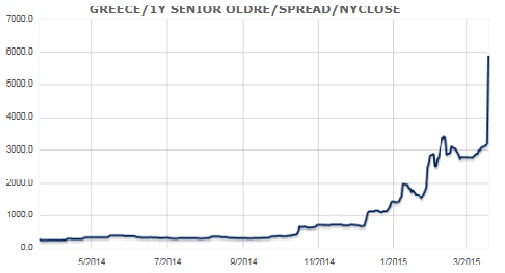
As Greek government and European lenders remains at loggerheads over the conditions of the bailout, data shows that market participants remain extremely worried.
Arguments of Syriza -
Basic argument of Syriza party is that growth has not surfaced after four years of austerity that is close to the country's 30% of economic output. So they conclude that this whole program of austerity despite its success elsewhere failed in Greece.
- They presented arguments for GDP linked bonds. Greek GDP has fallen from $ 341 billion in 2009 to just $241 billion in 2014. That is the reason for such high debt to GDP ratio. So according to Syriza, growth comes back creditors get paid.
- Greece is suffering from 26% unemployment close to 40% among youth, highest in Euro zone. So the government is asking to resolve the current humanitarian crisis as people suffers from basic services like food, electricity, home. Syriza passed a bill to help the people out with subsidy already.
Signs from markets -
Market continues to express concern over the success of current negotiation and some are pricing for an exit or some sort of debt restructuring.
- Greece's yield curve got further inverted, with front end yielding as high as 25% compared to around 12% for 10 year.
- Credit default swap is soaring vertically. Premium to cover one year debt sore from just around 30% in February to 60% in March.
- Stock market since Syriza come to power is down close to 50%.
Market will remain tense over Greece until commendable solution appears.


