


 Samsung, SK Hynix Shares Fall as China's CXMT Advances DRAM Technology
  Most Americans Oppose Election Betting on Prediction Markets, Poll Finds
  Morgan Stanley Predicts $10 Trillion RWA Market by 2030
  Arthur Hayes Announces FLOP Testnet Launch Within Weeks
  Apple Supplier Luxshare Sees Limited Impact From US Patent Probe
  TSMC Profit Set to Surge 65% as AI Chip Demand Drives Record Earnings
  Orsted to Take Full Ownership of UK Offshore Wind Farm for £15 Million
  Apple Supplier Luxshare Faces US Patent Probe, Sees Limited Impact
  TSMC Q3 Revenue Beats Estimates as AI Chip Demand Surges
  Moonshot AI Executives Seek Settlement Ahead of Hong Kong IPO
  US Suspends Microsoft, Adobe From Green Card Program
  Jameson Lopp Downplays AI Threat to Bitcoin Cryptography
  Nvidia’s China AI Chip Market Share Falls to 34% as Huawei Gains Ground
  Oracle Uses Trucked Natural Gas to Power AI Data Centers Amid Pipeline Delays
  Airbus Tests Valkyrie Combat Drone in Europe for Eurofighter Integration
  Elon Musk Accuses Indian Telecom Giants of Blocking Starlink Launch


 Add as a preferred source on Google
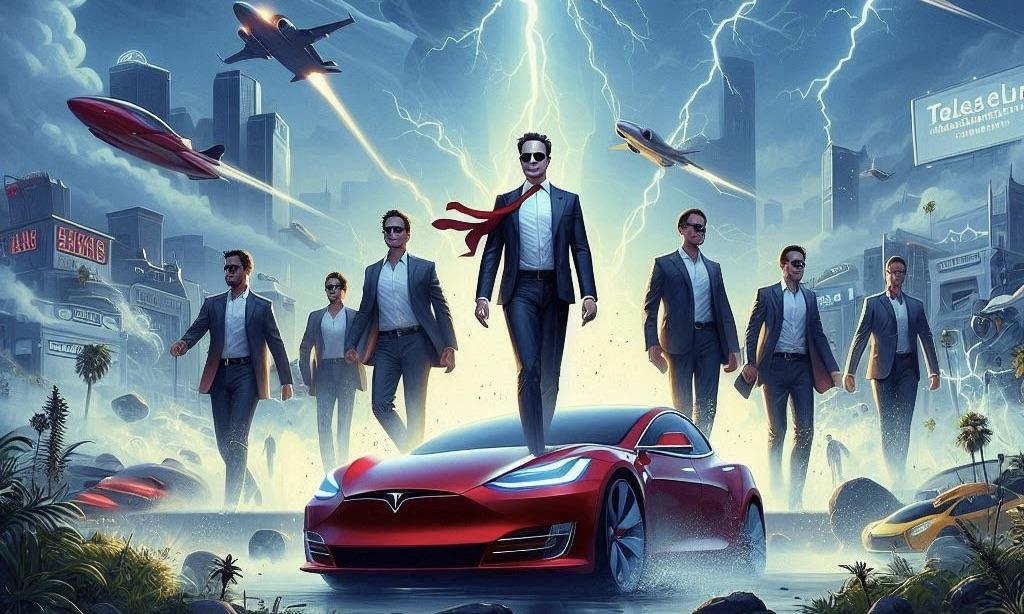
Tesla's stock has rebounded significantly, erasing year-to-date losses and reclaiming its position among the Magnificent Seven tech giants. Despite increased competition and a dip in market share, Tesla's impressive Q2 deliveries and robust energy storage business have driven this recovery.
Tesla's Stock Rebounds, Rejoins Magnificent Seven Despite Intense Competition and Market Challenges
Tesla's competitors are more intense than ever. However, according to Fortune, this has not been sufficient to prevent a substantial increase in the company's stock price, which has erased year-to-date losses and temporarily dispelled concerns regarding its continued membership in the Magnificent Seven, a term inspired by a film that refers to the tech giants (Alphabet, Amazon, Apple, Meta, Microsoft, and Nvidia) that have contributed the majority of the stock market's recent gains.
Nevertheless, Tesla's ranking among the top 10 largest companies in the United States was scarcely maintained when its shares plummeted to $138.80 in April. Pundits such as Jim Cramer of CNBC had already declared the company to have vacated its position among some of the country's most potent and fastest-growing companies.
However, Tesla's substantial rally persisted on July 10, as shares reached their highest level since September, concluding at $263.26, on the back of Q2 deliveries that exceeded low expectations. Tesla's market capitalization is currently approaching $850 billion. Tesla is now the eighth-largest U.S. company, but it remains significantly smaller than Meta, the next-smallest member of the Magnificent Seven, with a market capitalization of $1.3 trillion.
Tesla Faces Market Share Decline Amid AI Perception, Focus Shifts to Total Deliveries
Earlier this week, Fortune's Christiaan Hetzner observed that Tesla bulls may perceive the company as an artificial intelligence company; however, Tesla still needs to demonstrate its ability to sell cars. This assertion may be called into question in light of a New York Times report, which cites Cox Automotive and indicates that Tesla no longer maintains most of the American electric vehicle market.
Fortune was informed by Seth Goldstein, an equities strategist at Morningstar, that he had never considered it a wise decision to concentrate on Tesla's EV market share. He observed that Tesla's market share should decrease despite the company's continued expansion as the demand for electric vehicles increases.
“I think the more important number is, what are their deliveries and what’s their percent of the total auto market, including internal combustion engines?” Goldstein said.
At the beginning of the month, Tesla declared that it had shipped nearly 444,000 vehicles in the second quarter of the previous year, representing a mere 5% decrease from the previous year. As Hetzner observed last week, analysts had anticipated a decline of approximately 9%.
Goldstein was impressed by that figure and the record statistics from Tesla's energy storage business. The company reported deploying 9.4 gigawatt hours of battery energy storage, its highest quarterly figure to date and more than double the amount reported in Q1. "Even minor adjustments in expectations regarding high-growth stocks can have a substantial effect on share prices," Goldstein stated.
“That shows that Tesla can still grow,” Goldstein said. “It shows that maybe the worst is behind Tesla and that they are turning things around.”
Tesla Surprises Analysts with Strong Q2 Deliveries and Record Energy Storage Growth
Additionally, investors may anticipate Tesla's unveiling of its Cybercab, a robot-taxi model that is anticipated to be devoid of a steering column and pedals, on August 8. Goldstein is interested in whether the unveiling includes a specific timeline or provides only a few details.
Goldstein is interested in learning more about Tesla's progress in developing a new, more affordable vehicle during the upcoming earnings call on July 23. Goldstein stated that Musk indicated that production could commence as early as 2025, allowing deliveries to resume growth by 2026.
He believes that the market will respond favorably if the timeline is maintained.
“If they don’t commit to it again or give us any updates,” he said, “we could see the stock falter.”
Photo: Microsoft Bing







