


 Canton Network Expands in South Korea With Major Partnerships
  Samsung, SK Hynix Shares Fall as China's CXMT Advances DRAM Technology
  Nvidia’s China AI Chip Market Share Falls to 34% as Huawei Gains Ground
  Apple Names Steve Smith M&A Chief in Leadership Shakeup
  Moonshot AI Executives Seek Settlement Ahead of Hong Kong IPO
  Nasdaq Faces Pullback to 26,225 Despite Bullish Outlook, UBS Says
  TSMC Q3 Revenue Beats Estimates as AI Chip Demand Surges
  Apple Supplier Luxshare Sees Limited Impact From US Patent Probe
  Elon Musk Donates $366 Million to 2026 US Midterms
  Visa Wins China Approval to Prepare Domestic Payments Expansion
  Meta Launches Muse Wonder AI Models, Shares Rise 3.7%
  FAA Warns US Airlines Over Saudi Arabia Flight Risks
  Epic Games Delays Disney Shooter, Shifts to AI-First Development
  Tencent Shares Fall as $5 Billion AI Bond Sale Weighed
  Hong Kong’s Second Solana ETF Launches With Lower Fees


 Add as a preferred source on Google
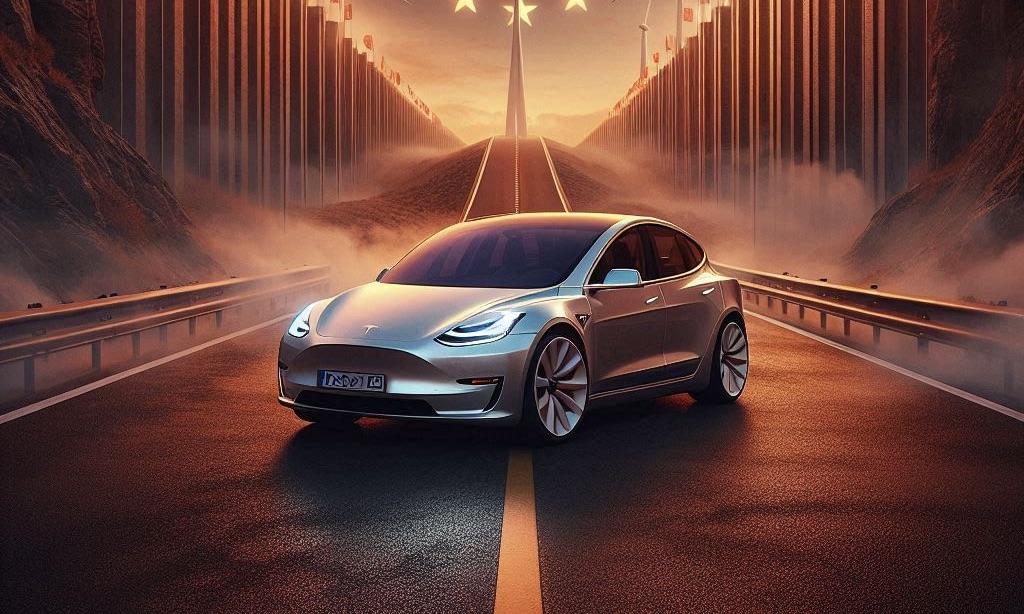
Tesla shares surged as the company announced plans to implement its Full Self-Driving (FSD) system in the EU and China by early 2025. However, regulatory challenges in the EU, including the new DCAS framework, are expected to limit Tesla's FSD capabilities and adoption in the region.
Tesla’s FSD Plans for EU and China in 2025 Face Regulatory Setbacks Under New DCAS Rules
On September 5, Tesla shares surged after the company announced an ambitious FSD implementation plan in the EU and China during the first quarter of 2025. However, Tesla's exponentially increasing FSD-related capabilities are about to encounter substantial regulatory inertia, which will likely restrict the EV giant's potential for growth.
Tesla has recently disclosed its roadmap for releasing its FSD in the forthcoming months. The concurrent unlocking of the ability to reverse in FSD and the advent of FSD version 13 in October are noteworthy. This serves as a testament to Tesla's increasing computing capacity, which is currently facilitating the rapid implementation of improved capabilities.
Of course, the critical development is the implementation of FSD in the EU and China in Q1 2025. As a result, Tesla has experienced a roughly six percent increase in early morning trading. Additionally, approximately $31 million in net call premium has been exchanged.
However, Tesla is confronted with regulatory obstacles in the EU. It has recently implemented the UN-led Driver Control Assistance Systems (DCAS) regulations despite its aspirations to implement the most recent FSD capabilities. According to Wccftech, this is a critical issue, as the DCAS framework's phase 1, anticipated to be implemented in January 2025, does not permit autonomous driving.
"To avoid driver overreliance on such systems, the regulation stipulates that DCAS shall be designed to ensure that the driver remains engaged with the driving task. The driver’s hands must remain on the wheel and the system shall monitor the driver’s visual engagement with the road, triggering alarms after 5 seconds when it detects that this is no longer the case."
Tesla’s FSD Rollout in EU Faces Limitations, While China Offers a More Favorable Market
Naturally, negotiations regarding the second phase of the DCAS are still in progress, with the subsequent workshop scheduled for September 9. As a result, it is more probable that Tesla will introduce a degraded version of the FSD in the EU during Q1 2025, which is likely to restrict its adoption.
Remember that, as per Gary Black of Future Fund, Tesla's earnings per share (EPS) increase by $0.05 per share for each 5 percent increase in FSD adoption.
Conversely, Tesla is anticipated to encounter a significantly more favorable environment in China, where Mercedes has recently been granted formal sanction to commence testing its proprietary Level 4 Advanced Driver Assistance System (ADAS). This system enables autonomous driving for extended periods without human supervision. In contrast, Tesla's FSD is classified as a Level 2 currency.







