Thailand’s Federation of Thai Industries (FTI) has backed a proposed pickup trade-in subsidy as falling production and tighter auto lending weigh on the domestic vehicle market, the Bangkok Post reported.
The Excise Department sent the proposal to a committee monitoring the government’s 400 billion baht emergency loan before it goes to the cabinet, the Bangkok Post reported. The newspaper said cabinet approval is expected in 2027.
Under the plan, buyers would receive 40,000 baht per vehicle, with the program aiming to reach 150,000 vehicles. The Bangkok Post cited a financial official who said as much as 6 billion baht could be allocated to the effort.
An adviser to the FTI’s Automotive Industry Club who also speaks for the group said buyers should view the subsidy as help with a down payment, rather than a reduction in the vehicle’s price, the newspaper reported. Consumers could discuss the value of a trade-in with dealerships, with the amount tied to market conditions. Automakers could provide additional support through co-payments, according to the Bangkok Post.
The proposal comes amid a sharp pullback in the pickup market. Monthly output has fallen to around 10,000 units from about 30,000, while production has declined by 300,000 units over three years, the newspaper reported. It attributed the sales slump in part to stricter bank approvals for auto loans and said the downturn has hurt manufacturers and suppliers, including tire producers.
The Bangkok Post said pickups account for 80% to 90% of auto components used in Thailand’s domestic market, underscoring the sector’s importance to local suppliers.
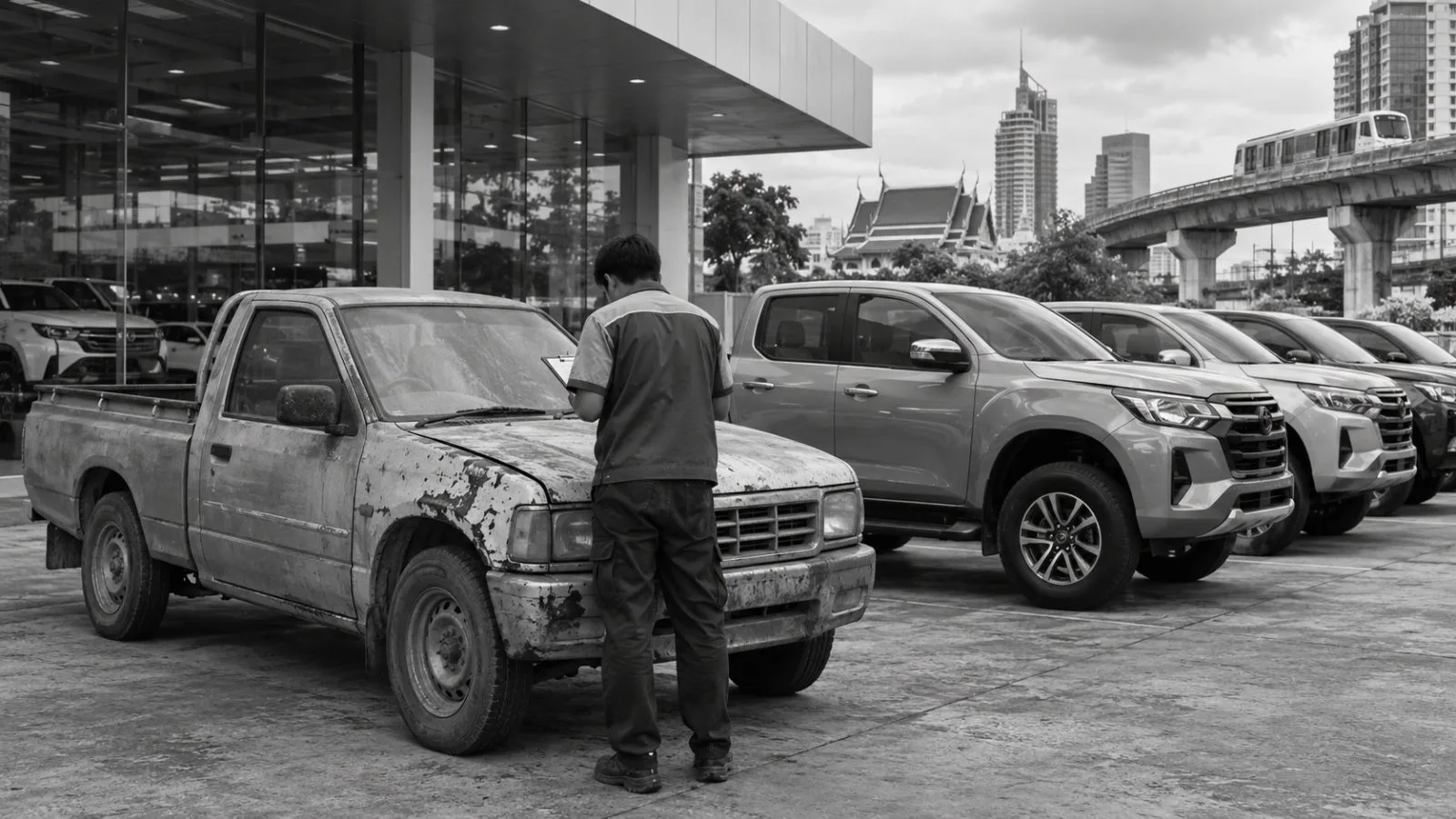
The program also aims to encourage owners to replace older vehicles with newer pickups that can run on B20 biodiesel. Officials said many older vehicles meet only Euro 1 or Euro 2 emissions standards. B20 includes 20% palm-derived methyl ester, and officials said broader use could reduce crude oil imports, the Bangkok Post reported.
EconoTimes previously reported that the FTI saw a risk of consumers delaying pickup purchases and choosing EVs ahead of a tax change in earlier coverage of the pickup trade-in proposal. The next step is cabinet consideration, which the Bangkok Post said is expected in 2027.