Dunkin', one of America's top fast-food chains, is nearing 10,000 locations across the U.S. but hasn't entered seven states, including Oregon and Washington. Regional preferences and coffee competition, particularly from Starbucks, have played a significant role in Dunkin's absence from these areas.
Despite Approaching 10,000 U.S. Locations, Dunkin' Remains Absent in Seven States, Including Washington and Alaska
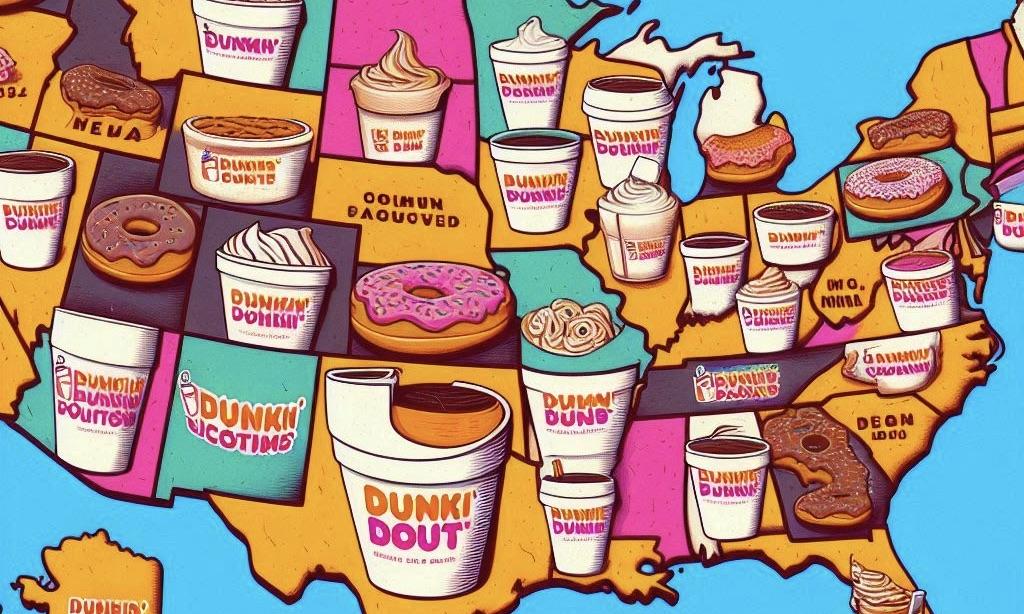
Dunkin', one of America's most beloved fast-food chains, is rapidly approaching 10,000 locations across the U.S., with a total of 13,200 stores worldwide, spanning 40 countries. Known for its coffee and donuts, Dunkin' has become a fixture in most populated regions of the United States. Yet, despite its widespread presence, seven states still need a single Dunkin' location. These states include Oregon, Idaho, Montana, Washington, North Dakota, South Dakota, and Alaska — forming a curious Dunkin' desert in the Northwest and nearby regions.
Since its founding in Quincy, Massachusetts, in 1948, Dunkin' has evolved into one of the top 10 fast-food chains in America, routinely ranking alongside industry giants such as McDonald’s, Starbucks, and Chick-fil-A. The company earned $11.9 billion in sales in 2023 alone. Despite this success, Dunkin' has yet to make inroads into specific areas, particularly in Washington state, where the last Dunkin' location closed in 2002 after a 40-year presence.
Dunkin's Exit from Washington Highlights the Stronghold of Starbucks and Regional Coffee Culture Preferences
Dunkin's withdrawal from Washington was no surprise to some, especially given the state’s deep connection to Starbucks, which dominates the coffee market in Seattle and beyond. Dunkin's early focus on donuts may have limited its appeal in a state where coffee culture reigns supreme. Starbucks, headquartered in Seattle, generated $31.6 billion in sales in 2023, nearly tripling Dunkin's revenue.
Franchisees who once operated Dunkin' stores in Washington faced several challenges, including slow product entry into the local market and insufficient advertising. Despite their efforts and Dunkin's attempts to rebrand itself as a coffee-centric chain, Washington’s love affair with Starbucks has left little room for another coffee contender. This story of Dunkin's struggle to adapt to local preferences can evoke empathy in the audience as they consider the human side of business decisions.
While Dunkin' continues to thrive in other parts of the country, its absence from these seven states, especially Washington, is a powerful reminder of the influence of regional preferences on the success or failure of even the most established brands. This insight into the dynamics of the fast-food industry can be enlightening for both consumers and business analysts, offering a deeper understanding of the factors that shape the market.