


 How to support someone who is grieving: five research-backed strategies
  AI is driving down the price of knowledge – universities have to rethink what they offer
  Locked up then locked out: how NZ’s bank rules make life for ex-prisoners even harder
  Disaster or digital spectacle? The dangers of using floods to create social media content
  Booked to travel through the Middle East? Here’s why you shouldn’t cancel your flight
  Why a ‘rip-off’ degree might be worth the money after all – research study
  6 simple questions to tell if a ‘finfluencer’ is more flash than cash
  Can your cat recognise you by scent? New study shows it’s likely
  Why financial hardship is more likely if you’re disabled or sick
  Every generation thinks they had it the toughest, but for Gen Z, they’re probably right
  The ghost of Robodebt – Federal Court rules billions of dollars in welfare debts must be recalculated
  Why have so few atrocities ever been recognised as genocide?
  Debate over H-1B visas shines spotlight on US tech worker shortages
  Office design isn’t keeping up with post-COVID work styles - here’s what workers really want
  Yes, government influences wages – but not just in the way you might think
  The American mass exodus to Canada amid Trump 2.0 has yet to materialize


 Add as a preferred source on Google
We live in a world drowning in objects: households with a television in each room; kitchen cupboards stuffed with waffle makers, blenders and cappuccino whisks; drawers filled to bursting with pocket-sized devices powered by batteries – batteries which themselves take a thousand times more energy to make than they will ever provide.
Just over a century ago, “disposability” referred to small, low-cost products such as disposable razors and paper napkins. Today, practically everything is disposable – it is culturally permissible to throw away anything from a barely-used smartphone, television, or vacuum cleaner, to an entire three-piece suite or fitted bathroom.
This has led to the serious problem of electronic waste. In the European Union, mountains of scrapped circuit boards and other computer junk are growing three times faster thank any other type of waste in the EU (UN, 2007). We generate 40 tonnes of waste in the process of manufacturing just one tonne of electronic products – yet 98% of these products are discarded within just six months of purchase. Given the huge quantities of precious resources (including gold and other rare metals) that find their way into our gadgets, it would surely be worth us taking more care of them, repairing them when broken, and keeping them for longer. In fact, the opposite is happening: product lifespans are shortening as material culture becomes increasingly disposable.
The notion of a “throwaway society” is nothing new. American economist Bernard London first introduced the term “planned obsolescence” in 1932 as a means to stimulate spending among the few consumers who had disposable income during the depression. The concept was popularised by Vance Packard in his The Waste Makers in 1964. In fact, the concept of disposability was a necessary condition for America’s cultural rejection of tradition and acceptance of change.
Products to feel good about

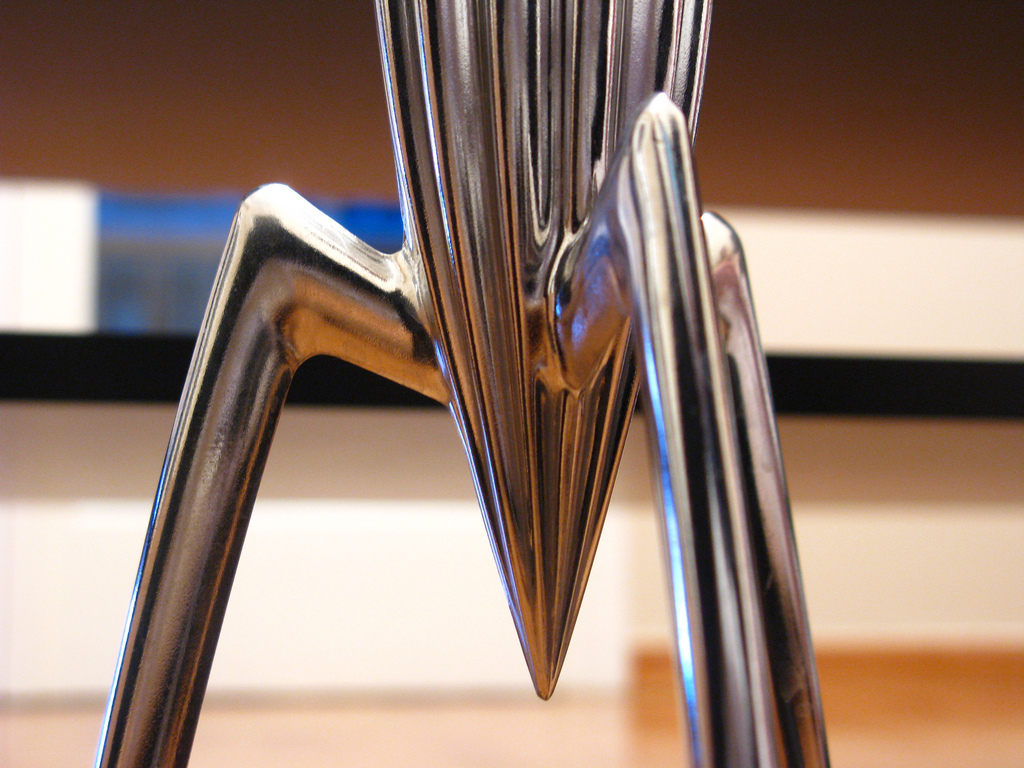
Proof that products can be long-lasting and beautiful, too. Niklas Morberg, CC BY-SA
There is a different approach, however – one of emotionally durable design, which can help us to reduce the consumption and waste of resources by building a more lasting relationship between us and the products we buy. Simply put, it helps us design products that are built to last longer, and provide a longer-term experience. The term “emotional” is used here because wasteful patterns of consumption and waste are driven, in large part, by emotional and experiential factors. We tire of things, novelty wears off all too quickly and we fall out of love with them, so to speak.
Considering emotional durability at the design stage helps us to wean people off their desire for the new, and can shape new and sustainable business models. Here, longer-lasting products have the potential to build economic models around creating robust products, upgrade and repair services, and brand-loyal customers – all without excessive waste.
In design terms, we can support greater levels of emotional longevity when we specify materials that age gracefully, and that develop quality over time. We can design products that are easier to repair, upgrade and maintain throughout their lifespan. These are effective product life extension strategies, and while they can come at an increased cost at point of purchase, they generate revenue downstream, through the introduction of service and upgrade packages.
Extending the life of a product has significant ecological benefits. For example, take a toaster that lasts about 12 months. Even if the toaster’s life is extended to just 18 months through more durable design, the extra longevity would lead to a 50% reduction in the waste consumption associated with manufacturing and distributing it. Scale this up to a national or international population of toaster-buyers, and it’s clear how significant an impact this could be.

A circular economy is a less wasteful one. WRAP
There is a growing sense that the consumer electronics industry must transition from a linear economy to a circular one. A circular economy is one in which resources are kept in use for as long as possible. The maximum value is extracted from them, while materials and energy are recovered or recycled as much as possible at the end of any product’s life. This is a seismic shift in thinking, affecting everything from the design and delivery of short-life products, to that of longer-lasting material experiences.
Simply having more stuff stopped making people in Britain happier decades ago. The New Economics Foundation (NEF) argues for an economy of better, not more. One in which things age gracefully, where they last and can be repaired many times before being recycled, allowing us to share better the surplus of stuff we already have. Designing products that can be kept for longer nurtures a deeper relationship with both the product and the brand, which increases the likelihood of brand loyalty maturing.
Such emotionally durable design doesn’t just make sense from an environmental and resources perspective, but can be seen as a commercially viable business strategy in an increasingly competitive globalised world.
 Jonathan Chapman does not work for, consult, own shares in or receive funding from any company or organization that would benefit from this article, and has disclosed no relevant affiliations beyond the academic appointment above.
Jonathan Chapman, Professor of Sustainable Design, Director of Design Research Initiatives, University of Brighton
This article was originally published on The Conversation. Read the original article.







