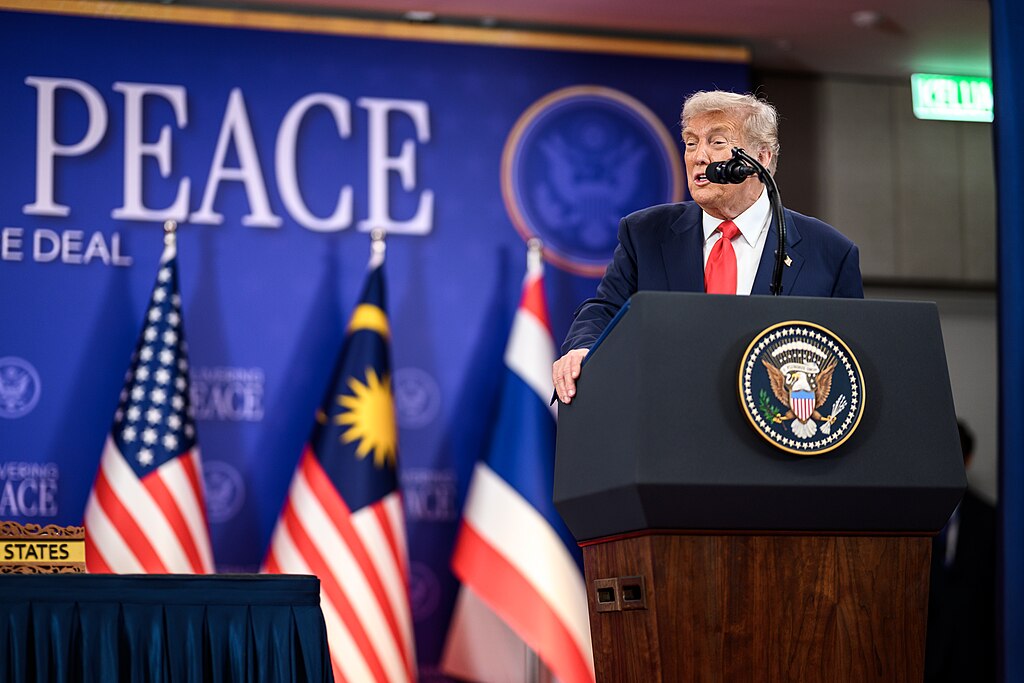
U.S. President Donald Trump announced on Sunday that a proposed agreement between the United States and Iran is effectively complete, highlighting plans to reopen the Strait of Hormuz and remove the U.S. naval blockade on Iranian ports. The announcement comes as both countries continue discussions on a broader framework aimed at easing tensions in the Middle East.
In a post on Truth Social, Trump declared that he had authorized the “toll-free” reopening of the Strait of Hormuz and the immediate removal of the U.S. naval blockade, signaling a potential breakthrough for global energy markets and international shipping. The strategic waterway is a critical route for global oil exports, and any disruption has historically impacted crude oil prices worldwide.
Despite Trump's remarks, Iranian officials have not yet formally approved the proposed memorandum of understanding. Reports indicate that Tehran is still reviewing the draft agreement. According to details cited by Reuters, the proposal includes Iran’s reopening of the Strait of Hormuz to commercial traffic, the suspension of additional U.S. sanctions during negotiations, and the easing of restrictions on Iranian oil exports.
The draft also outlines plans for the release of approximately $25 billion in frozen Iranian assets through financial arrangements involving regional partners and credit facilities. In return, Iran would maintain the current status of its nuclear program, refrain from producing nuclear weapons, and halt uranium enrichment expansion while negotiations continue.
The announcement comes amid continued instability in the region. Israeli airstrikes in Beirut reportedly targeted a Hezbollah command center following drone attacks, resulting in casualties and raising concerns that ongoing military operations could complicate diplomatic efforts. Trump criticized the timing of the strikes and urged all parties to avoid actions that could jeopardize progress toward a peace agreement.
Iranian officials have emphasized that any agreement must preserve the country’s authority over the Strait of Hormuz, including its right to collect navigation and security-related service fees. Discussions are also reportedly underway regarding a large-scale reconstruction fund to address war-related damages.
While Trump has described the proposed accord as a major diplomatic achievement, Iranian leaders continue to characterize it as an initial step toward broader negotiations. If finalized, the agreement could significantly affect Middle East stability, global oil markets, maritime trade, and future U.S.-Iran relations.