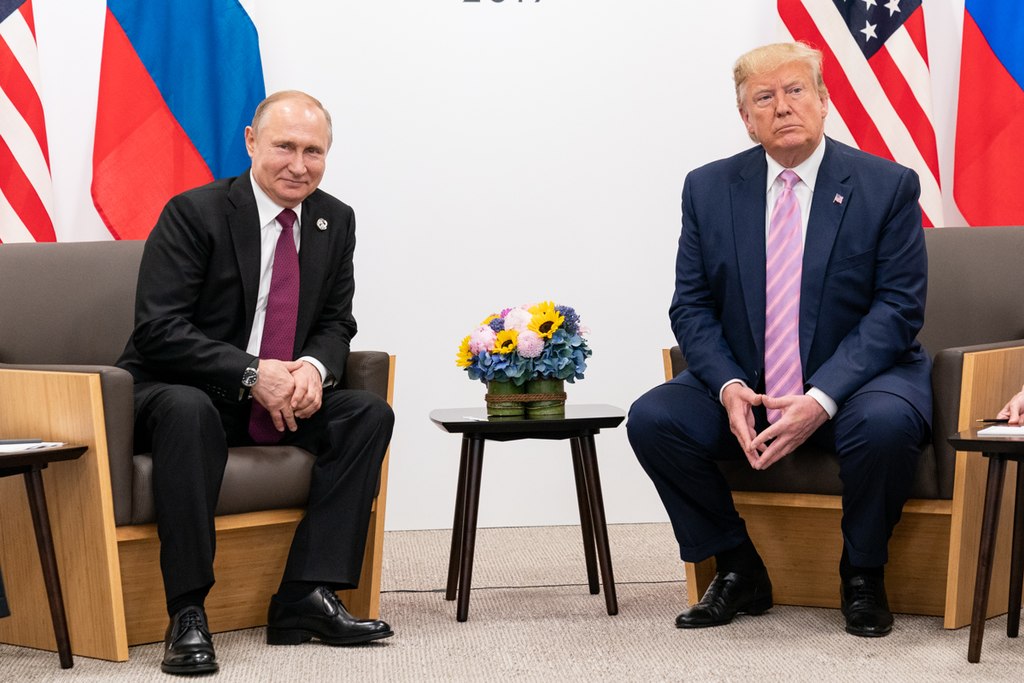
U.S. President Donald Trump has rejected an offer from Russian President Vladimir Putin to voluntarily extend limits on strategic nuclear weapons following the expiration of the New START treaty, a landmark arms control agreement that had constrained the world’s two largest nuclear powers for more than two decades. Instead, Trump said the United States should pursue a “new, improved and modernized” nuclear arms treaty that could last well into the future.
In a post on his Truth Social platform, Trump described New START as a “badly negotiated deal” and claimed it had been “grossly violated,” pointing to Russia’s 2023 decision to suspend on-site inspections and transparency measures. Those inspections were a cornerstone of the treaty, designed to build trust and reduce the risk of miscalculation between Washington and Moscow. Putin justified halting inspections by citing U.S. military support for Ukraine following Russia’s full-scale invasion in 2022.
Putin’s proposal would have kept the treaty’s core limits in place for another year, capping deployed strategic nuclear warheads at 1,550 and delivery systems, including missiles, submarines, and aircraft, at 700. Arms control experts warn that without any binding agreement, both the United States and Russia could rapidly expand their nuclear arsenals, increasing global security risks and fueling a renewed nuclear arms race.
Despite Trump’s rejection, both sides signaled some openness to future dialogue. Kremlin spokesman Dmitry Peskov said Russia remained ready for talks if the U.S. responded constructively, while the White House said discussions with Moscow would continue. The United Nations also urged both countries to restore arms control measures, emphasizing the importance of transparency and predictability for global strategic stability.
The treaty’s expiration has sparked uncertainty, with Russia stating it now considers New START no longer in force and warning it could take “military-technical countermeasures” if new threats emerge. Analysts note that unconstrained nuclear competition could become even more dangerous as China continues to expand its own nuclear capabilities, although Beijing has declined to join trilateral arms control talks.
As the last remaining U.S.-Russia nuclear arms treaty ends, experts caution that the absence of limits and inspections could significantly raise the risk of escalation and undermine decades of nuclear stability.