
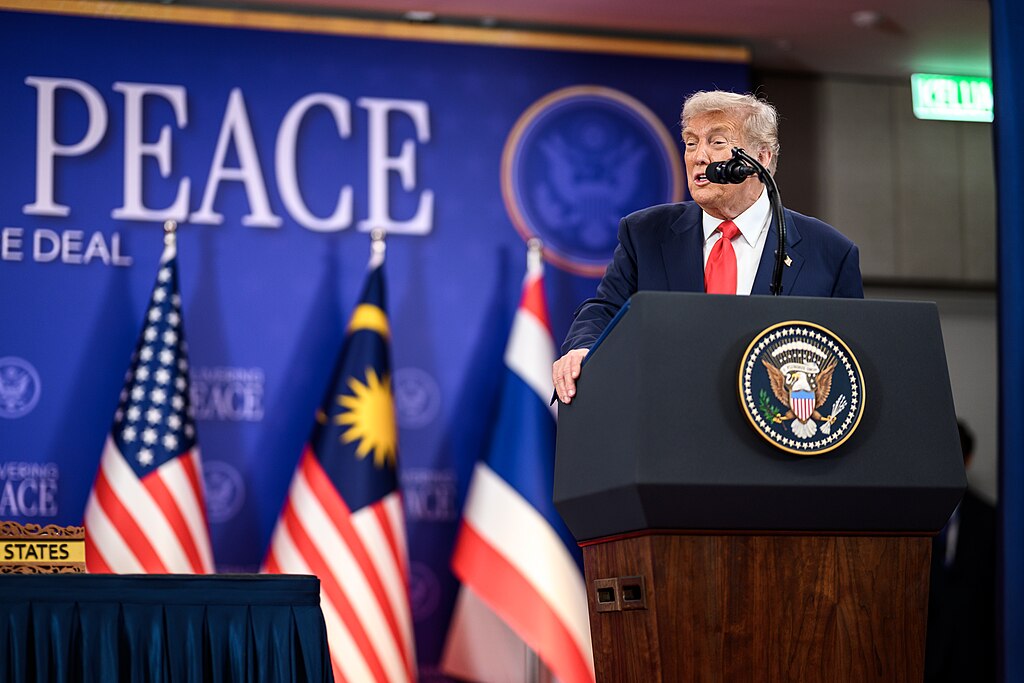
U.S. President Donald Trump said on Tuesday that he held a “very good” telephone conversation with NATO Secretary General Mark Rutte, during which they discussed issues of global security, including the strategic importance of Greenland. The remarks come as Trump renewed his long-standing interest in the Arctic territory, emphasizing its role in both U.S. national security and broader world security.
Following the call, Trump revealed that he had agreed to participate in a meeting involving multiple parties at the World Economic Forum in Davos, Switzerland, taking place this week. While he did not disclose who would attend the meeting, the announcement has fueled speculation that Greenland and Arctic security will be central topics of discussion among global leaders, policymakers, and defense officials.
In a post on his social media platform, Truth Social, Trump stated that Greenland is “imperative for National and World Security,” adding that “there can be no going back” on this position. According to Trump, this view is widely shared, underscoring his belief that the territory’s strategic location in the Arctic makes it crucial for military, economic, and geopolitical stability.
Earlier in the day, Trump told reporters that the United States would raise the issue of acquiring Greenland during the World Economic Forum. He argued that Denmark, which currently controls the semi-autonomous territory, lacks the capacity to adequately protect it. Trump has repeatedly framed Greenland as vital due to its proximity to key Arctic shipping routes, natural resources, and its importance in monitoring potential threats in the region.
The renewed focus on Greenland comes amid growing international attention on the Arctic, where climate change is opening new sea lanes and increasing competition among major powers. Trump’s comments suggest that his administration views Greenland not only as a regional concern but as a cornerstone of global security strategy.
As world leaders gather in Davos, Trump’s statements are likely to reignite debate over sovereignty, security responsibilities, and the future of the Arctic in an increasingly competitive geopolitical landscape.


