
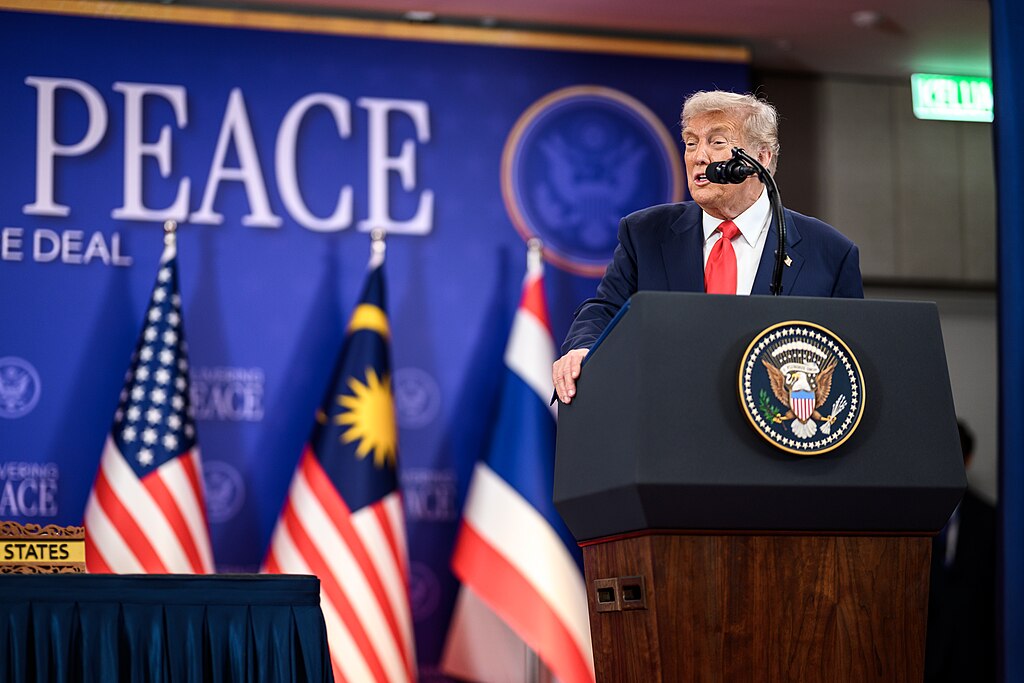
U.S. President Donald Trump declared on Wednesday that the United States will not allow China to take control of the Panama Canal, underscoring Washington’s continued focus on one of the world’s most strategically important shipping routes.
Speaking during a public appearance, Trump reaffirmed his administration’s commitment to protecting U.S. interests in the Panama Canal, a critical waterway that connects the Atlantic and Pacific oceans and plays a major role in global trade. His remarks come amid ongoing concerns in Washington over China’s expanding influence in Latin America and its growing investments in ports and infrastructure across the region.
Trump stressed that the canal remains vital to U.S. national security, economic stability, and international commerce. He said the United States would take the necessary steps to ensure that China does not gain control or undue influence over the key maritime passage.
The Panama Canal has long been viewed as a strategic asset because it handles a significant share of global shipping traffic, allowing vessels to avoid the lengthy journey around South America. Any shift in influence over the canal has the potential to affect international trade, supply chains, and geopolitical dynamics.
U.S. officials have repeatedly voiced concerns about Beijing’s expanding economic footprint in the Western Hemisphere, arguing that Chinese investments in critical infrastructure could have broader security implications. China, meanwhile, has maintained that its overseas infrastructure projects are commercial in nature and aimed at promoting economic cooperation.
Trump’s latest comments reinforce his administration’s broader approach toward China, which includes addressing trade, technology, national security, and geopolitical competition. His statement also highlights the strategic importance Washington places on safeguarding major global shipping lanes and maintaining influence in the Americas.
The Panama Canal remains a cornerstone of international maritime trade, and Trump’s remarks signal that the United States intends to remain actively engaged in protecting its interests in the region while countering China's growing global presence.


