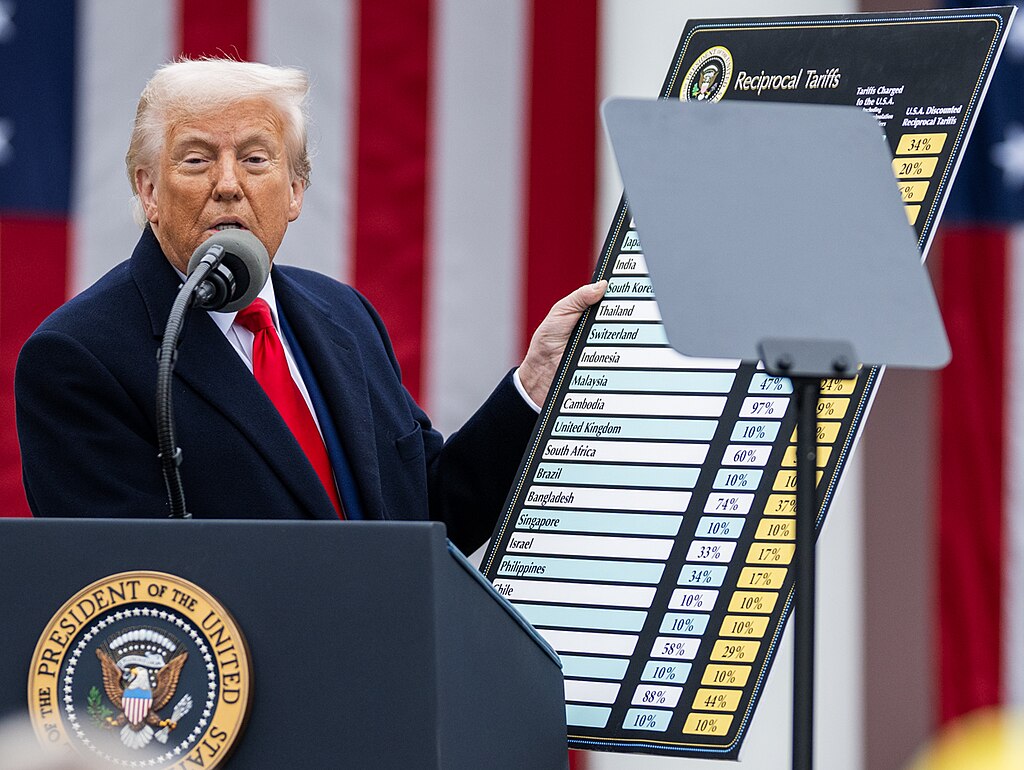
A new academic paper from the Brookings Institution reveals that the sweeping tariffs introduced during President Donald Trump's administration had a negligible effect on overall U.S. economic output, while significantly boosting federal revenue and accelerating the economic separation between the United States and China.
The research, conducted by economists Pablo Fajgelbaum of UCLA and Amit Khandelwal of Yale, assessed the short-term effects of Trump's trade policies. Their findings indicate that the net welfare impact on the U.S. economy ranged from a modest 0.1% GDP gain to a 0.13% GDP loss, depending on how domestic demand and trade terms shifted in response to the tariffs.
While the effect on consumer spending appears small on the surface, the study highlights substantial behind-the-scenes redistribution. Consumers paid more, benefiting producers, but those losses were largely offset by increased government revenue and wage growth in select industries. Tariff pass-through rates were estimated at 90%, meaning foreign exporters absorbed only about 10% of the added costs, with American consumers and businesses bearing most of the burden.
Overall tariff rates climbed to a roughly 80-year high of 9.6%, up from 2.4%, though about 57% of U.S. imports still enter the country duty-free due to trade agreements and exemptions. Federal tariff revenue in 2025 reached $264 billion, representing around 4.5% of total government receipts, compared to just 1.6% over the prior decade.
Perhaps the most striking finding involves U.S.-China trade. China's portion of total U.S. imports dropped dramatically to 7% in December 2025, down from 23% in December 2017. However, much of that trade has simply redirected through other countries rather than returning to domestic production.
The study also found no meaningful evidence that the tariffs increased manufacturing jobs, reduced the overall trade deficit, or successfully shifted supply chains toward allied nations.