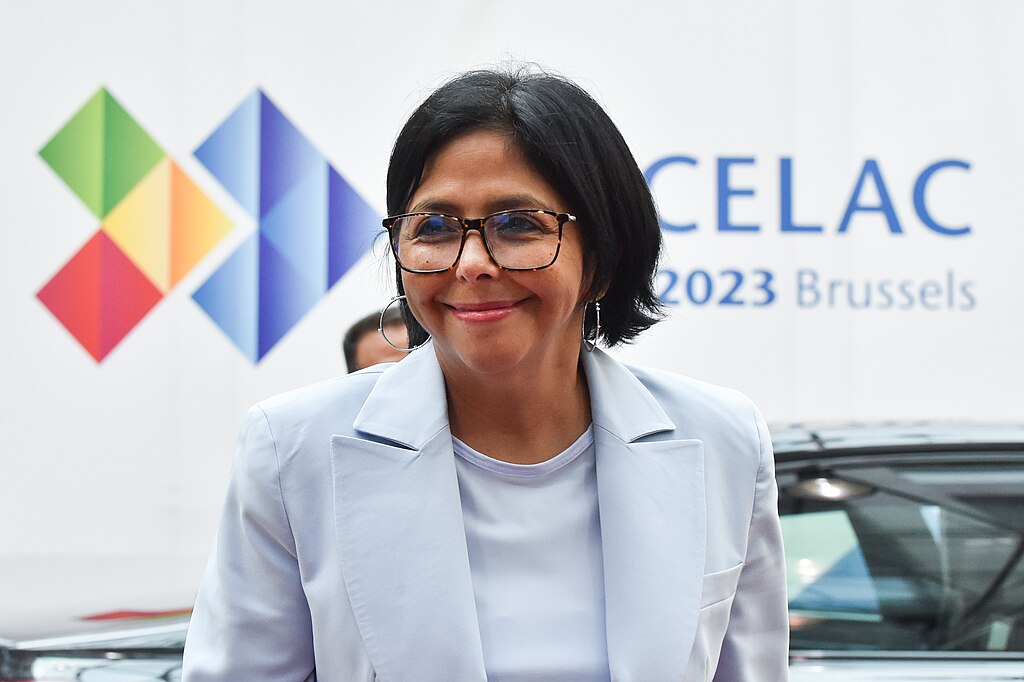
U.S. President Donald Trump has issued a strong warning to Venezuelan Vice President Delcy Rodríguez, suggesting she could face consequences even greater than those imposed on former leader Nicolás Maduro if she fails to cooperate with U.S. demands. The remarks were made during a telephone interview with The Atlantic magazine as Trump arrived at his West Palm Beach golf course in Florida, according to Reuters.
Trump’s comments came a day after he publicly praised Rodríguez following a dramatic operation in which U.S. forces seized Maduro and his wife from Caracas. However, tensions escalated after Rodríguez later declared that Venezuela would defend its natural resources, signaling resistance to U.S. pressure. In response, Trump adopted a tougher tone, stating that if Rodríguez “doesn’t do what’s right,” she would “pay a very big price, probably bigger than Maduro.”
The U.S. president strongly defended his controversial decision to remove Maduro by force, framing it as a necessary step toward improving conditions in Venezuela. He argued that any form of rebuilding or regime change would be preferable to the existing situation, adding that conditions in the country “can’t get any worse.” Trump’s comments reflect his long-standing criticism of Maduro’s leadership and the humanitarian and economic crisis in Venezuela.
Beyond Venezuela, Trump also hinted at a broader willingness to use American power on the global stage. In the same interview, he suggested that other countries could be subject to U.S. intervention, reiterating his interest in Greenland. “We do need Greenland, absolutely,” Trump said, referring to the island that is part of Denmark, a NATO ally. This statement reinforces his previous claims about Greenland’s strategic and economic importance to the United States.
The remarks have already sparked international debate, raising concerns about U.S. foreign policy, regime change, and the potential implications for global stability. As the situation develops, Trump’s warnings to Delcy Rodríguez and his assertive stance toward other nations are likely to remain a focal point in discussions about American interventionism and geopolitical strategy.