
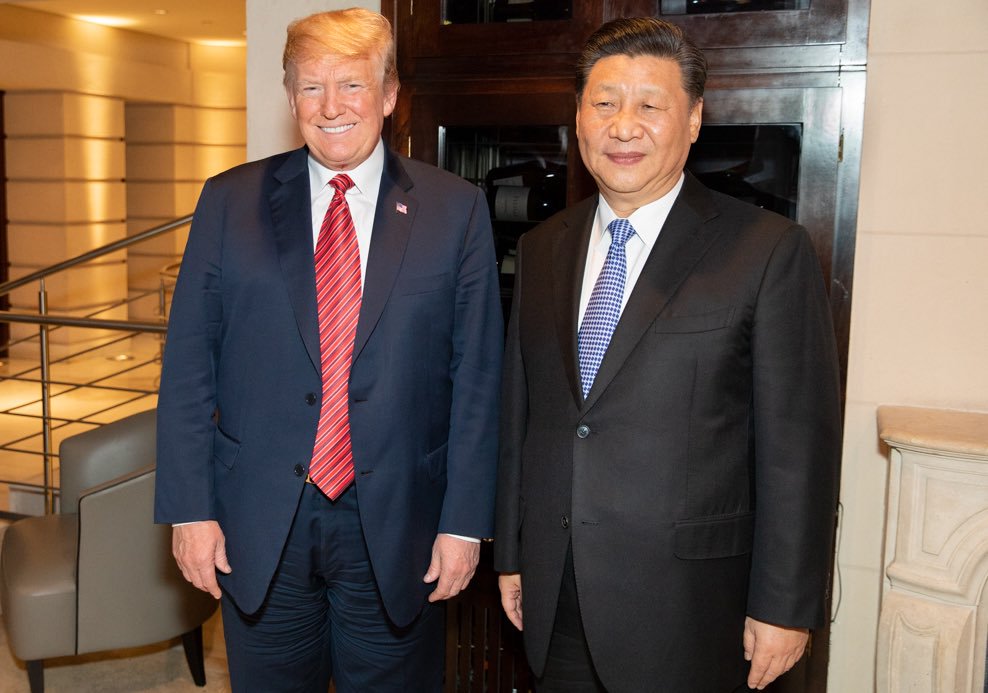
U.S. President Donald Trump and Chinese President Xi Jinping will meet in Washington on September 24, with expectations for a major breakthrough limited as both leaders focus on preserving stability in U.S.-China relations.
The summit comes four months after their previous meeting and amid shifting economic and geopolitical pressures. China’s exports remain resilient despite weak domestic demand and a prolonged property downturn, while Trump is dealing with the economic and political fallout from the Iran war.
A central issue will be whether Washington and Beijing signal an extension of the trade truce reached last year. The agreement prevented a sharper escalation in tariffs between the world’s two largest economies and reduced the risk of further disruption to global trade.
Ahead of the Trump-Xi meeting, U.S. Treasury Secretary Scott Bessent and Chinese Vice Premier He Lifeng held preparatory talks in New York. Discussions included potential artificial intelligence guardrails and trade in non-sensitive products.
China’s global trade surplus is on track to exceed $1 trillion for a second consecutive year. Although U.S. restrictions have affected low-cost shipments used by retailers such as Shein and Temu, more than half of roughly 6,500 Chinese product categories exported to the United States have recorded growth compared with 2025.
Taiwan could also emerge as a sensitive issue. Trump previously said Xi repeatedly raised Taiwan during their May meeting in Beijing, including U.S. arms sales and Washington’s commitment to the island. Trump has described a pending $14 billion Taiwan arms package as a “negotiating chip” in discussions with China.
Beijing could potentially offer increased purchases of U.S. agricultural goods or Boeing aircraft, as well as cooperation on fentanyl precursor chemicals, while seeking concessions on issues it considers strategically important.
Iran is another potential topic. Washington sees China as capable of exerting economic pressure on Tehran, although Beijing has so far shown limited willingness to intervene.
Analysts broadly expect both governments to prioritize stability, with Washington focused on Iran and Beijing seeking more time to strengthen China’s economic resilience.


