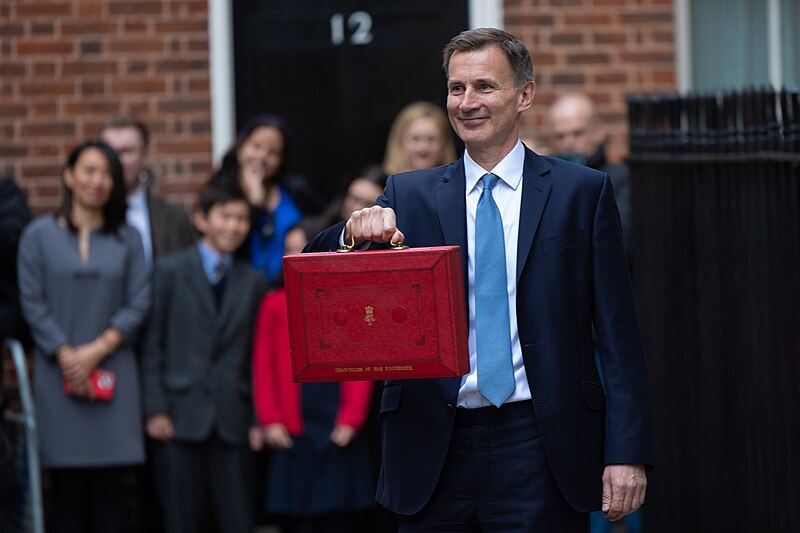
British finance minister Jeremy Hunt warned of the serious consequences should the United States government fail to raise its debt ceiling. This comes as US President Joe Biden is currently in a standoff between the Republican-controlled House of Representatives who have sought to raise the debt limit in exchange for federal spending cuts.
On Saturday, Hunt told reporters following a meeting among the financial chiefs of the G7 countries in Japan that there would be disastrous consequences should Washington fail to raise the debt ceiling and go into default. Hunt added that he hopes Biden and Congress could come to a solution to raise the debt limit.
“It would be absolutely devastating if America, which is one of the biggest motors of the global economy, was to have its GDP knocked off track by not reaching an agreement,” said Hunt, adding that the US potentially going into default would be “a very serious threat to the global economy.”
Hunt also told reporters that the G7 finance chiefs also had “very frank and open discussions” about the challenges they face, such as banking regulation and the impact of Russia’s invasion of Ukraine on the global economy. Hunt also said that G7 officials discussed the impact of the West’s sanctions on Moscow and the importance of stopping sanctions evasion or leakage.
The British finance chief added that imposing economic sanctions on Russia was not as effective as providing Ukraine with military support but was more of a “slow burn” and that there would be a point where the sanctions would “start to bite.” Hunt said that it was important that the non-G7 countries invited by the current chair, Japan – Indonesia, Singapore, India, Brazil, and Comoros – also participated in the discussion about Russia.
Friday last week, British lawmakers launched a probe into the fairness of the United Kingdom’s food supply chain in an effort to understand why households in the country are facing the highest levels of food prices since the 1970s. The Environment, Food, and Rural Affairs Committee of the House of Commons said it plans to look into how profits and risks are shared from “farm to fork” and the level of regulation.
The panel will also look into the impact of external factors on the supply chain.
Photo by Simon Walker (No. 10 Downing Street)/Wikimedia Commons(CC by 2.0)