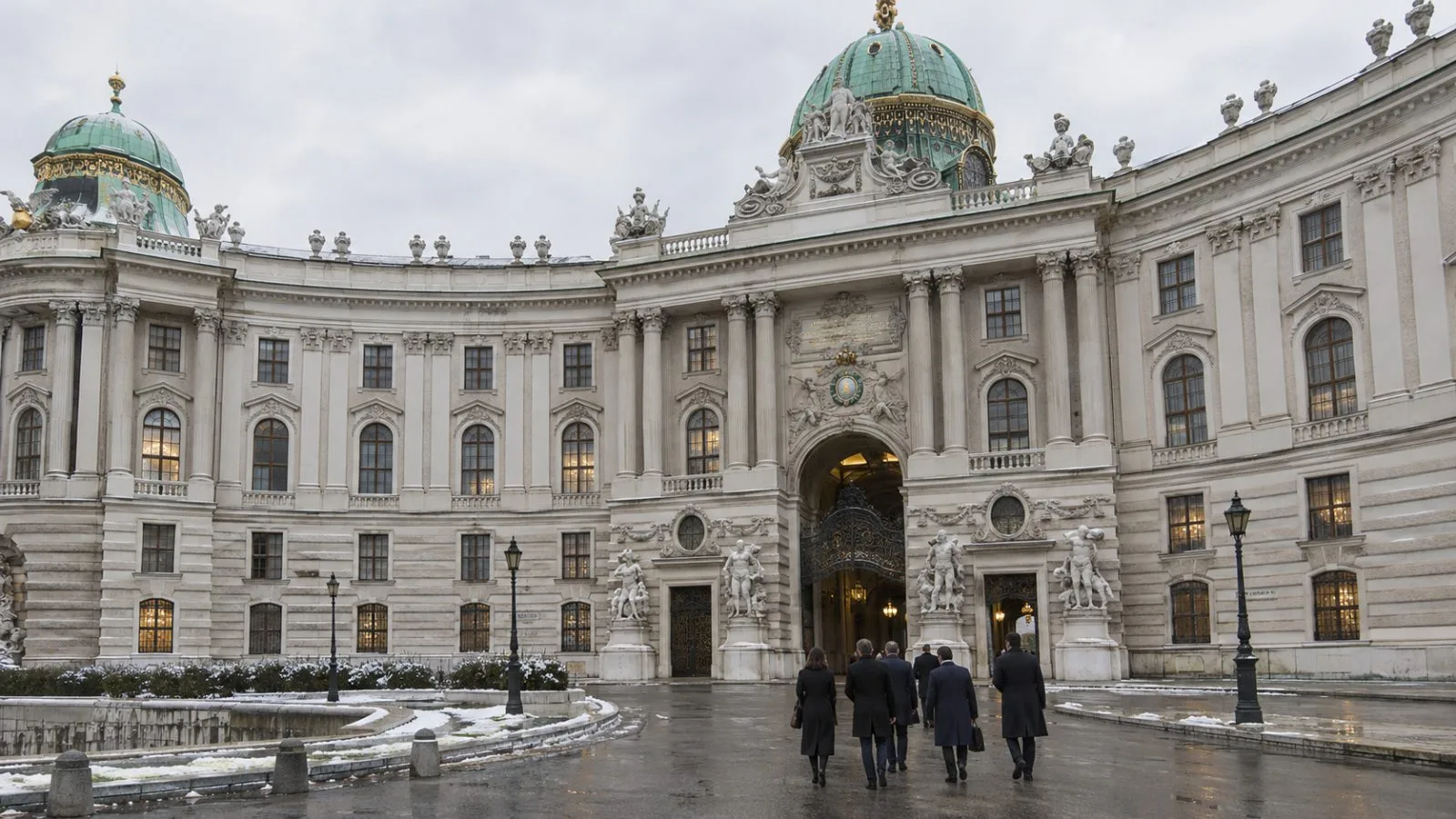
The United Kingdom told the Organization for Security and Co-operation in Europe (OSCE) on Nov. 26 that Russia violated Europe’s postwar security commitments, while saying the broader framework remains valid.
UK Ambassador Neil Holland spoke in Vienna and rejected Moscow’s use of earlier invasions to justify its war against Ukraine. He said Russia had accepted principles it now disregards.
“The architecture has not failed. Russia has repeatedly chosen to violate it,” Holland said.
The broader system includes the 1945 U.N. Charter, which prohibits threatening or using force against another state’s territorial integrity or political independence. The 1975 Helsinki Final Act set out commitments involving sovereign equality, territorial integrity, inviolable borders, non-intervention and peaceful dispute settlement.
The 1990 Charter of Paris later helped institutionalize the Conference on Security and Co-operation in Europe, or CSCE, the OSCE’s predecessor. The 1994 Budapest Memorandum reaffirmed Moscow’s pledges to respect Ukraine’s sovereignty, independence and existing borders and to refrain from threatening or using force against Ukraine.
The 1999 Istanbul Document recognized equal security rights for participating states and their freedom to choose or change security arrangements. It also recorded an expectation that Russian troops would make an early, orderly and complete withdrawal from Moldova.
The Vienna Document sets out annual exchanges of military information, advance notice of major activities, inspections and consultations intended to reduce risk. Holland said Russia refused to explain its military buildup before the 2022 invasion and later stopped providing the annual information called for under the document.
The 1990 Treaty on Conventional Armed Forces in Europe established limits on major conventional weapons, information exchanges and verification procedures. The Soviet Union was listed among its signatories; Russia later became a party and withdrew effective Nov. 7, 2023.
The Open Skies system permitted participating states to conduct unarmed aerial observation missions. A U.S. State Department compliance report cited Russia’s 500-kilometer flight restriction over Kaliningrad and its refusal to permit flights within 10 kilometers of its border with Georgia’s Abkhazia and South Ossetia regions. Russia notified its withdrawal from the treaty in 2021.
The OSCE describes its decisions and declarations as political rather than legally binding, although the wider framework also includes treaties and the U.N. Charter. The European Union said Nov. 25 that the principles underpinning Europe’s security architecture remained indispensable and that diplomatic efforts should follow the U.N. Charter and international law.