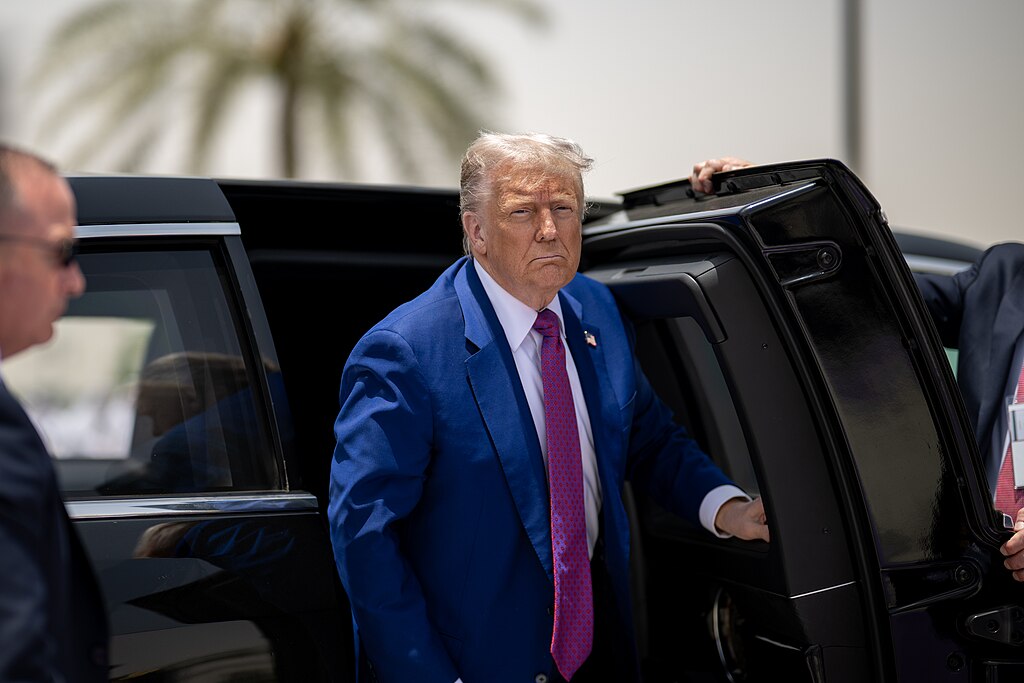
The United States launched a dramatic military operation against Venezuela, capturing its long-serving president Nicolas Maduro and triggering widespread international controversy. U.S. President Donald Trump announced that American forces detained Maduro during an overnight raid that reportedly disrupted electricity in parts of Caracas. According to Trump, the operation targeted a safe house used by the Venezuelan leader, marking the most direct U.S. intervention in Latin America in decades.
Trump said Maduro and his wife, Cilia Flores, were flown to the United States, with multiple media outlets reporting their arrival at Stewart International Airport in upstate New York. Video footage showed U.S. personnel boarding the aircraft, while major television networks identified Maduro among those disembarking. Maduro is expected to appear in Manhattan federal court on charges including narco-terrorism conspiracy, while Flores faces allegations related to cocaine importation. Both are reportedly being held at the Metropolitan Detention Center in Brooklyn.
At a press conference in Florida, Trump declared that the United States would temporarily oversee Venezuela to ensure what he described as a “safe and proper transition.” However, he offered few details on how Washington would govern the country, acknowledging that U.S. forces currently have no control on the ground. Venezuelan officials, led by Vice President Delcy Rodriguez, condemned the action as a “kidnapping” and demanded Maduro’s immediate release, insisting his government remains in power.
Inside Venezuela, the situation remained tense but largely calm, with soldiers patrolling key areas and small pro-Maduro demonstrations forming. Some citizens expressed relief, while others feared a power vacuum. Trump ruled out cooperation with opposition leader Maria Corina Machado, a move that angered her supporters and added to uncertainty about Venezuela’s political future.
International reactions were sharply divided. Argentina praised what it called Venezuela’s new “freedom,” while Mexico and Brazil condemned the intervention. Critics compared the move to past U.S. regime-change operations and warned it undermines American credibility globally. Trump, however, defended the action, saying the United States would be reimbursed through Venezuela’s oil resources.
The United Nations Security Council is set to meet as protests erupted outside the White House, highlighting the far-reaching consequences of one of the most controversial U.S. foreign policy actions in recent history.