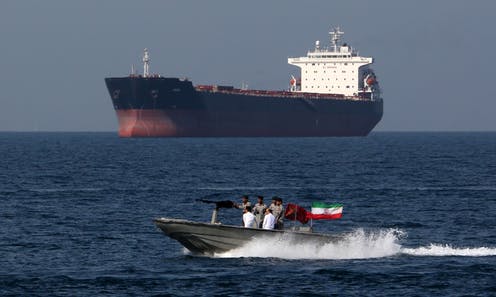
The United States military has intercepted multiple Iranian-flagged oil tankers in Asian waters, escalating tensions in an already volatile geopolitical environment. According to shipping and maritime security sources, at least three vessels were redirected away from key locations near India, Malaysia, and Sri Lanka as part of Washington’s intensified maritime enforcement efforts against Iran.
This development comes as the U.S. continues to impose a naval blockade targeting Iran’s oil trade, a move that has significantly disrupted global energy markets. In response, Iran has taken aggressive countermeasures, including firing on commercial ships navigating the Strait of Hormuz, one of the world’s most critical oil transit chokepoints. The ongoing conflict, now nearly two months since the U.S. and Israel launched military operations against Iran, has shown little progress toward renewed peace talks despite a fragile ceasefire.
The closure of the Strait of Hormuz has severely impacted global oil and gas supply chains, affecting roughly 20% of the world’s energy flow and contributing to a growing energy crisis. Recent incidents include the seizure of an Iranian cargo ship and oil tanker by U.S. forces, while Iran claims it has captured two container ships attempting to exit the Gulf.
Among the intercepted vessels were the supertankers Dorena and Deep Sea, along with the smaller tanker Sevin. The Dorena, reportedly carrying up to 2 million barrels of crude oil, was last tracked near southern India and is now under U.S. Navy escort. The Sevin, partially loaded, and the Deep Sea, also carrying crude, were last seen near Malaysia. Another tanker, the Derya, may have been intercepted after failing to offload Iranian oil in India before sanctions waivers expired.
U.S. Central Command stated that since the blockade began, 29 vessels have been instructed to turn back or return to port. Military officials are reportedly targeting Iranian ships in open waters to reduce the risk of naval mine threats in the Strait of Hormuz, further highlighting the strategic importance of this escalating maritime standoff.