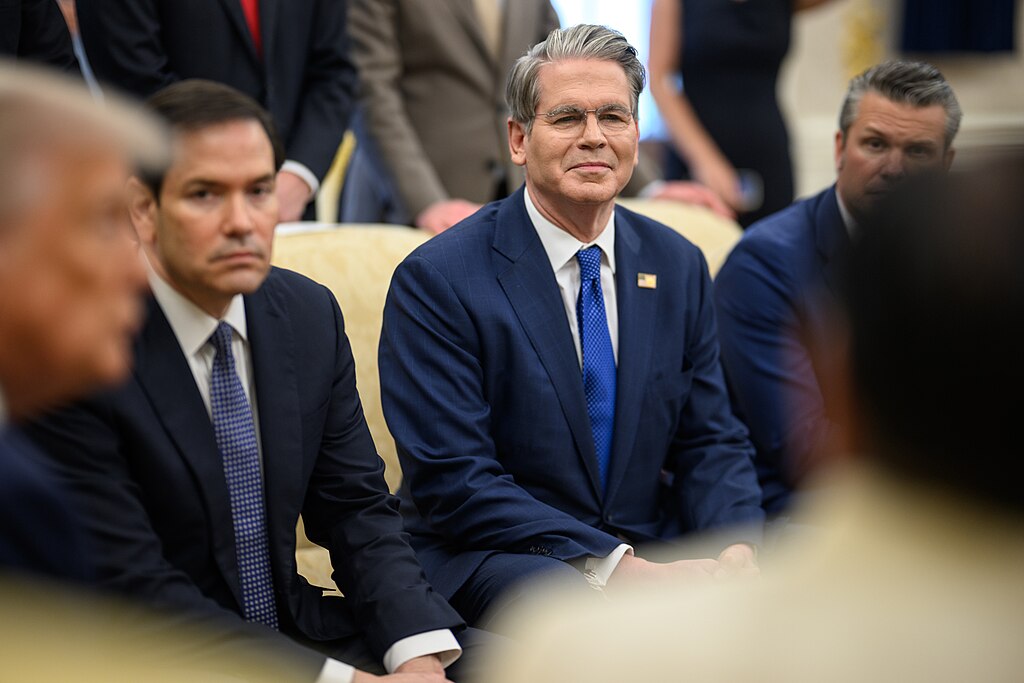
U.S. Treasury Secretary Scott Bessent announced a sweeping new sanctions campaign against Iran on Monday, warning that countries continuing to conduct business with Tehran could face penalties from Washington.
Speaking at a press conference in Washington, Bessent described the strategy as an “economic onslaught” targeting Iran’s financial connections worldwide. He said the goal was to economically isolate the Iranian government as the Trump administration intensifies pressure over Tehran’s nuclear program.
President Donald Trump is personally contacting foreign leaders and asking them to end economic cooperation with Iran, according to Bessent. Countries will receive a specific period to comply before the U.S. Treasury considers unilateral action.
The campaign is targeting five key areas of Iran’s economy, including digital assets, technology, gold, aviation and shipping. Bessent did not disclose when additional measures could be imposed or detail the specific penalties under consideration.
The Treasury Department also sanctioned 60 additional entities accused of links to Iran. The latest list did not include major Chinese companies or financial institutions, despite concerns over China's role in facilitating Iranian oil trade.
Asked whether Washington could target major Chinese banks, Bessent said “no one is above the reach of U.S. sanctions,” while avoiding naming China directly and emphasizing the importance of private diplomatic engagement.
Iran quickly threatened retaliation. The Islamic Revolutionary Guard Corps warned that U.S. interests and critical energy routes could face serious consequences if Iranian infrastructure comes under threat.
Iranian Economy Minister Ali Madanizadeh said Tehran was “fully prepared” to withstand the sanctions and could respond with measures of its own. He also claimed that China and Russia, two important Iranian trading partners, had not accepted Washington’s latest restrictions.
The sanctions mark an expansion of U.S. pressure on Iran following months of military confrontation. Trump reiterated this week that Iran must not be allowed to develop a nuclear weapon.
Iranian officials have previously threatened to further restrict oil shipments through the Strait of Hormuz in response to U.S. pressure. Traffic through the strategically important energy corridor remains well below prewar levels.