
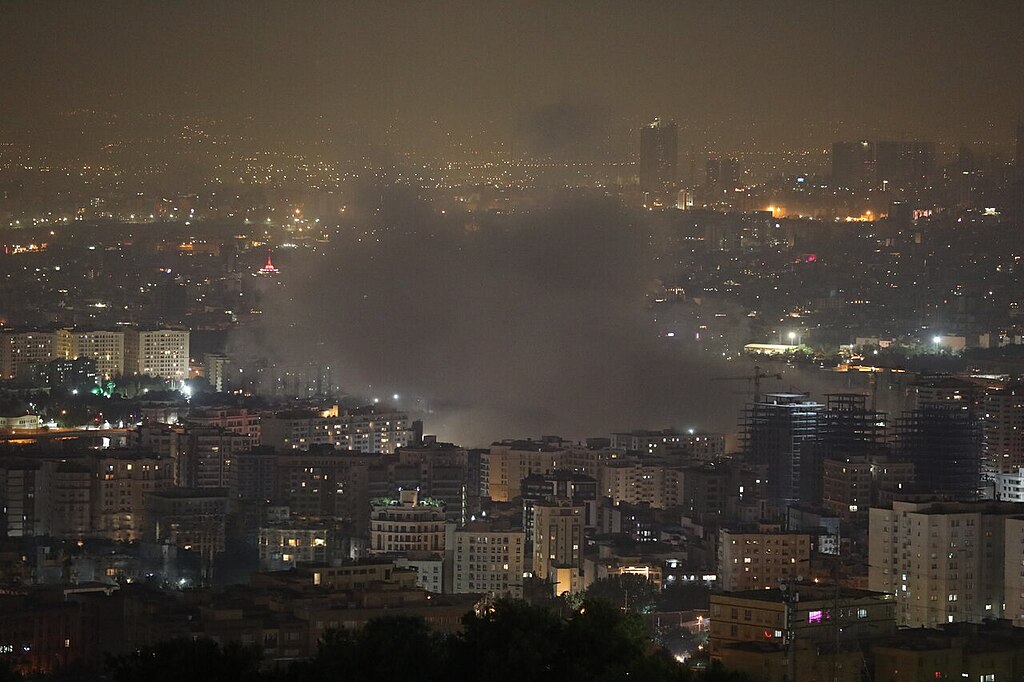
The U.S. military said it completed a new wave of strikes on Iran late Thursday, marking the sixth consecutive night of operations ordered by President Donald Trump as tensions between Washington and Tehran continue to intensify.
According to U.S. Central Command (CENTCOM), American forces used fighter jets, drones, and warships to launch precision strikes against dozens of Iranian military targets. The attacks reportedly focused on coastal surveillance systems, air defense sites, military logistics infrastructure, and maritime assets aimed at weakening Iran’s military capabilities.
The latest strikes included attacks on Qeshm Island and areas near Bandar Abbas, home to Iran’s largest port and key naval and Islamic Revolutionary Guard Corps facilities located along the strategically important Strait of Hormuz.
Iranian media also reported U.S. strikes targeting three bridges, a train station in the coastal city of Bandar Khamir, and Iranshahr Airport in southeastern Iran. Reuters said it could not independently verify those reports.
In response, Tehran launched missiles and drones at U.S. military bases in neighboring countries, including an expanded air base in Jordan. Iranian officials claimed the facility had been used in a U.S. strike that allegedly hit an Iranian children’s cancer hospital on Wednesday night.
President Trump has repeatedly warned that the United States could expand its campaign by targeting Iran’s energy infrastructure and has also threatened attacks on bridges in the coming days.
Those remarks have drawn criticism from international legal experts, who note that the 1949 Geneva Conventions prohibit attacks on infrastructure considered essential for civilian populations. Earlier this year, legal scholars in the United States argued that strikes on such facilities could constitute war crimes under international humanitarian law.
Trump also faced widespread international condemnation in April after threatening to destroy Iran’s entire civilization before a temporary ceasefire was reached.
The conflict began on February 28 when U.S. and Israeli forces launched attacks on Iran, prompting retaliatory strikes by Tehran against Israel and Gulf states hosting U.S. military bases. The fighting has killed thousands, displaced millions, and fueled higher oil prices while increasing volatility across global financial markets.


