


 Zcash Plans Quantum-Resistant Security Upgrade for January
  OpenAI Revenue Hits $50 Billion, Below Earlier $70 Billion Estimate
  Yandex Data Center Hit by Drone Strike as Russia-Ukraine Cyber Infrastructure Attacks Escalate
  Apple Supplier Luxshare Faces US Patent Probe, Sees Limited Impact
  Amazon Cuts More Jobs as AI Investment Expands
  US Suspends Microsoft, Adobe From Green Card Program
  Epic Games Delays Disney Shooter, Shifts to AI-First Development
  Apple Supplier Luxshare Sees Limited Impact From US Patent Probe
  Moonshot AI Executives Seek Settlement Ahead of Hong Kong IPO
  Amazon in Talks to Acquire AI Startup Decart for $7 Billion
  Samsung Q3 Profit Hits Record High on AI Memory Demand
  TSMC Q3 Revenue Beats Estimates as AI Chip Demand Surges
  OpenAI Annualized Revenue Hits $50 Billion, Below Earlier Estimates
  Elon Musk Accuses Indian Telecom Giants of Blocking Starlink Launch
  Tencent Shares Fall as $5 Billion AI Bond Sale Weighed
  Elon Musk Eyes Semiconductor Manufacturing Expansion With $15 Billion Terrafab Project


 Add as a preferred source on Google
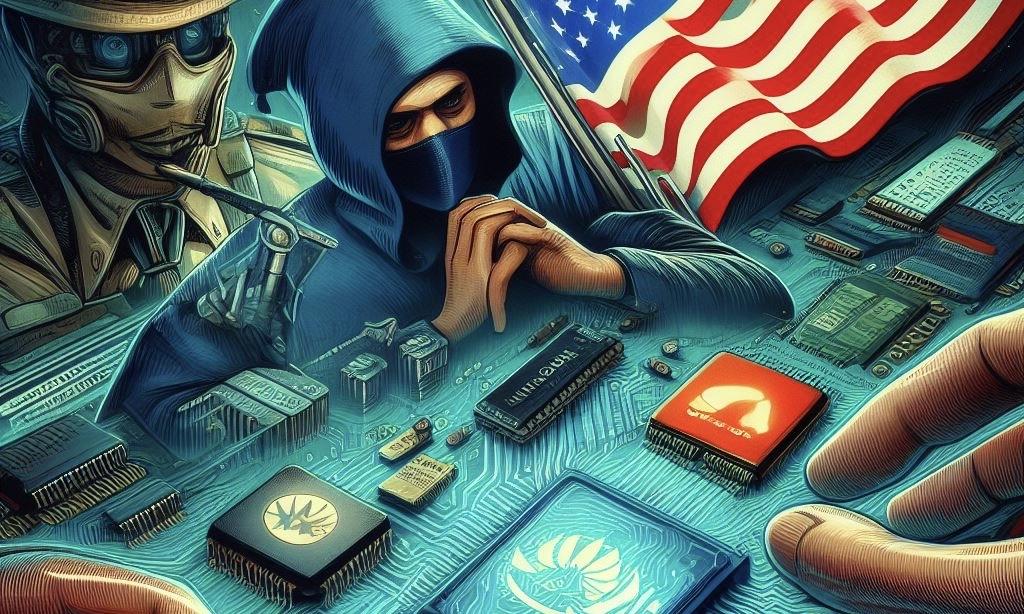
In a significant escalation of trade restrictions, the United States has revoked licenses from leading semiconductor manufacturers Intel Corp. and Qualcomm Inc., obstructing Huawei Technologies Co.'s access to vital chip supplies, sources familiar with the matter revealed.
Impact on Chip Sales to Huawei
The US has canceled Huawei Technologies Co.'s licenses to buy semiconductors from Qualcomm Inc. and Intel Corp., increasing export restrictions on the Chinese telecom equipment maker, a new report claimed.
According to people who spoke on the condition of anonymity, the withdrawal of licenses has impacted US sales of semiconductors used in Huawei phones and laptops. Michael McCaul, chairman of the House Foreign Affairs Committee, confirmed the administration's decision in an interview Tuesday, as per Bloomberg (via Yahoo Finance). He believes the action is critical to keeping China from creating advanced AI.
“It’s blocking any chips sold to Huawei. Those are two companies we’ve always worried about being a little too close to China,” McCaul, a Texas Republican who was briefed about the license decisions for Intel and Qualcomm, said.
While the decision may not affect many chips, it demonstrates the US government's desire to limit China's access to a wide range of semiconductor technologies. Officials are also mulling sanctions against six Chinese corporations suspected of supplying chips to Huawei, which has been on the US trade restrictions list since 2019.
The US Commerce Department confirmed the withdrawal of "certain licenses" for Huawei's exports but declined to provide specifics. Following signs of progress in the country's semiconductor development, the Democratic administration has faced increased pressure to do more to deter Huawei and other Chinese tech businesses.
“We continuously assess how our controls can best protect our national security and foreign policy interests,” the agency said in a statement Tuesday.
Qualcomm shares fell 0.9% to $180.15 on Tuesday, following a Financial Times report earlier in the day on the license revocation. Intel's stock changed slightly, trading at $30.68.
Qualcomm recently stated that its partnership with Huawei is already constrained and will soon end. Qualcomm has been permitted to supply the Chinese company with processors that support earlier 4G network connections, but it is forbidden to sell ones that provide more advanced 5G access.
“This is small. Qualcomm has already said that the Huawei business is going away anyway,” Stacy Rasgon, an analyst at Sanford C. Bernstein, stated.
According to Bloomberg's supply chain research, Huawei is not one of Qualcomm's top ten customers. It also does not appear on Intel's list of top clients.
Rasgon points out that Huawei only ships roughly five million desktop and notebook computers each year, accounting for 2% of the market, so even if Intel supplied all of the chips, the impact on Intel's profitability would be small.
Impact on Chip Sales to Huawei
The US is pressuring allies such as Japan, the Netherlands, South Korea, and Germany to tighten restrictions on selling and maintaining chip fabrication gear in China, with Huawei the primary target of that effort.
McCaul and other Republican politicians, including House Republican Conference Chairwoman Elise Stefanik and Senator Marco Rubio, have called Commerce to withdraw licenses for companies that sell chips to Huawei. Their complaints intensified after the business launched a smartphone powered by an advanced, made-in-China CPU while Commerce Secretary Gina Raimondo was in China in August.
The Biden administration has launched an investigation into the "purported" 7-nanometer device, which a Bloomberg breakdown revealed was manufactured by Chinese chipmaker Semiconductor Manufacturing International Corp. A Commerce official claimed earlier this year that SMIC may have broken US law by supplying that semiconductor to Huawei.
Photo: Microsoft Bing







