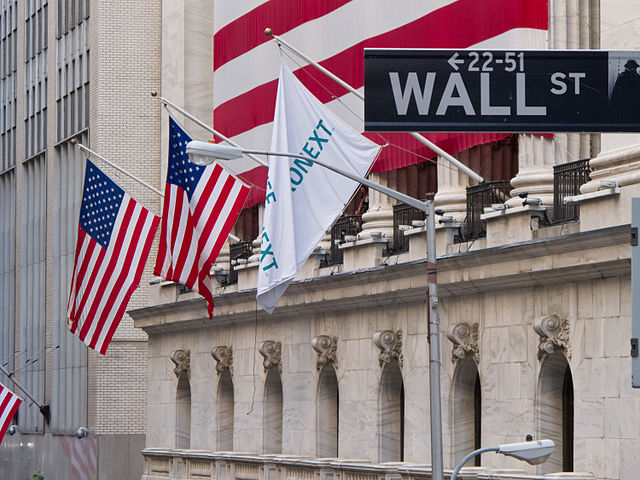
U.S. stock index futures traded little changed on Monday evening after Wall Street posted a strong rebound, led by technology stocks recovering from last week's sharp selloff. Investors are now turning their attention to the upcoming U.S. nonfarm payrolls report, while continuing to monitor geopolitical developments involving the United States and Iran.
As of 7:30 p.m. ET, S&P 500 Futures slipped 0.05% to 7,496.50, Nasdaq 100 Futures edged down 0.04% to 30,040.0, and Dow Jones Futures fell 0.08% to 52,531.0. Despite the modest pullback in futures trading, sentiment remained supported by Monday’s gains across major Wall Street indexes.
Markets also found reassurance after the U.S. Supreme Court blocked President Donald Trump’s attempt to remove a Federal Reserve policymaker, easing concerns over the central bank’s independence.
Technology shares drove Monday’s rally as investors returned to artificial intelligence and semiconductor stocks following last week's profit-taking, which had been fueled by concerns over elevated valuations and rising interest rates. The Nasdaq Composite surged 2%, while the S&P 500 gained 1.2%. The Dow Jones Industrial Average closed at a record high, supported by broad buying and a strong debut session for Alphabet after joining the blue-chip index. Alphabet shares climbed 4.8%, contributing to the Dow’s advance.
Investor focus has now shifted to Thursday’s U.S. nonfarm payrolls report, which is expected to provide fresh insight into the strength of the labor market and the Federal Reserve’s interest rate outlook. The employment data will be released ahead of the Independence Day holiday, making it one of the week’s most closely watched economic indicators.
Geopolitical risks also remained in focus despite markets largely looking beyond renewed U.S.-Iran tensions. President Donald Trump said Iran had sought additional talks in Qatar this week following recent military exchanges. However, Iranian state media denied that any negotiations were scheduled, creating uncertainty over the next steps in diplomatic efforts.
The United States and Iran exchanged strikes over the weekend before agreeing to halt hostilities by Monday. Oil prices posted modest gains following the developments but remained near levels seen before the recent conflict.
Earlier in June, a memorandum of understanding between Washington and Tehran had boosted market confidence by raising expectations for improved oil shipments through the Strait of Hormuz. Nevertheless, tensions remain elevated as Iran continues to criticize Israeli military operations against Hezbollah in southern Lebanon, leaving investors cautious about potential disruptions that could affect global markets.