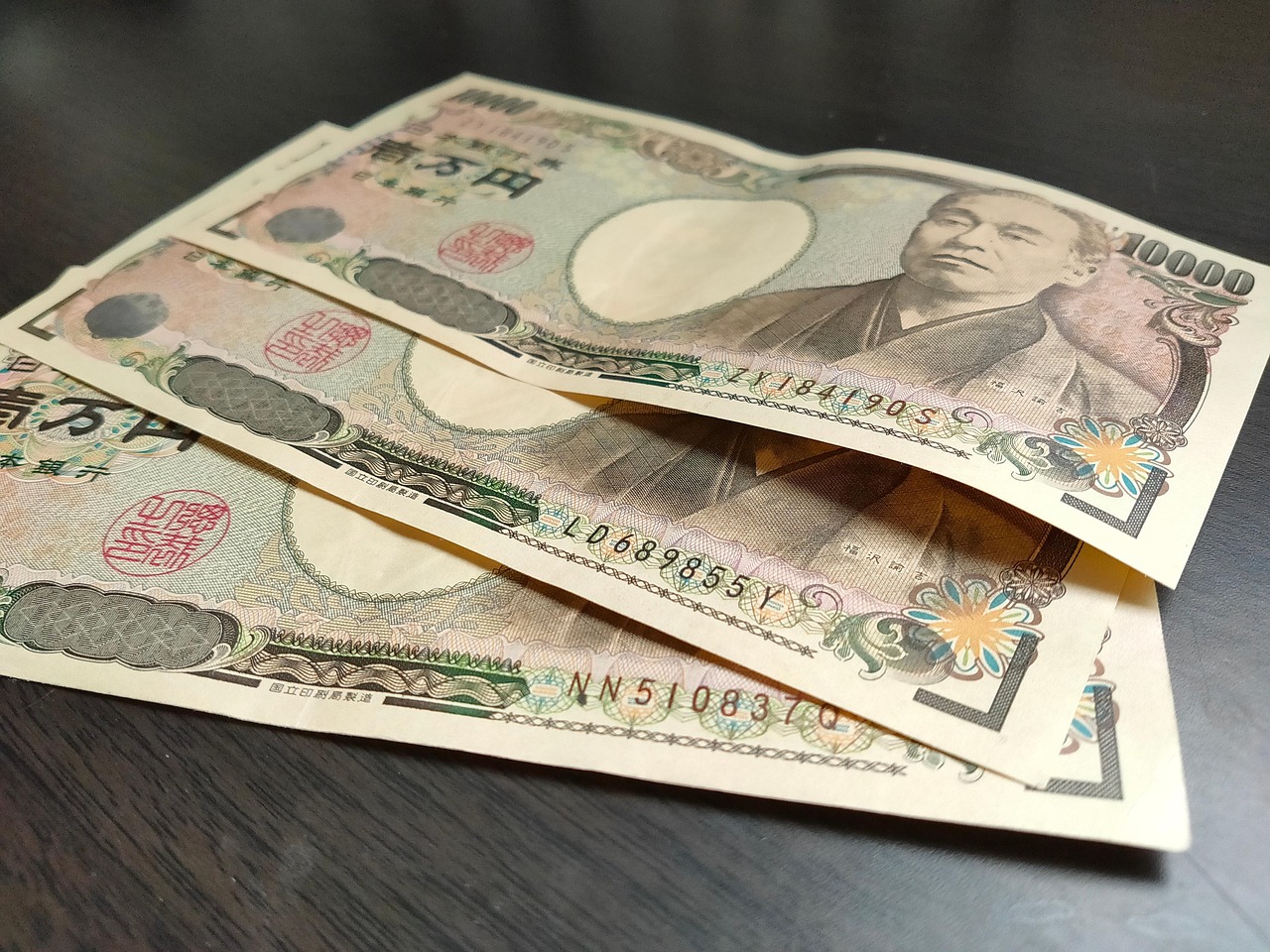
The Japanese yen remained under heavy pressure on Tuesday, falling to its weakest level against the U.S. dollar since 1986, fueling speculation that Japanese authorities could soon step into the foreign exchange market to support the currency. The USD/JPY exchange rate climbed to 162.27 in early trading, keeping investors focused on whether Japan’s Ministry of Finance (MOF) will launch another round of currency intervention.
The yen is on track to decline nearly 2% against the dollar during the second quarter, marking its fourth consecutive quarterly loss. The persistent weakness has largely been driven by the wide interest rate gap between Japan and the United States, as investors continue to favor higher-yielding U.S. assets.
Analysts believe intervention is becoming increasingly likely, although they caution that any action may only provide temporary relief. Carol Kong, a currency strategist at Commonwealth Bank of Australia, said it is no longer a question of whether Japanese authorities will intervene but when. However, she noted that any intervention is unlikely to reverse the broader uptrend in USD/JPY, with the bank forecasting the currency pair could reach 164 by early 2027.
Japan has already spent roughly 11.7 trillion yen (about $72.25 billion) on previous interventions in recent months while the Bank of Japan also raised interest rates. Despite those efforts, the yen has continued to weaken as global inflation concerns, intensified by geopolitical tensions surrounding the Iran conflict, reshaped expectations for interest rates worldwide.
Speculative traders have also increased bearish bets against the Japanese currency. The latest data from U.S. regulators showed net short positions on the yen reached approximately $11.3 billion, close to the highest level recorded in two years.
Although interventions in late April and early May briefly strengthened the yen, those gains quickly faded as markets increasingly priced in the possibility of additional interest rate hikes by the U.S. Federal Reserve later this year.
Attention is now firmly on Thursday’s U.S. nonfarm payrolls report, one of the most closely watched economic indicators. After three consecutive months of stronger-than-expected job growth, investors believe the report could further influence the Fed’s policy outlook. Markets currently price in about a 63% probability of a U.S. rate hike by September.
Matt Simpson, senior market analyst at StoneX, said Japan faces a difficult challenge because it is attempting to defend its currency while the Federal Reserve maintains a hawkish stance. He added that Tokyo could have a better chance of successfully supporting the yen if weaker-than-expected U.S. economic data caused the dollar to weaken. Until then, intervention alone is unlikely to produce lasting results.
Meanwhile, the U.S. dollar index, which measures the greenback against six major currencies, traded near 101.6 after slipping 0.26% in the previous session. Despite the pullback, the index remains on pace for a 1.3% quarterly gain. The euro traded around $1.14165, while the British pound stood near $1.3251. The Australian dollar eased to $0.6876, and the New Zealand dollar slipped to $0.5647.
Economists surveyed by Reuters expect the June U.S. jobs report to show employers added approximately 110,000 jobs, while the unemployment rate is forecast to remain steady at 4.3%.
Investors also continued monitoring U.S. political and geopolitical developments. The U.S. Supreme Court recently declined to allow President Donald Trump to remove Federal Reserve Governor Lisa Cook, a decision viewed by markets as reinforcing the central bank’s independence. At the same time, uncertainty surrounding negotiations between the United States and Iran persisted after Tehran said no formal meeting had been scheduled despite ongoing diplomatic efforts and renewed missile exchanges that have kept global market sentiment cautious.