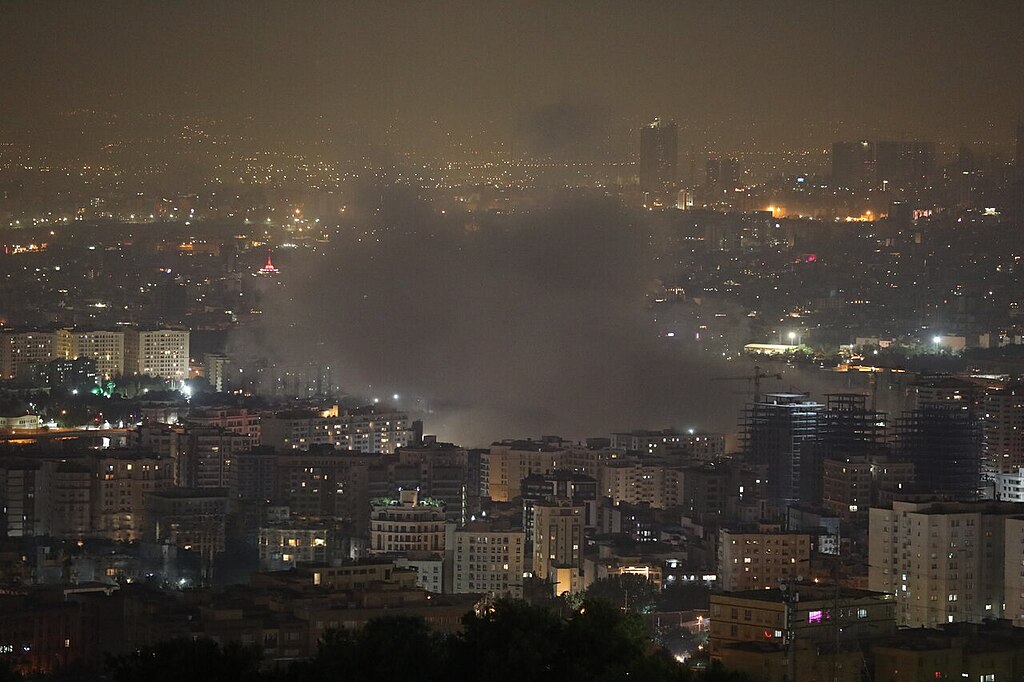
The United States launched a major wave of airstrikes against Iran on Tuesday, triggering Iranian missile and drone attacks across the Middle East and marking the sharpest escalation in the conflict in weeks.
The U.S. strikes followed renewed fighting over the weekend and attacks on two tankers leaving the Strait of Hormuz on Monday. Growing concerns over oil supplies pushed global crude prices more than $4 per barrel higher on Tuesday, with prices settling at a five-week high.
U.S. Central Command said American forces targeted Iran’s Islamic Revolutionary Guard Corps (IRGC), hitting air defense and radar systems, maritime facilities, mine-laying capabilities and communications infrastructure.
Iranian media reported strikes near Ahvaz and at Jiroft airport, while explosions were reported around Chabahar, Bandar Abbas, Asaluyeh and Qeshm Island.
Iranian authorities also reported civilian casualties. The Iranian Red Crescent said five people were killed and 50 wounded at a wedding near Sirik, close to the Strait of Hormuz. Mehr reported that a 4-year-old child was among those killed, while IRNA cited a provincial official who put the number of wounded at 68.
Tehran retaliated by targeting U.S. assets and regional allies. The IRGC claimed it launched ballistic missiles at a base in Jordan and carried out missile and drone attacks against U.S. facilities in Erbil, Iraq. Iranian media also reported a large-scale drone attack on a U.S. base in Bahrain.
Jordan said 13 ballistic missiles entered its airspace, with 10 intercepted and three landing in remote areas. Bahrain also reported intercepting Iranian drones. Two U.S. officials said initial assessments showed no American casualties from the attack in Jordan.
President Donald Trump warned Tehran against further retaliation, threatening strikes at a “much harder and higher level.”
Iran, meanwhile, maintained its threat to restrict energy exports through the Strait of Hormuz, a crucial route that handled roughly one-fifth of global oil supplies before the war.
The renewed U.S.-Iran fighting threatens to deepen disruptions to Gulf energy shipments and keep upward pressure on global oil prices as prospects for another ceasefire remain uncertain.