


 Greenland Lawmakers Back Trump Security Deal Despite Economic Concerns
  Djibouti Migrant Boat Capsizes, Killing 139 and Leaving 84 Missing
  Mahmoud Abbas Postpones Palestinian Elections to September 2027
  Trump Announces Russia-Ukraine Energy Ceasefire as Zelenskiy Awaits Details
  US Condemns China Sanctions on Taiwan Allies Belize and Paraguay
  Elon Musk Donates $366 Million to 2026 US Midterms
  MI5 Warns of Rising Iran, Russia Threats and AI Bioweapon Risks
  Zelenskiy Says Ukraine Received No Warning Before Russian Missile Attack
  Trump Warns Houthis Over Attacks, Considers Erdogan Intervention
  US Supreme Court Denies Release of Anti-ICE Activist Kyle Wagner
  NATO Commander Warns Russia of Devastating Response to Attack
  India Voter List Protests Reach Supreme Court as Opposition Demands Election Chief's Resignation
  Panama Declares Emergency After 7.7 Earthquake Triggers 200 Aftershocks
  Flavio Bolsonaro Backs Brazil’s 40-Hour Workweek Reform Ahead of Runoff
  European Auto Stocks Rise as EU-China Trade Deal Targets Hybrid Imports
  North Korea Fires Ballistic Missiles as Tensions With South Korea Escalate
  Trump Sanctions International Criminal Court, Sparking EU Backlash


 Add as a preferred source on Google
The US has echoed the response Taiwan has given to China over its comments on sovereignty over the Taiwan Strait. Washington pushed back on China’s claims over the Taiwan Strait, saying the body of water was an international waterway.
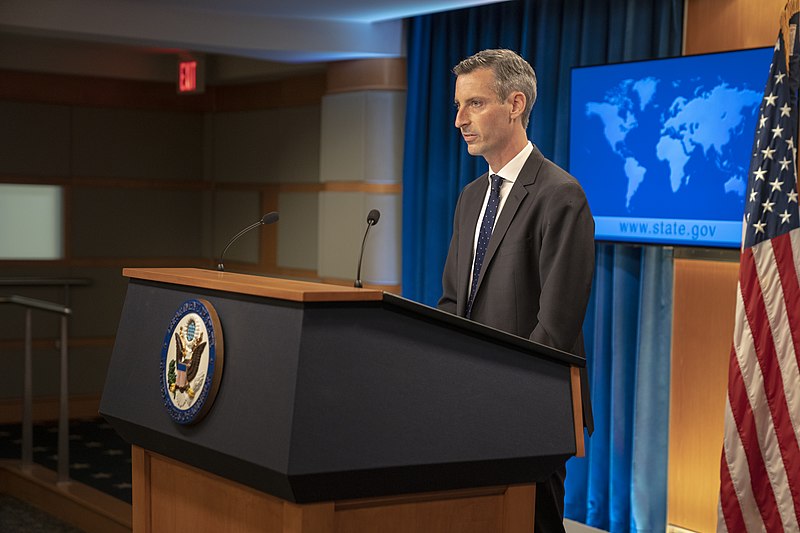
The US has also pushed back on China’s sovereignty claims over the Taiwan Strait. Beijing has often been angered by the passage of foreign ships into the Strait. In response to Reuters, US State Department spokesperson Ned Price reiterated that the Taiwan Strait is an international waterway and is therefore subject to international law.
“The Taiwan Strait is an international waterway, meaning that the Taiwan Strait is an area where high seas freedoms, including freedom of navigation and overflight, are guaranteed under international law,” said Price, adding that there is an interest in “abiding peace and stability” in the region, that the US considers being important for “security and prosperity in the broader Indo-Pacific region.”
Price also stressed Washington’s concerns about Beijing’s “aggressive rhetoric and coercive activity regarding Taiwan,” and the US will continue to transit in areas where international law permits, including the Taiwan Strait.
Taiwan’s foreign ministry spokeswoman Joanne Ou also called China’s claims of sovereignty a “fallacy.” Taiwan’s Premier Su Tseng-Chang also said the Taiwan Strait was not China’s “inland sea.”
“China’s ambition to swallow up Taiwan has never stopped or been concealed; the Taiwan Strait is a maritime area for free international navigation,” Su told reporters.
Taiwan has repeatedly maintained that China has no authority to speak for the island or claim sovereignty over the democratically-governed nation and that the Taiwanese people are the only ones who can decide their own future.
China has not ruled out using force to attempt to reunify the island, which it claims as part of its territory. Beijing has engaged in a pressure campaign to get the island nation to accept China’s sovereignty, but Taiwan has resisted.
Taiwan’s lead negotiator on trade told Reuters this week that a possible invasion of Taiwan by China would affect global trade much more than the war in Ukraine, as it would result in a shortage of semiconductor chips.
While Taiwan has not reported signs of a possible invasion by China, Taipei has raised its alert levels since the war in Ukraine started.







