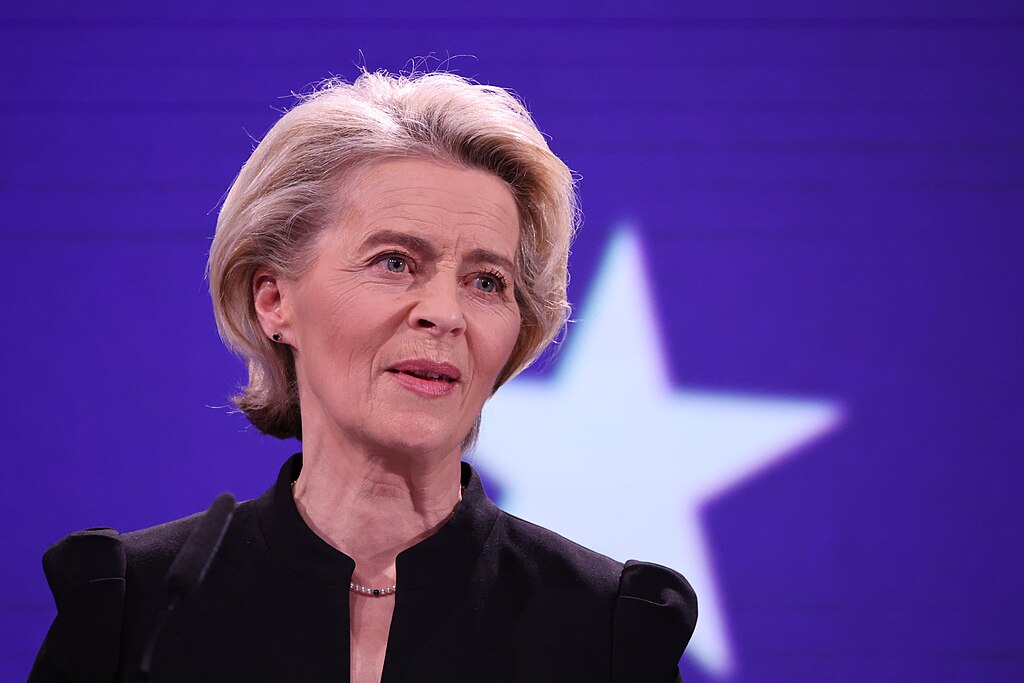
The European Union is prepared to take decisive countermeasures if the United States imposes new trade tariffs, European Commission President Ursula von der Leyen warned on Tuesday. Speaking at the European Parliament in Strasbourg, von der Leyen emphasized the EU’s preference for dialogue but made clear it would defend its economic interests if necessary.
“Our objective is a negotiated solution. But of course, if need be, we will protect our interests, our people, and our companies,” she stated. The comments come amid growing trade tensions between the EU and the U.S., raising concerns about a potential escalation in tariff-related disputes.
Von der Leyen stressed that while retaliation is not the EU's desired course, the bloc has a robust plan in place should the situation demand it. “We do not necessarily want to retaliate. But if it is necessary, we have a strong plan to retaliate and we will use it,” she added.
The warning underscores the EU's firm stance on safeguarding its industries and maintaining fair trade relations. As global economic uncertainty increases, trade policy remains a key point of contention between major economies.
The statement was made just days after von der Leyen met with European leaders and Ukrainian President Volodymyr Zelenskiy in Paris to discuss regional security. While the focus of that meeting was peace in Ukraine, von der Leyen's remarks in Strasbourg signal the EU's readiness to respond firmly to external economic pressures.
Trade analysts view the EU’s message as a strategic move to encourage diplomatic resolution while keeping retaliatory tools on the table. As the U.S. considers its next trade actions, the EU is making it clear that it won’t stand by passively.