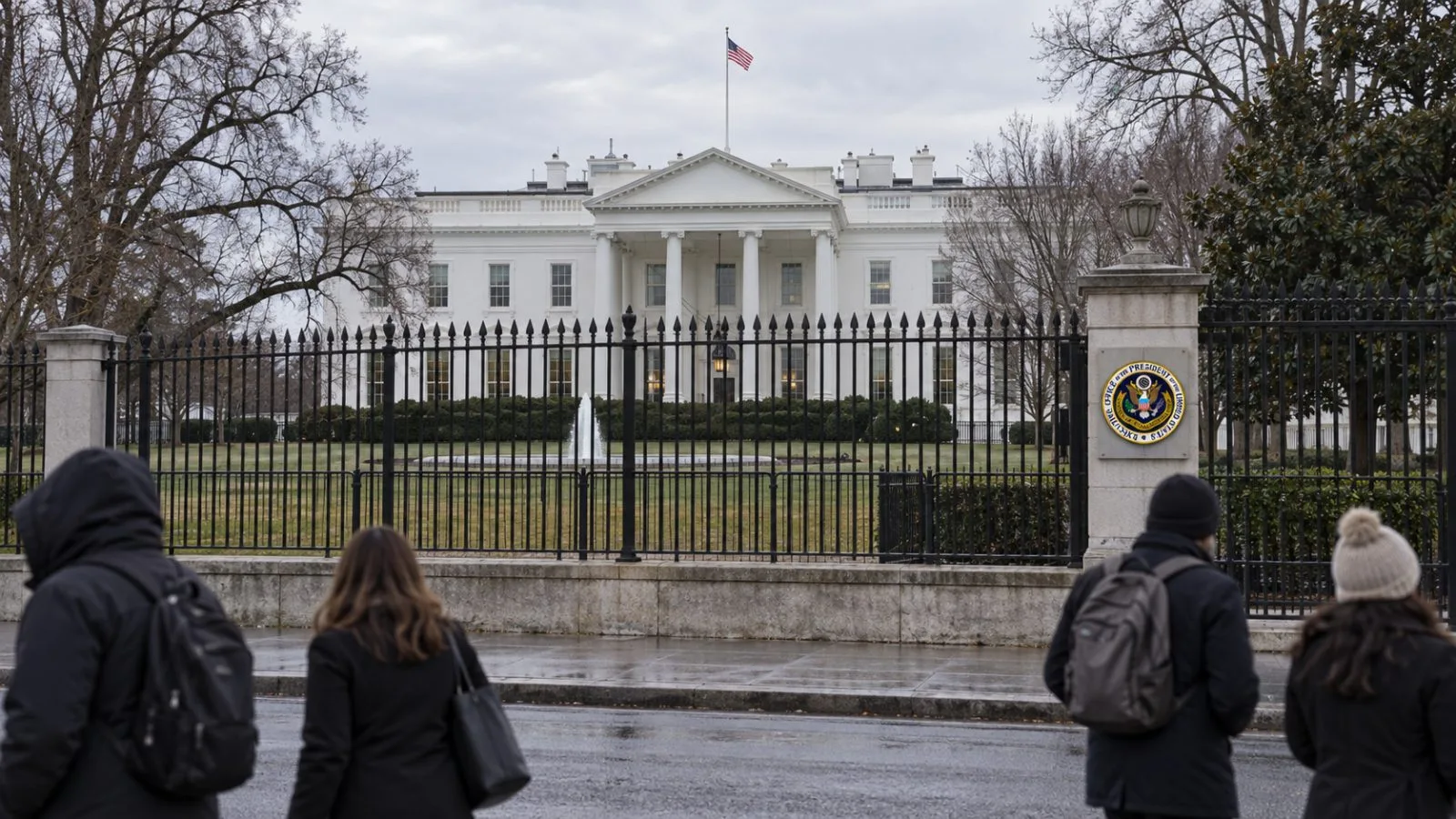
A potential second term as president for Donald Trump is likely to result in an America-first, America-alone foreign policy.
The ramifications for the rest of the world could be huge, potentially endangering international security around the globe. So it’s no wonder that the result of the November vote seems of more interest than normal to non-Americans.
Trump is neck and neck with President Joe Biden, each receiving 43% in YouGov‘s New Year’s poll showing voters’ plans for the upcoming presidential election.
A second term for the likely Republican nominee would have catastrophic effects on international diplomacy, according to Le Monde columnist, Sylvie Kauffman: “The G7 and NATO summits will once again become moments of unpredictable circus – or absolute emptiness.”
Continuing the focus of his first presidency, Trump has vowed to move thousands of US troops stationed abroad, FBI agents, and Drug Enforcement Administration officials, to tackle the immigration crisis on the Mexican border.
Not only will this affect the US military presence around the globe – and potentially undermine allies’ security – it will also have a devastating effect on Mexico, which will have to deal with an increasingly log-jammed border with the United States.
Trump intends to launch what he describes as the “largest deportation” effort in US history of illegal immigrants and end automatic citizenship for children born in the US to immigrants living in the country illegally.
In the same way that Trump re-negotiated the North American free trade agreement into the United States, Mexico, Canada agreement in 2019, it’s likely he would restructure Biden’s economic agreements such as the Indo-Pacific economic framework.
What will concern most diplomats in Europe is Trump’s declared intention to start “fundamentally re-evaluating NATO’s purpose and NATO’s mission”. It’s been suggested that Trump will withdraw from Nato, or at least revise its doctrine that an attack on one member is an attack on all.
Ending support for Ukraine
He has already stated that he would stop the “endless flow of American treasure to Ukraine” and demand European partners repay the US$75 billion (£58 billion) of aid that the US pledged to Ukraine.
What is concerning to many is whether Trump will try to uphold his promise to end the war in Ukraine in 24 hours. It’s almost certain that Trump will discontinue the US’s membership of the 50-nation Ukraine Defence Contact Group dedicated to supporting Ukraine’s defence from Russia, weakening Ukraine’s potential to defend its territory.
US support of Ukraine extends beyond just logistics. In August 2023, the US agreed to train Ukrainian pilots of the US-produced F-16 jets provided to Ukraine by its European allies. A continuation of this agreement will be vital to any Ukrainian hopes of withstanding Russian advances.
The war would not end simply because Trump wishes it, and any Russian gains from the conflict might encourage Russia to try to regain former territory in Moldova or any of the Baltic states.
And that the lack of opposition to any Russian territory grab is likely to encourage China to attempt to annex Taiwan. Trump, despite promising an aggressive trade relationship with China, has refused to confirm whether he would send troops to help defend the island should China invade.
While much of Trump’s first term in office reversed many of the Obama administration’s changes, a second term would be aimed at ensuring centralisation of power in the Trump presidency and rolling back the Biden administration’s initiatives.
One significant difference this time around is that Trump and his allies have been planning his term next since he left the White House. Trump would be surrounded exclusively with his loyalists, be free of any restrictive voices of reason and be more organised than his first term.
It is unlikely that Trump will continue Biden’s attempts to moderate Israeli operations in Gaza. Trump has been a long-time ally of Israel and became the first US president to formally, and controversially, recognise Jerusalem as the Israeli capital in 2017.
On the day of the attack on October 7 in Israel, Trump called on Hamas to be “crushed” by Israel for it staking of hostages, but stated that Israel needed “do a better job of public relations, frankly, because the other side is beating them at the public relations front”.
Pulling out of green policies
There is also determination to push back on Biden’s clean energy objectives. Trump’s energy policies are summed up by his campaign slogan of “drill baby drill!”, are aimed at ensuring the US has the lowest-cost energy and electricity prices.
It is possible that Trump will pull out of policies agreed at COP28 in the same way that he announced the US’s withdrawal from the Paris agreement in 2017. Although the US re-joined the agreement in 2021, Trump has pledged to withdraw again should he be elected.
In August 2023, Trump revealed a radical new economic agenda. It included a 10% tariff on imports into the US, and a Trump Reciprocal Tariff Act to put further tariffs on any nation that taxes US exports.
Although a great deal of concern focuses on Trump’s potential re-election, his main opponents for the Republican nomination, Nikki Haley and Ron DeSantis, have both outlined aggressive immigration policies and support for Israel, although only Haley has indicated that she would continue to support Ukraine.
While the election is still ten months away, the possibility of Trump being re-elected has already affected US foreign policy. Last month, President Biden decided against signing a trade deal with the UK until after both countries have had their next elections. While this is significant, it is nothing compared to the impact that Trump’s re-election will have on the rest of the globe should he return to the White House.