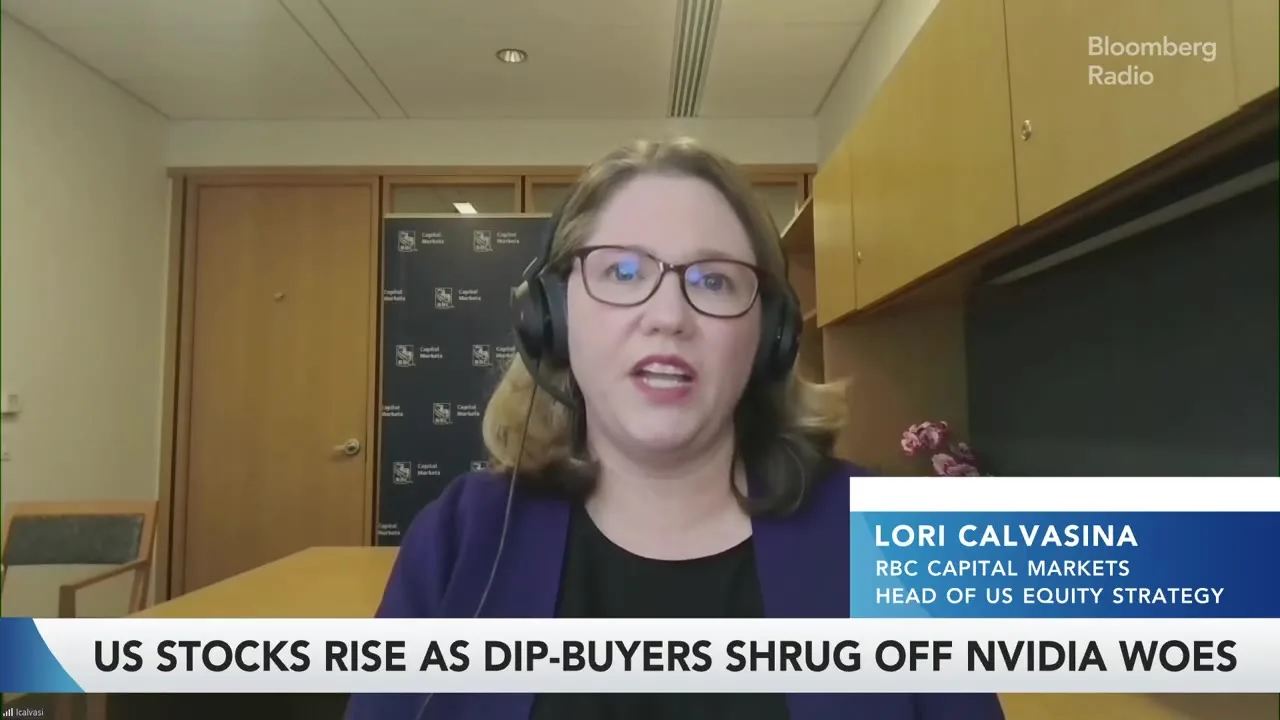
US stocks could rebound after an election-driven selloff pushed the S&P 500 down 5.9% on Thursday, bringing valuations toward levels that supported earlier recoveries, according to remarks broadcast by Bloomberg Television.
A slowdown in artificial intelligence spending that damages economic growth and corporate earnings is not priced into stocks. That outcome was not the central expectation, but the consequences of the elections remain uncertain.
The assessment came in “Stocks Climb as Buyers Step In Despite Nvidia Woes,” published Nov. 9. The election result challenged the argument that simply getting past the vote would allow stocks to rise.
Stocks had not fallen ahead of the elections, leaving room for investors to adjust prices afterward. The Democratic sweep was described as larger than expected, prompting investors to reconsider their portfolios.
The historical comparisons included market declines of about 10% when a new interest-rate hiking cycle begins. Each of the previous three midterm election years had brought declines of at least 7% close to the vote.
A previously discussed pullback of 5% to 10% would have put the S&P 500 between 7,000 and 7,400, measured from its latest record. Whether that adjustment would finish by Dec. 31 remained open.
The S&P 500 and Nasdaq 100 had reached valuations where stocks resisted further declines during the previous three major selloffs. Those comparisons included the lows reached during the tariff-related selloff in 2025.
A comparison of US and overseas price-to-earnings ratios, which measure share prices against corporate profits, had returned to post-pandemic lows. It had reached its five-year average in late September or early October.
Small-company valuations offered a less reassuring comparison. The Russell 2000's price-to-earnings ratio fell below 13 during the 2025 tariff selloff, to roughly 12.5, leaving room for a deeper adjustment if economic trouble develops.
The discussion then turned to whether investors should look beyond 2027 earnings and focus on 2028. There was too little certainty to judge those later earnings, while slower AI spending could potentially extend the investment cycle.
Companies still need to explain their plans, and governments need to establish what they want to do and what they can accomplish. The federal government's ability to change the spending cycle remained unresolved.
Early bank earnings discussions had pointed to indirect exposure to AI spending even where direct exposure was limited. A prolonged slowdown could therefore reach lenders, while higher interest rates could eventually constrain business investment.
“It is too early to say with any certainty exactly how all of this is going to play out,” the Bloomberg interview guest said.