Afghanistan continues to experience a humanitarian crisis to this day, with countries and organizations scrambling to come to its aid without passing through the Taliban. During the latest UN Security Council meeting, US officials took a swipe at China over human rights work in Afghanistan.
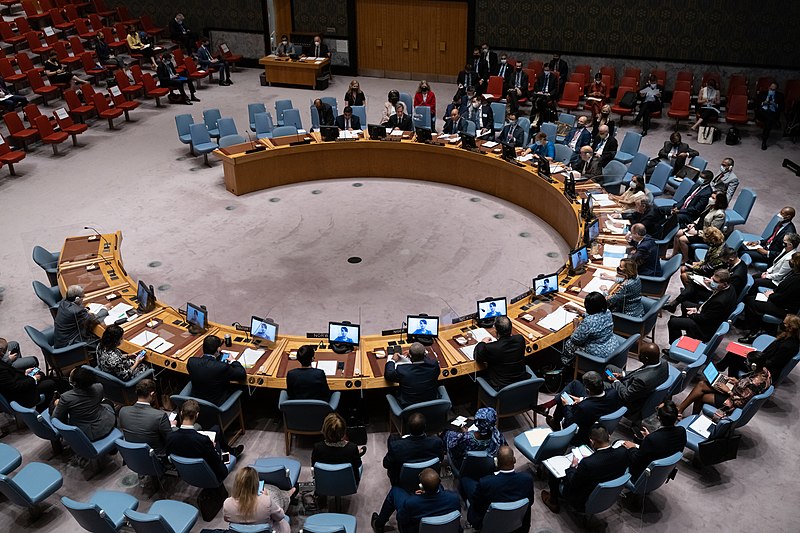
During the UN Security Council meeting Wednesday for Afghanistan, the US and Russia had opposing opinions on the organization’s role in Afghanistan. While Washington called for stronger support towards human rights work in Afghanistan, Moscow opposed, saying that the human rights aspect of the political missions does not need to be reinforced.
Anna Evstigneeva, Russia’s deputy ambassador to the UN, said the mission “should not become a kind of a supervisor to meet the interests of those who are not ready to help Afghans without preconditions.”
This comes as the UN political mission’s mandate is set to expire on March 17.
US deputy ambassador to the UN Jeffrey DeLaurentis said that Washington supports the political mission’s human rights monitoring functions and role in humanitarian coordination. DeLaurentis then took a swipe at China, saying that Beijing spends more time criticizing the actions of the US “than focusing on helping the Afghan people themselves.”
DeLaurentis noted that China is the second-largest contributor to the United Nations. “What China has done to help the people of Afghanistan or contribute to regional security does not match that standing,” said DeLaurentis.
Meanwhile, Iran’s representative to the UN Zahra Irshadi said that Afghanistan’s assets should not be politicized, calling to unfreeze the assets of the country, saying that the funds belong to the Afghan people. Irshadi cited the UN Secretary-General’s report about the situation in Afghanistan and the effects it has on global peace and security.
“If Afghanistan’s current situation is not addressed, it will lead to a collapse in the country’s political and societal system that will then trigger an influx of refugees to the neighboring countries. The International Community needs to fulfill its responsibility towards Afghanistan’s neighbors,” said Irshadi.
Irshadi also reiterated the importance of having an inclusive government in Afghanistan. The Taliban has insisted that their interim government is inclusive.