


 Gold Prices Rebound as Dollar Weakens Ahead of US Inflation Data
  Asian Stocks Plunge as AI Chip Selloff Hits South Korea and Japan
  US Dollar Index Falls as Fed Signals Caution, Indian Rupee Surges
  S&P 500 Futures Rise Ahead of US Inflation Data and Bank Earnings
  RBA Signals More Rate Hikes as Inflation Risks Rise
  Asian Currencies Steady as Dollar Nears 18-Month High Ahead of US CPI
  Asian Stocks Fall as Oil Prices Rise Ahead of US CPI Data
  Nasdaq Falls as Oil Prices Surge Ahead of Bank Earnings


 Add as a preferred source on Google
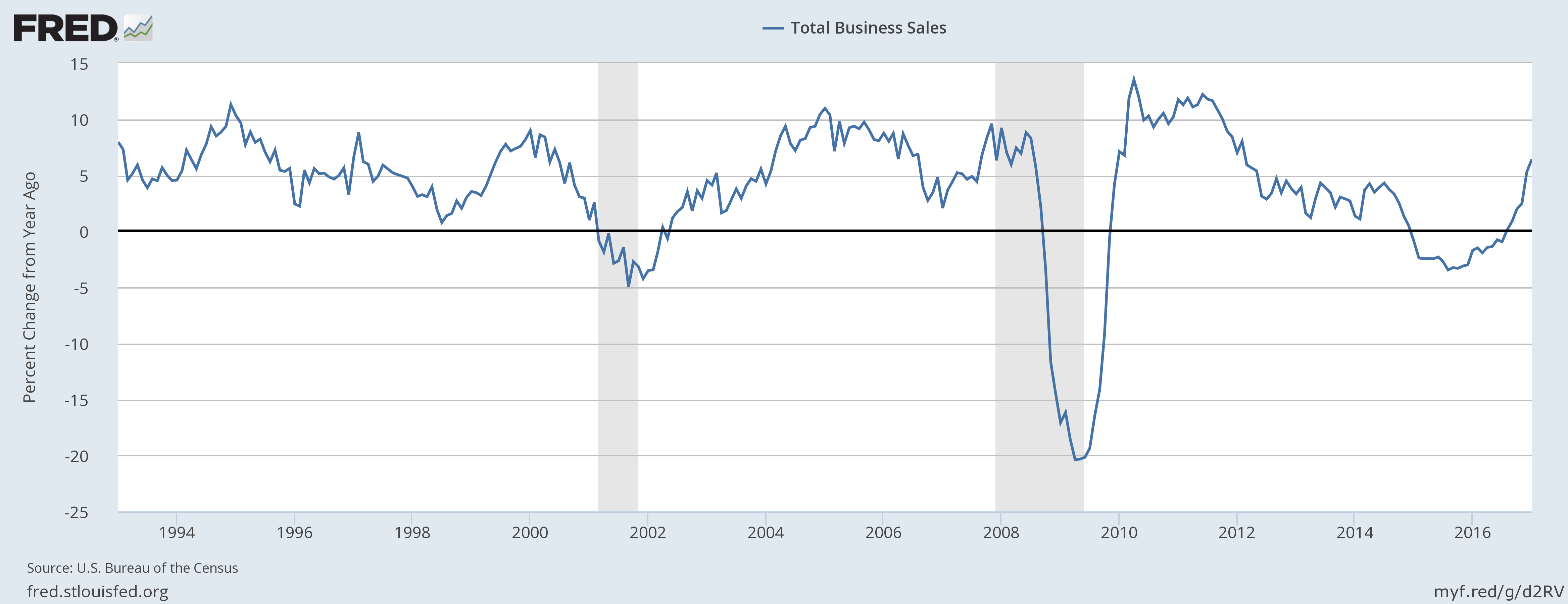
What drives stocks (other than cheap funding from FED), is their earnings, some which investors get returned in form of dividends and buybacks, rest of which goes into the books as reserves. And what drives earnings higher is actual sales and to some extent the efficiency.
Now US Federal Reserve has raised interest rates three times since the financial crisis, signaling that extraordinary monetary stimulus is coming to an end (no matter how gradual). So it would be now up to the economy and moreover revenue and earnings to support growth in the stock market.
The recent data suggests that sales growth has been very encouraging and would help stocks race higher if that continues.
We expressed our concern last year as the growth dived into the negative and warned that it has well served as an indicator for looming recession in the past. However, since August last year, growth has returned to positive territory and since the US election outcome, it has just raced higher. This can be seen as a first ever change in direction since the rebound after the Great Recession. In January 2017, total business sales grew by 6.41 percent, the highest reading since February 2012. This is an early indication that the recent improvements in the soft data such as confidence are likely to be followed by hard data improvements.







