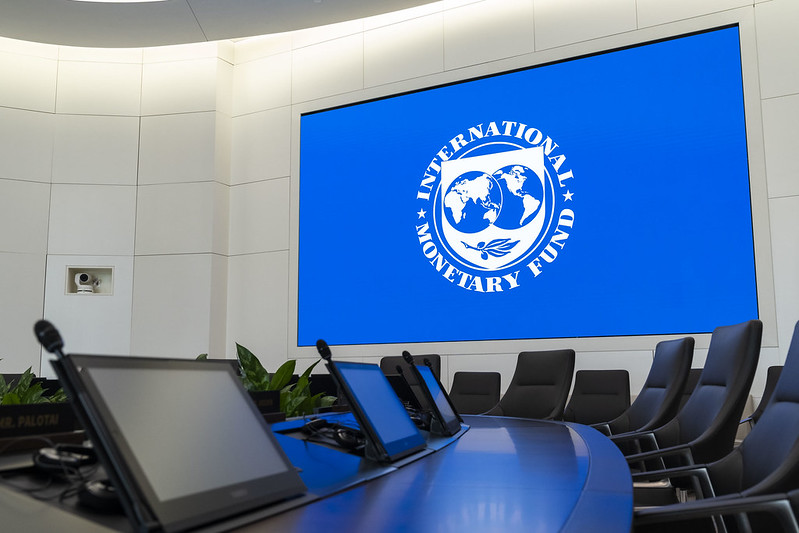
Ukraine’s government has reached a revised agreement with the International Monetary Fund (IMF) on a new $8.2 billion lending program, easing several previously proposed conditions, including politically sensitive tax increases. Prime Minister Yulia Svyrydenko confirmed that the IMF Executive Board is expected to review the four-year program at its upcoming meeting, a crucial step toward unlocking broader international financial assistance, including a €90 billion ($106.8 billion) European Union support package.
As Russia’s war against Ukraine enters its fifth year, the country remains heavily dependent on Western financial aid to maintain military defenses, stabilize the economy, and cover essential public expenditures such as wages and pensions. The updated IMF agreement reflects adjustments made after discussions between Ukrainian officials and IMF representatives. According to Svyrydenko, certain structural benchmarks initially agreed upon in November have been simplified to better align with Ukraine’s current economic realities.
Ukraine’s economic outlook has deteriorated in recent months due to intensified Russian airstrikes targeting energy infrastructure. Widespread damage to power grids has caused disruptions in electricity, heating, and water supplies during the winter season. Businesses have relied on costly energy imports and generators to continue operations, but many have reduced working hours and production levels. In response, Ukraine’s central bank downgraded its 2026 GDP growth forecast to 1.8%, down from 2%, citing deeper-than-expected energy shortages.
One of the most debated elements of the IMF loan program involves tax reforms for individual entrepreneurs. The government has agreed to introduce a value-added tax while increasing the annual revenue threshold to 4 million hryvnias (approximately €85,000), up from 1 million hryvnias. Analysts estimate that around 250,000 entrepreneurs will be affected, significantly fewer than the 600,000 initially projected. The government is currently consulting lawmakers as it prepares draft legislation outlining the revised tax measures.
The IMF financial assistance package is seen as essential for ensuring Ukraine’s macroeconomic stability, strengthening investor confidence, and sustaining international support during the ongoing conflict.