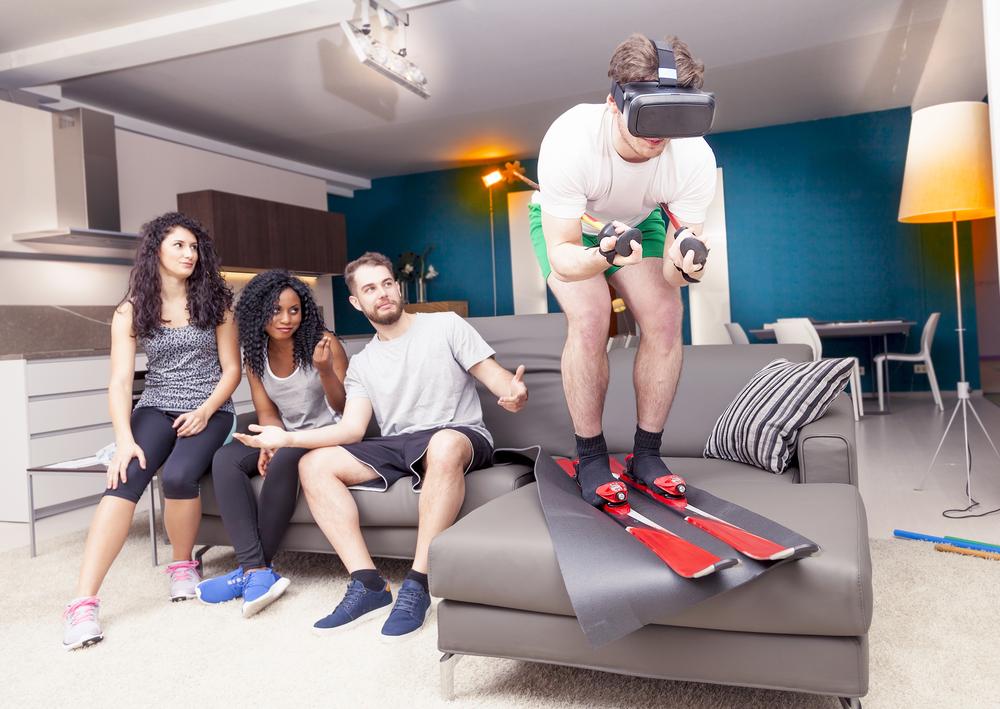
When the Oculus Rift became the “must have” Christmas gift last year, there were some who saw it as just another fad – this year’s Furby, if you will. Yet for those in the know, the fact that people across the globe would be strapping on Virtual Reality goggles signalled a watershed moment, and one for which they had been waiting for many years.
Virtual Reality is a concept we have all grown up with, and has been in the developmental stage for decades. The Oculus Rift and HTC Vibe might ultimately prove to be red herrings - after all, who needs a specialist headset when a decent quality smartphone can do the same thing?
But the point is that the technology has finally reached a point where it is marketable. Just as the Toyota Prius and Honda Insight kick started the electric car era, these first headsets have led to a tenfold increase in development funding and activity across a range of sectors. Unsurprisingly, however, gaming is at the top of the list.
Counting the money
For the companies and developers at the heart of the multi billion dollar gaming industry, the question is how to monetise it. It is no secret that the online casino sector is an aspect of gaming that has seen immense growth and is also hugely competitive, with more slots and roulette sites going online every week. Unsurprisingly, this is an area of online gaming that is looking even more closely than others at how Virtual Reality can enhance user experience and thereby bring operators more members and increased revenue.
There is an argument that the word gaming is no longer even appropriate for what the technology is achieving. To step inside a game in the way that VR allows and see things in 3D is one thing. But to interact with virtual objects by feel, to be surrounded by sound, and as the technology advances further, to even be able to smell and taste what you are experiencing is something far more profound. Some have suggested that we will stop talking about gamers and instead conceptualise experiencers as VR becomes both more advanced and more accessible.
A virtually real experience
There have been endless discussions and editorials on the comparative merits of online gaming of this type opposed to visiting a casino in the real world. Most agree that the online versions offer more incentives and better opportunities to win, simply because they have far lower overheads and can therefore afford to pay more out. However, playing online is never going to be as much fun as visiting a real world casino.
And there you have it in a nutshell – we are back at the concept of experience and this is why VR could be such an important development, not just in casino gaming but in other genres too. After all, we can already interact with our friends online – if we can also experience the sights, sounds and smells of a virtual experience with them, it begs the question of why we need ever leave the house again.
This article does not necessarily reflect the opinions of the editors or management of EconoTimes.