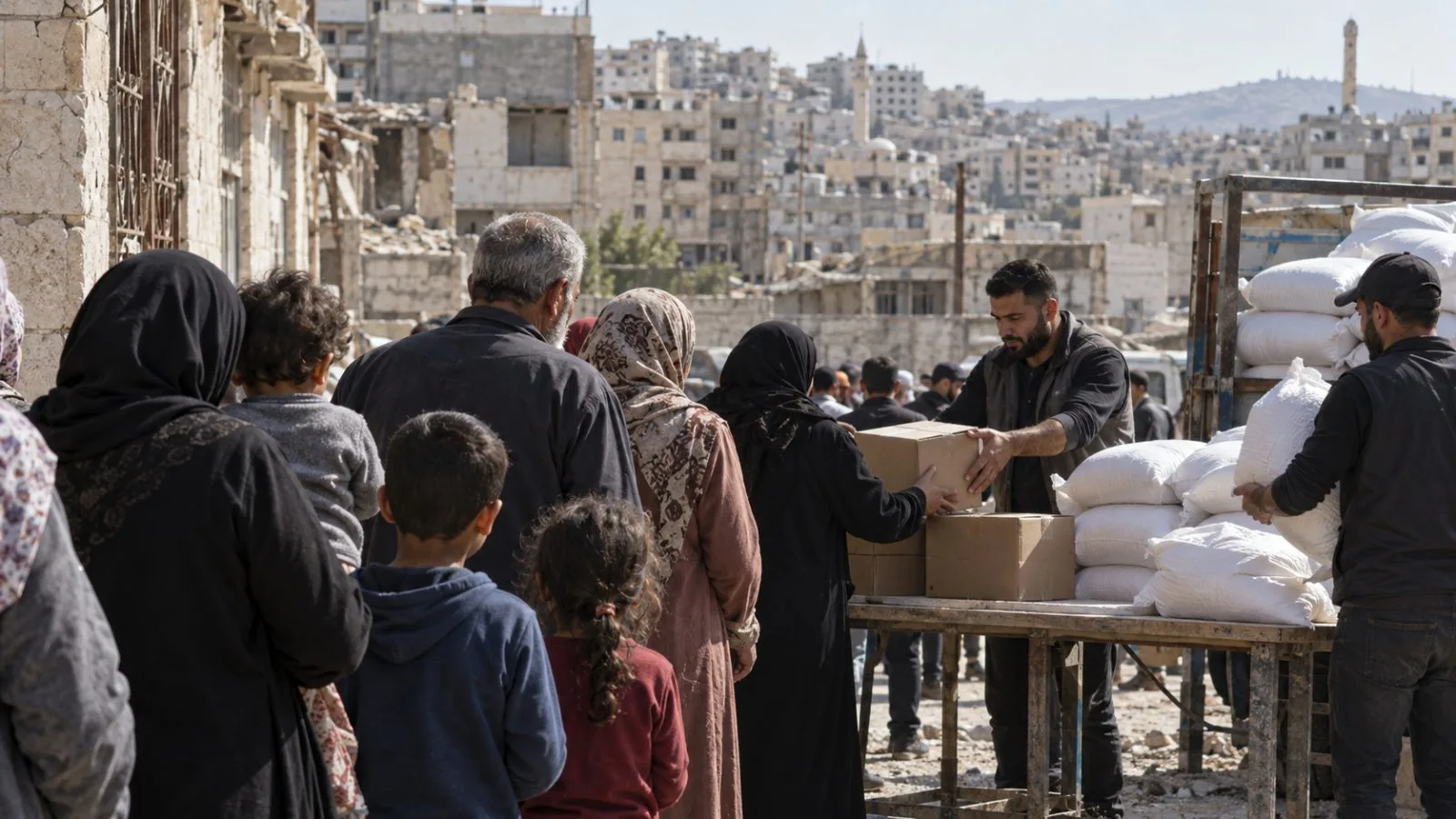
Funding shortages are ending U.N. World Food Programme (WFP) assistance for about 500,000 people in Gaza, where hunger remains widespread ahead of Israel's Oct. 27 election.
WFP said Oct. 19 that its October caseload had fallen to 1.1 million from 1.6 million in September. It has halved food rations and cut the number of hot meals it provides each day to 150,000 from 250,000.
The agency also reduced the value of cash assistance to 75,000 families. It said nutrition support for 300,000 women and children and school snacks for 200,000 children would continue.
WFP said its 2026 funding for Palestine was less than half the level of previous years. It is seeking $450 million for critical operations in Gaza and the West Bank from October 2026 through March 2027. People losing food and cash support bear the immediate cost of the shortfall.
The Integrated Food Security Phase Classification (IPC) projects that about 1.4 million Gaza residents, roughly two-thirds of the population, will face crisis-level food insecurity or worse from July through December. That compares with more than 1.2 million from mid-April through June. The IPC classifies Gaza overall in Phase 3, or Crisis; WFP puts about 200,000 people in the more severe Phase 4, or Emergency.
In WFP monitoring conducted in the first half of September and cited by the U.N. Office for the Coordination of Humanitarian Affairs (OCHA), 44% of surveyed households reported going to bed hungry at least once in the preceding month. Food had run out entirely at least once for 45% of those surveyed.
The IPC said food security improved after an October 2025 ceasefire and an increase in aid deliveries. But livelihoods remain disrupted, aid coverage has declined since February and further cuts could quickly worsen conditions. The assessment also linked a sustained recovery to progress in peace efforts that would allow displaced people to return and families to rebuild their livelihoods.
The National reported that some Gaza residents were deferring personal and business decisions until Israel's election, as EconoTimes previously covered their plans. The Associated Press reported Oct. 21 that polling pointed to a close contest between Prime Minister Benjamin Netanyahu and opposition leader Gadi Eisenkot. Israel's official election timetable sets the vote for Oct. 27.