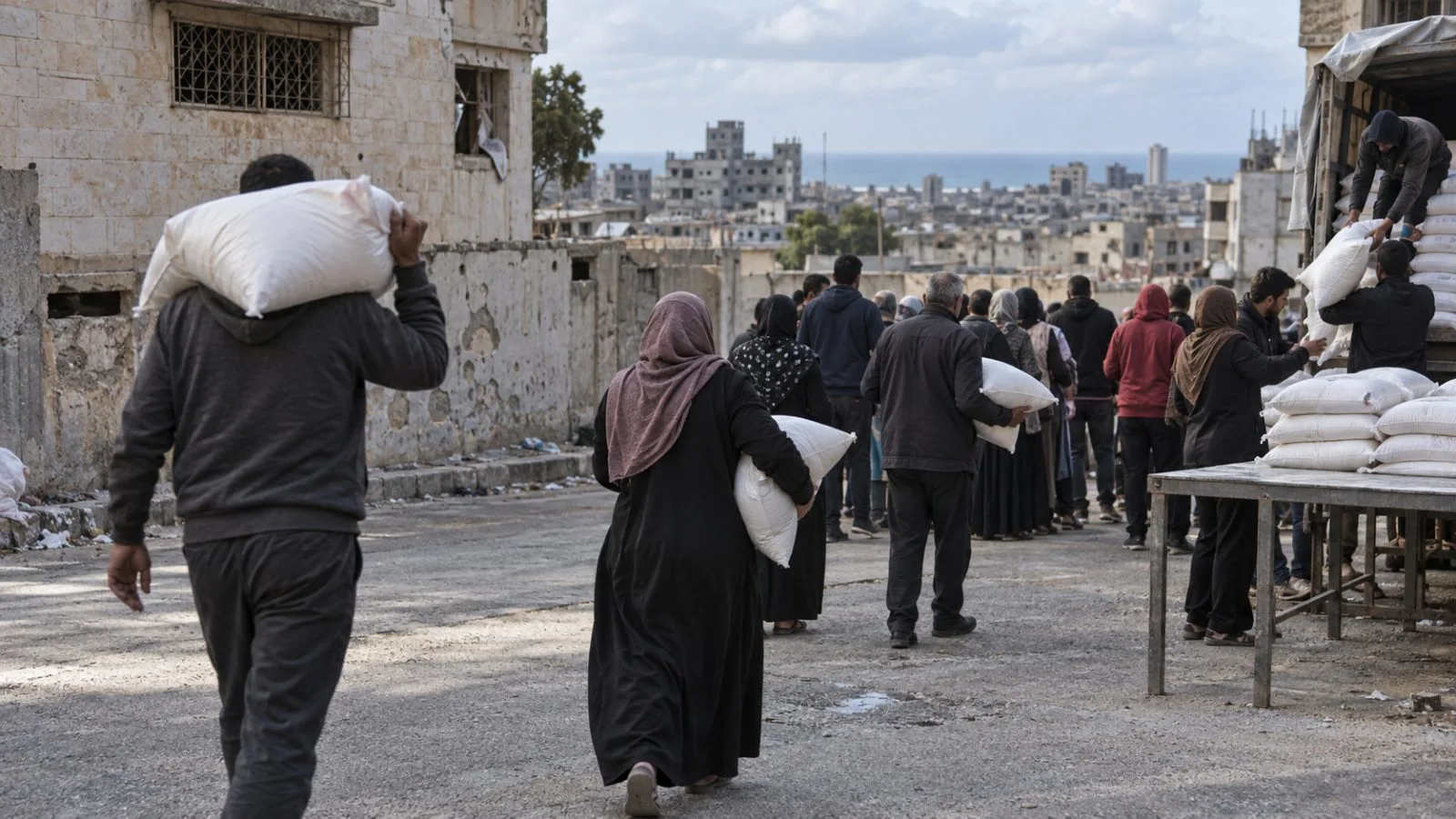
Gaza faces a projected rise in severe food insecurity as the United Nations World Food Programme (WFP) serves 500,000 fewer people this month, reducing support for households already under strain.
The Integrated Food Security Phase Classification (IPC) projects that 1.4 million people, or 67% of Gaza’s population, will face crisis-level food insecurity or worse during July through December 2026. That compares with 1.2 million in April through June. The projected figure remains below the 1.6 million people, or 77%, at the end of 2025, but the comparison with spring points to worsening conditions.
WFP said its October cuts to monthly assistance leave it supporting 1.1 million people, down from 1.6 million in September. The agency said its 2026 funding for Palestine is less than half the level of previous years. It is seeking $450 million to sustain critical work in Gaza and the West Bank from October 2026 through March 2027.
Families who remain on the food aid rolls now receive one parcel instead of two, along with less wheat flour. WFP has also reduced its hot-meal output from 250,000 to 150,000 a day. In hard-to-reach areas, including near the yellow line marking Israeli military control, families receive meals every other day rather than daily.
The agency has reduced the value of cash assistance for 75,000 families. It says it can continue supporting bakeries, nutrition programs for women and children, and school snacks for now. Funding shortages had already halved the number of people receiving WFP assistance in the West Bank, from 400,000 to 200,000 in September.
The IPC links households’ reliance on aid to damaged livelihoods and exhausted ways of coping. WFP said improved access and aid deliveries after the October 2025 ceasefire had eased hunger, but described the gains as “modest and fragile.” The IPC projection runs through December; WFP’s funding appeal covers operations through March 2027.