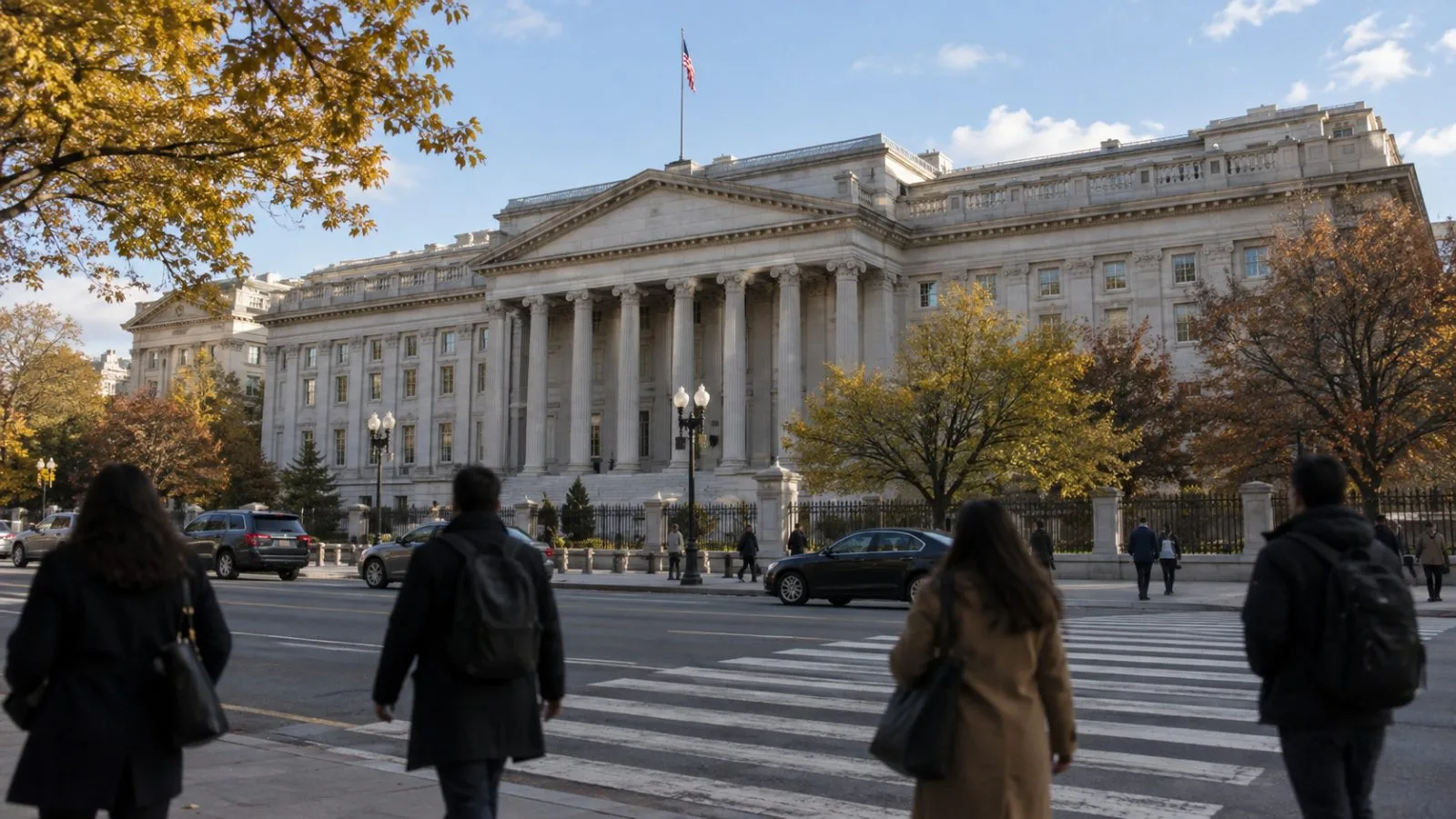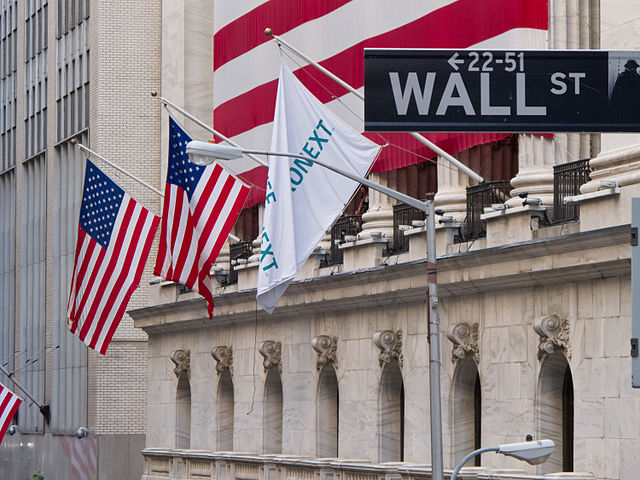
Wall Street ended Thursday’s session in negative territory as losses in private equity firms and weakness in major blue-chip stocks like Apple and Walmart offset earnings-driven gains in industrial shares. Investor sentiment remained cautious amid concerns over credit quality, artificial intelligence valuations, and uncertainty surrounding Federal Reserve interest rate policy.
Private equity stocks led the decline after Blue Owl Capital announced it would sell $1.4 billion in assets and suspend redemptions in one of its funds to manage debt and return capital. The move intensified worries about lenders’ exposure to software companies and broader credit risks. Blue Owl shares plunged 6%, while Apollo Global Management, Ares Management, KKR & Co, and Carlyle Group fell between 1.9% and 5.2%.
Apple slipped 1.4%, exerting the biggest drag on the S&P 500, while Walmart also dropped 1.4%. The retailer’s new CEO, John Furner, issued a conservative fiscal 2027 forecast despite announcing a $30 billion share buyback program. AI-related technology stocks continued to face volatility as investors questioned whether heavy artificial intelligence investments are translating into meaningful revenue and profit growth. Market participants are increasingly evaluating which industries, from software to logistics, could face disruption from rapidly evolving AI tools.
Despite broader weakness, Deere & Co surged 11.6% after beating first-quarter earnings estimates and raising its annual profit forecast. Omnicom climbed 15% on strong fourth-quarter revenue results, while Carvana fell nearly 8% following weaker-than-expected earnings. EPAM Systems tumbled 17% after issuing cautious guidance.
The S&P 500 declined 0.28% to 6,861.89, the Nasdaq Composite fell 0.31% to 22,682.73, and the Dow Jones Industrial Average dropped 0.54% to 49,395.16. Energy stocks gained 0.6% as oil prices rose amid escalating U.S.-Iran tensions, while financials slipped 0.9%.
Investors are closely watching economic data, including weekly jobless claims and the upcoming Personal Consumption Expenditures report, the Federal Reserve’s preferred inflation gauge. According to CME’s FedWatch Tool, markets are pricing in a 50% probability of a rate cut by June. Trading volume remained light, with declining stocks outpacing advancers across major indexes.