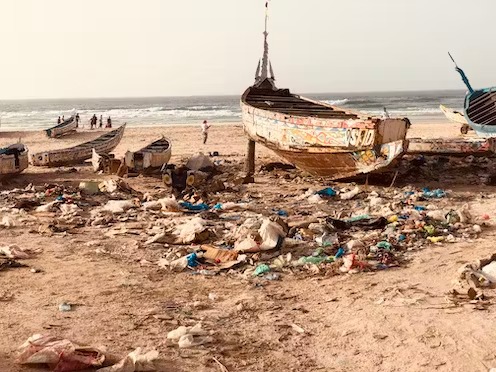
Plastic pollution is an urgent environmental issue, globally. Every year, about eight million tonnes of plastic end up in the oceans.
Most of the 17 west African countries have a problem managing plastic waste. Eight of them are among the top 20 with the least effective plastic waste management practices – up from five in 2015. This has worsened marine pollution and adversely affected activities in the region.
Coastal provinces account for about 56% of west Africa’s GDP and one-third of the population lives there.
In 2018, west African nations launched the West Africa Coastal Area Management Programme to protect and restore the ecological, social and economic assets of coastal areas. It’s supposed to do this by addressing coastal erosion, flooding and pollution. Last year it received an additional US$246 million in funding from the World Bank. This has brought the World Bank’s total financing of the project to US$492 million.
For many years, we have researched development economics, particularly the interface between the use of natural resources and the development of countries. We’ve also been involved in research on plastic pollution through the interdisciplinary “Revolution Plastics” initiative of the University of Portsmouth’s Centre for Blue Governance.
Our findings on plastic pollution could help west African countries to spend World Bank funds effectively.
We recommend that nations first quantify the volume, type and origin of plastics discarded in coastal zones. Then they must focus on reducing plastics from source, as well as promoting reuse and recycling. They can draw on successful case studies globally, which can be adapted to local contexts.
Healthy oceans and a circular economy
The West Africa Coastal Area Management Programme has initiated studies to assess the environmental and economic impact of plastic pollution in the region. These studies also aim to explore the benefits of moving to a circular economy: an economic system that reuses or regenerates materials or products in a sustainable way.
The programme expects that a circular economy will create new economic opportunities through markets for reusing products and materials. Rather than discarding products, they can be put back into the economy. This can create demand for services and technologies related to collecting and processing them.
The programme can benefit from research on sustainable plastic management from other regions to achieve its objectives.
Research partnership
The Centre for Blue Governance has expertise in blue economy, marine ecosystem management, climate change and circular economy. It has extensively researched plastic pollution in Portsmouth, a port city in the United Kingdom, and beyond. We have found that sustainable plastic management can be achieved in various ways. These strategies could be relevant for initiatives in west Africa. They include:
Inclusive partnerships: Collaborating with businesses, campaigners and citizens on the Revolution Plastics initiative, we apply research to develop eco-friendly fabrics and combat microplastic pollution.
Awareness campaigns through art: Community awareness of the harmful effects of plastic pollution is necessary. Through the Masibambisane project in South Africa, we explored street art, theatre and song to create awareness about plastic pollution.
The project achieved significant results in KwaMhlanga, in South Africa’s Mpumalanga province. It demonstrated that raising awareness through art could inspire people to change their behaviour. These communities now have a deeper understanding of the urgent need to act against plastic pollution.
In addition, the introduction of sorting facilities close to homes increased recycling rates and encouraged sustainable habits. The west African programme can incorporate these lessons into the e-book it is planning. This is a way to share information about best practices and encourage action in communities.
Reuse and recycling projects: Through our inDIGO-EU and Microseap projects we reduced plastic waste by promoting recycling and reuse. For example, the INdIGO project has developed biodegradable fishing gear that reduces the environmental impact of ocean fishing in the UK and France. Based on this project, the West Africa Coastal Area Management Programme can develop a sustainable alternative to the gear used for small-scale fishing in the region.
From diagnosis to action
Our research findings suggest that for optimal use of the World Bank fund, the West Africa Coastal Area Management Programme could consider the following action plans:
Collect data on plastic pollution: Start with a regional study to quantify the volume, typology and origin of plastics discarded in coastal zones. This could involve the use of technologies such as drones, sensors and remote sensing to map pollution hotpots. Perception surveys could also help to understand behaviours and attitudes related to plastic pollution. The aim is to establish precise indicators and predictive models that can measure how well future interventions work.
Plan for a switch to a circular economy: The plan should focus on source reduction, reuse, recycling and material recovery. A committee made up of government actors, private enterprises and local communities could oversee implementation.
Design community awareness and education programmes: These campaigns should instil a sense of environmental responsibility and give people tools to actively participate in reducing plastic pollution. Involving opinion leaders could increase their impact.
Develop ways to use plastic waste: Value chains for sorting, recycling and valorising require infrastructure, like modern sorting centres. Advanced recycling technologies and market mechanisms for recycled materials are also necessary. Partnerships could be established with local businesses to create products from recycled plastics, such as construction materials or textiles.
By investing in these targeted areas, it is possible to create a sustainable system that offers economic and social opportunities to local communities.