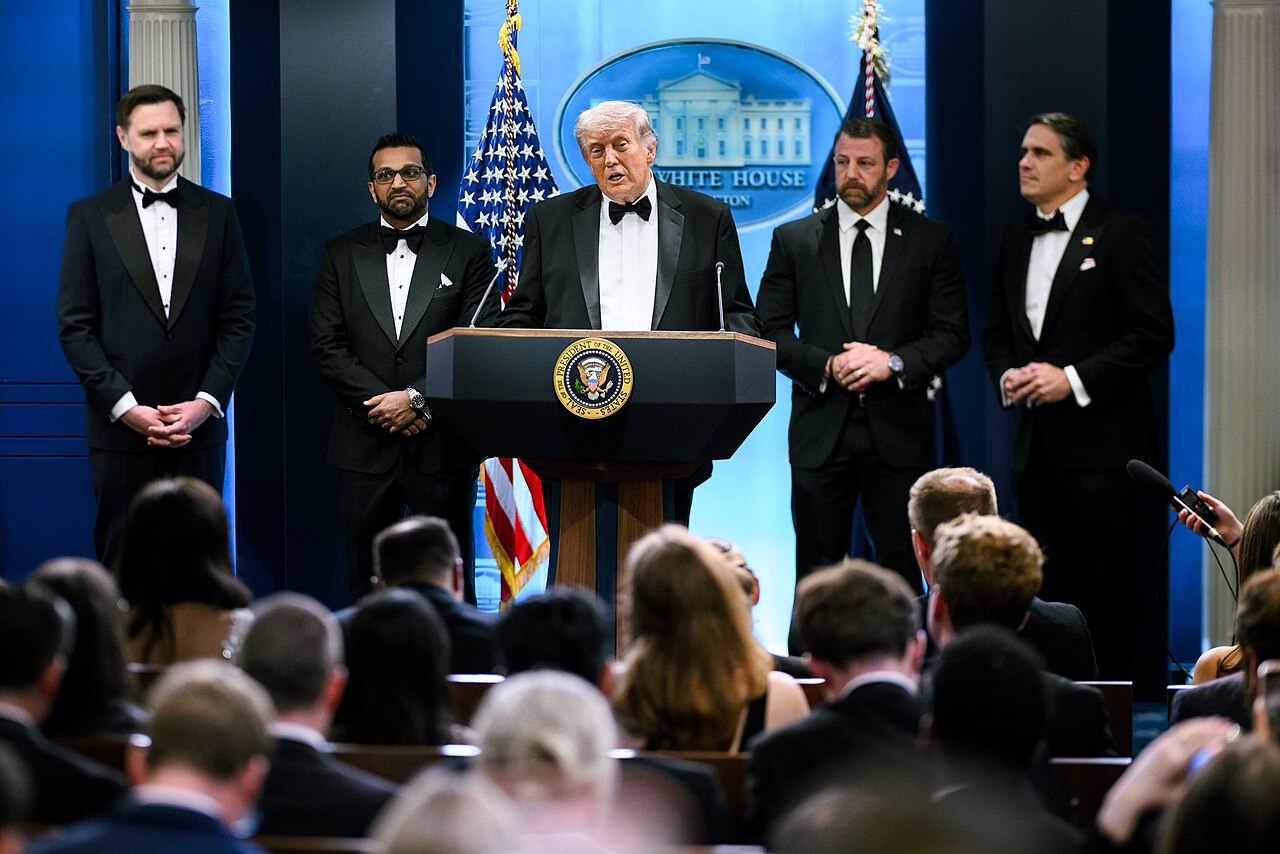
U.S. officials reviewed contingency plans, including the concept of a designated survivor and the presidential line of succession, ahead of the White House Correspondents’ Association (WHCA) dinner, according to White House press secretary Karoline Leavitt. The precautionary discussions came into sharper focus after a gunman attempted to attack President Donald Trump and other senior officials during the high-profile event on Saturday.
The incident disrupted one of Washington’s most prominent social gatherings, sending shockwaves through attendees. As gunfire erupted, guests quickly sought cover under tables while security personnel moved swiftly to evacuate key figures. President Trump, who was scheduled to deliver remarks later that evening, was rushed off the stage by Secret Service agents, highlighting the seriousness of the security breach.
Several top officials in the presidential line of succession were present at the dinner, including Vice President JD Vance, House Speaker Mike Johnson, Secretary of State Marco Rubio, Treasury Secretary Scott Bessent, and Defense Secretary Pete Hegseth. Their presence raised concerns about the concentration of leadership in a single location during a potential threat.
However, not all high-ranking officials attended. Senator Chuck Grassley, the president pro tempore of the Senate and a key figure in the line of succession, was absent. Leavitt explained that multiple Cabinet members and officials did not attend the event for personal reasons, reducing the need to formally designate a single survivor.
The term “designated survivor” refers to a government official who deliberately skips major events, such as the State of the Union, to ensure continuity of government in case a catastrophic incident incapacitates top leadership. While no single individual was assigned this role for the WHCA dinner, prior discussions indicate that officials were mindful of potential risks.
The attempted attack has intensified scrutiny of security protocols at major political events and renewed focus on safeguarding the U.S. leadership structure.