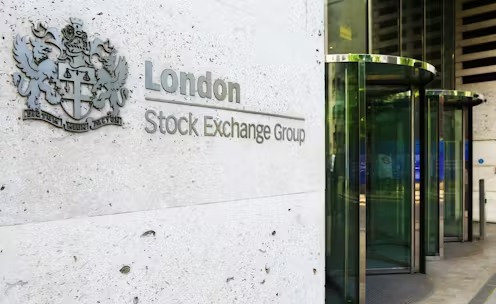
London Stock Exchange (LSE), which can trace its heritage to the coffee houses of the 17th century, is failing. The volume of shares traded is sharply declining, and some UK companies are swiftly moving to the US market.
Listing in a stock exchange is meant to raise long-term equity capital for companies by offering shares to the public and institutions. However, the gap between what companies are valued at on the UK and US stock exchanges is seen as suppressing the market value of UK-listed companies, and prompting them to look for better playing grounds.
Two decades ago, UK-listed equities accounted for 11% of the MSCI World Index, which tracks the global equity market. Now they represent a meagre 4%. Since 2020, several LSE-listed companies, including Cambridge-based biotech firm Abcam, plumbing supplier Ferguson and packaging firm Smurfit Kappa Group, have moved to the US.
Most recently, oil and gas giant Shell has threatened to do the same. In 2023, the Nasdaq raised US$13 billion (£10.4 billion) while the LSE managed US$972 million from the companies floating on it.
For companies moving to a US listing, the UK and the US standards differ. In an LSE listing, regulatory measures are stringent – companies need to raise capital and get approval from regulator the Financial Conduct Authority (FCA).
In the US, the Nasdaq and the New York Stock Exchange both require companies’ initial stock price, number of shares, number of shareholders and total market value, in addition to other financial requirements. But once companies float their shares and start trading, they need to meet less stringent standards.
More than 30 companies with market capitalisation over £100 million are leaving London’s public equity markets. Thirteen companies have undertaken and completed takeover bids and 17 companies delisted.
The aggregate market capitalisation of LSE-listed equities went down to US$3 trillion in February 2024, from US$4.3 trillion in 2007, whereas the US market has grown three-fold to US$53 trillion.
So what’s behind this contrast in fortunes? Factors including high interest rates, dwindling pension funds, fewer high-performing tech companies, Brexit isolation and a lack of committed domestic investors have all contributed to the LSE’s downward spiral.
Valuation matters
LSE-listed companies’ valuation is relatively low compared to their US counterparts. Initial public offerings (or IPOs – when private companies put their shares on sale to raise capital) on LSE fell substantially in 2023 as a host of companies opted for US listing for the chance of higher valuation and growth.
The valuation differential between both markets is affecting the LSE listing considerably. Earnings for US-listed companies have been consistently growing, at a three-year annualised return of 14%, revenues have grown at 9.1%, and the market trading is levelling at an average price-earnings ratio of 27.6.
In contrast, the five-year annualised return of the LSE (2017-2022) was 3.2% and the revenues growth is projected at 5.4%.
The US market offers a higher valuation for companies, a faster-growing equity market fuelled by AI-led investor pools, and opportunities to make money through short-selling. The UK market traditionally prefers long-term selling stocks which sometimes result in low growth and return.
What a Shell exit could mean for the LSE.
Back in 2022 the UK government urgently wanted to close the valuation gap with the US and introduced the “Edinburgh reforms”. The 30 regulatory reforms aimed to make LSE an attractive platform for companies compared to the rival bourses in the US and Europe.
But previous reforms to the LSE’s listing regime in 2021 didn’t halt the decline in the number of companies choosing to list there. And the UK Treasury committee said last year that there has been little economic impact since the Edinburgh reforms package was set out.
Lastly, since it acquired data giant Refinitiv in 2021, the LSE has been less focused on the exchange side and more on data analytics. LSE has not been able to get the most from its indexes and is subsumed by the hefty US$27 billion cost of the deal.
What can be done?
To turn things around, LSE should set a clear mechanism to trade different classes of shares. Multiple share classes make it easier for founders to keep control of their business and are usual in the US but far less common in the UK.
It could also revamp the valuation of delisted shares before they go for liquidation. Both NYSE and Nasdaq offer provisions for delisted shares to move on to the over-the-counter markets (that is, through a broker) to continue trading. Over-the-counter trading can offer greater flexibility and lower transaction costs.
It should also consider simplifying the administrative burden and easing investment procedures. In addition, with executive rewards higher in the US than the UK, LSE should address the cross-border pay differentials since UK shareholders have a controlling say on remuneration compared to the simple advisory role of US shareholders.
Looking ahead, political events will have a significant effect on market prospects. The FTSE All-Share index shows a sharp volatility before, during and after general elections. This will be a period of reckoning for the LSE, investors and regulators alike. The choices LSE makes now could determine whether it can stem the flow of companies to the US and continue in its proud tradition.