

 Menu
Menu

 Search

- News

- Economy

- Central Banks
- Investing
- Research
- Roundups
- Digital Currency
- Insights
- Technical Analysis
- Technology
- Business
- Law
- Health
- Nature
- Fintech
- Science
- Topic
- Opinions
- ©Econometrics LLC . All Rights Reserved.
Simon Tormey
Professor of Political Theory and Head of the School of Social and Political Sciences, University of Sydney
Simon Tormey is Head of the School of Social and Political Sciences at the University of Sydney. A political theorist, Simon is the author of numerous books and articles including Anti-Capitalism – recently revised with Oneworld. His latest book, The End of Representative Politics, has just been published by Polity.
Prior to his appointment at Sydney in 2009 he was Professor and Head of the School of Politics and International Relations and founding Director of the Centre for the Study of Social and Global Justice (CSSGJ) at the University of Nottingham UK. He was educated at the University of Wales, Swansea receiving his doctorate in 1991. He was a Research Scholar and Lecturer at the University of Leicester before joining Nottingham in 1990. In 2005 he was awarded a personal chair ('professorship') in Politics and Critical Theory.
Simon appears regularly in the media commenting in particular on European politics for Sky Business, Sky News, ABC News, Bloomberg and the BBC.

Less 
Simon Trafford
Lecturer in Medieval History, School of Advanced Study, University of London
Simon's broad interests are in the history and archaeology of early medieval Europe, c.350-1150. He specialises in later Anglo-Saxon England, especially the kingdoms of Northumbria and York, and concentrating in particular on migration, identity and gender. Recently he has been developing projects in various types of human engagement with the sea and water in early medieval Britain.He also maintains a keen interest in modern constructions and appropriations of the early medieval past, with a particular concentration on representations of the vikings in popular culture.
Less
Simon Troon
Research Assistant and Sessional Teaching Associate, School of Media, Film and Journalism, Monash University
Simon R. Troon's book Cinematic Encounters with Disaster (Bloomsbury Academic 2024) analyses different approaches to cinematic representation of disaster, in Hollywood and beyond, appraising them with regard to ethical issues apparent in contemporary environmental cultures, the climate crisis, and the Anthropocene.
Less
Simon Valle
Conservation Planning Officer at IUCN SSC Conservation Planning Specialist Group & Honorary Lecturer in Conservation Science, Bangor University
Less
Simon Vella
Postdoctoral Research Fellow, Institute for Musculoskeletal Health, University of Sydney
Less
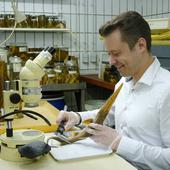
Simon Weigmann
Associated Scientist, Leibniz Institute for the Analysis of Biodiversity Change
The focus of my research is on the taxonomy and systematics of chondrichthyans (sharks, skates and rays, chimaeras) in the deep western Indian Ocean, an area with a very poorly known cartilaginous fish fauna and simultaneously increasing commercial fishing efforts, intensified deep-water fishery, and declining populations of many cartilaginous fish species.
Less
Simon Williams
I was born in Germany while my father was on sabbatical there, but grew up in Melbourne and then Adelaide, where I did my undergraduate studies in Mathematical Physics and Pure Mathematics.
I went to Oxford to do graduate study with Roger Penrose on general relativity and conformal field theory (although both of these reduce to differential equations if you stare at them hard enough!)
Since my return to Australia I've lectured at Adelaide University, worked as a radar signal processor at DSTO, and bayesian analyst at CSIRO before joining CSEM to work on iterative optimisation of parametric bayesian models for medical image analysis.
Since then I have also found fun people to work on mathematical models of high-rate algal ponds and lithium polymer batteries.
Less
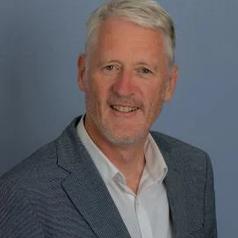
Simon Wilmot
Senior Lecturer, Film, Deakin University
Simon makes films that explore self-making, identity and place, especially in the context of settler-colonialism. He is also interested in documentary film as a placemaking practice. He is currently working with Dr James Barry on documentary films about Muslim's Anzacs.
Less

Simon Wortham
Pro Vice-Chancellor Research, Kingston University
After completing my DPhil at the University of Sussex in 1993, my research has concentrated on the connections between continental philosophy, literary theory and a variety of political and psychoanalytic texts. I have published books on the philosophical question of the university institution; on the question of sleep as a complex and surprisingly persistent topic within the history of philosophy; on the European philosophical tradition's relationship to problems of pain and suffering; on the complicated interplay between psychoanalytic and political ideas of resistance; and on the writings of Jacques Derrida. My last academic monograph explored the legacy of philosophical discourses of optimism and pessimism in order to assess the limits and possibilities of contemporary political hope. Since then, I have written a trilogy of novels published by Ma Bibliotheque, the first appearing in 2020. My new book, Reading Robert Walser: Criticism, Creativity, Correspondence, includes a novella based on the author's correspondence as well as chapters on the question of address, both in epistolary writing and creative performances. The book will be published by UCL Press in 2025. While at Kingston I have supervised PhDs on topics as varied as psychoanalysis, trauma and creative writing; resistance, revolution and fascism; Kantianism and speculative realism; and deconstruction and performativity.
Less
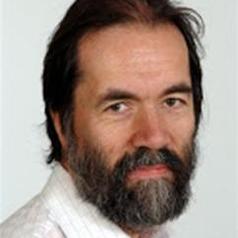
Simon Wren Lewis
I am currently working on the following areas in macroeconomics: social welfare measures derived from utility, implications of distorted steady states (including inflation bias) and distortionary shocks (e.g. UIP shocks) , stability under alternative monetary regimes, monetary and fiscal policy interaction, fiscal policy as a stabilisation tool, optimal debt stabilisation, alternative fiscal institutions, equilibrium exchange rates, and the methodology of macroeconomics.
Less
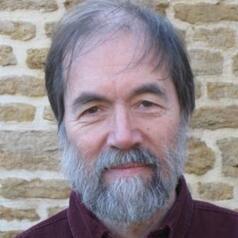
Simon Wren-Lewis
Emeritus Professor of Economics, and Emeritus Fellow of Merton College, University of Oxford
I have mainly worked on the following areas in macroeconomics: monetary and fiscal policy interactions, equilibrium real exchange rates, fiscal policy rules, social welfare measures derived from utility, stability under alternative monetary regimes, alternative fiscal institutions, structural econometric models, and the methodology of macroeconomics.
Less
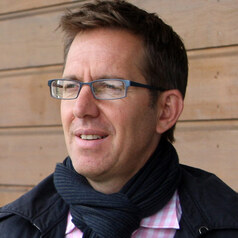
Simon Wright
Senior Research Fellow, Energy & Circularity, Gulbali Institute, Charles Sturt University
As a Senior Research Fellow in Energy and Circularity, Simon brings 20 years of experience working in academia, industry and consultancy on a broad range of sustainability issues.
As an academic, Simon’s research interests revolve primarily around the field of sustainability transitions, in particular the role of government and other key stakeholders in accelerating the transition to renewable energy and a more circular economy. Simon’s current research portfolio encompasses regional transitions to renewables; renewable energy and circularity in agriculture; pathways to net zero; community energy; microgrids; and the acceleration, implementation and measurement of the circular economy.
Simon is a member of the Sustainability Transitions Research Network (STRN) and Circular Australia Research Taskforce; and a board member on community energy cooperatives. Simon also holds a Visiting Fellowship at Nottingham University (UK).
In 2022, Simon was awarded a Churchill Fellowship to Canada and Europe to investigate employment pathways and reskilling programs for mining communities transitioning to renewables.
Less
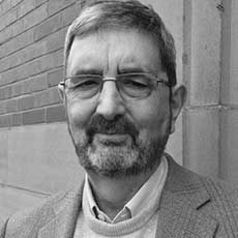
Simon Esmonde Cleary
Emeritus Professor of Roman Archaeology, University of Birmingham
I am a specialist in Roman archaeology with interests centring on Roman Britain and on Roman France Germany and Spain and Portugal, with a particular interest in Late Antiquity.
My main research interests lie in the archaeology of the Roman period, more particularly in the western provinces. Though covering all Roman the period, my principal focus is on the period of Late Antiquity (ca. A.D.300-700). My current research concerns the transition from Roman to post-Roman over much of the western part of the empire, both as regards the nature of the archaeological record and as regards the changes in economy society, religion and mentalities which that record embodies and has resulted in a substantial monograph ‘The Roman West AD 200-500: an archaeological study’ published in 2013. Also published in 2013 was my book 'Chedworth: life ina Roman villa', arising our of my long-term collaboration with The National Trust on the re-display and re-interpretation of the well-know Romano-British villa at Chedworth in the Cotswolds near Cirencester.I have previously worked and published on the Roman period in Britain, again with an emphasis on the later Roman period and the Roman to post-Roman transition. I also have a particular interest in urban archaeology both as a sub-discipline within field archaeology and as an approach to understanding the distinctiveness of towns and of urbanised societies, and collaborated with my colleagues Ray Laurence and Gareth Sears in writing a major work ‘The City in the Roman West c.250 BC – AD 250’ (2011). In addition I have an interest in Roman period numismatics, particularly the identification and interpretation of site-finds.
Less
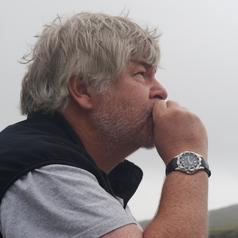
Simon Francis Thrush
Director of the Institute of Marine Science, University of Auckland, Waipapa Taumata Rau
Professor Simon Thrush is Director of the Institute of Marine Science and Director of the George Mason Centre for the Natural Environment at the University of Auckland. Professor Thrush has a strong research focus on the interactions between ecosystems and society as we seek to identify effective processes for change that will help society make informed choices about how we restore, conserve and use marine ecosystems. He is interested in the positive potential we have to actively restore degraded coastal ecosystems by generating the ecological knowledge needed for successful restoration, identifying the ecosystem benefits this will provide and in sustaining engagement of society.
Professor Thrush obtained a BSc (Hons) from the University of Otago and a PhD from the University of East Anglia, England. He has over 30 years’ experience in the development and implementation of strategic ecological research to influence resource management and improve societal valuation of marine ecosystems. He has worked in New Zealand, Europe, USA and Antarctica, has contributed to over 200 publications in the peer reviewed scientific literature and collaborates with colleagues around the world.
Less
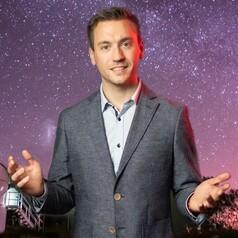
Simon J. Murphy
Senior Lecturer, Astrophysics, University of Southern Queensland
I am an ARC Future Fellow and Senior Lecturer at the University of Southern Queensland. I study stellar pulsations detected in data from NASA’s Kepler and TESS missions, and use those pulsations to make inferences about the stars. I use stellar pulsations as clocks, to track the stars’ orbital motions through space and discover new binary systems in a parameter space inaccessible to other techniques. This provides clues on how binary stars form. I also use the pulsations to make inferences on stellar structure, including precise measurements of stellar ages and metallicities. With these, we can recalibrate the ages of the stars by determining the ages of the clusters and associations in which they reside. I graduated from the University of Manchester with a BSc (Hons) in 2010, completed my PhD at the University of Central Lancashire in 2013, and held multiple postdoc positions at the University of Sydney, including as an ARC DECRA fellow, until I moved to UniSQ in 2022.
Less
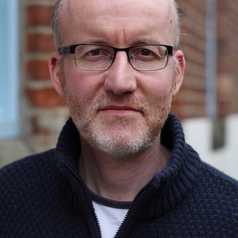
Simon P. James
Professor of Philosophy, Durham University
I came to philosophy by a roundabout route, taking a BSc in Biological Sciences followed by an MA in the History and Philosophy of Science, before obtaining a PhD for a thesis on environmental ethics. I have written a number of articles on environmental philosophy as well as the following books: Zen Buddhism and Environmental Ethics (Routledge, 2004), Buddhism, Virtue and Environment (Routledge, 2005; co-authored with David E. Cooper), The Presence of Nature: A Study in Phenomenology and Environmental Philosophy (Palgrave-Macmillan, 2009) and Environmental Philosophy: An Introduction (Polity, 2015). My new book, How Nature Matters (Oxford University Press, 2022), presents a new theory of environmental value, based on the concepts of meaning, constitution and cultural identity.
Less
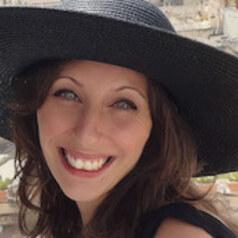
Simona Cosentino
PhD Candidate in Architecture and Global Heritage, Nottingham Trent University
Simona is a Doctoral Researcher at the School of Architecture, Design and Built Environment at Nottingham Trent University (NTU). Her PhD work, Community Uses of Tangible and Intangible Heritage Resources for Sustainable Development in India, investigates community engagement with heritage for sustainable local social and economic development and works with urban and crafts communities in Ahmedabad and Kolkata.
Her research interests cut across the cultural heritage field, including World Heritage, Intangible Cultural Heritage, tourism and the wider creative industries, focusing on heritage's capacity to transform people's lives and its contribution to achieving broader sustainable development goals, such as poverty reduction and social inequalities. She is a research assistant expert in heritage-based design, working in heritage and tourism-led development projects, and a part-time lecturer at NTU and previously at Politecnico di Milano, Italy.
She holds an MA in World Heritage Studies from the University of Birmingham, an MA and BA in Product Design from Politecnico di Milano, and professional experience as a graphic/UX and content designer. Simona nurtures a personal cultural and spiritual interest towards Indian culture, motivating her works and travels across the Country.
Less
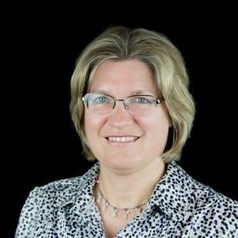
Simona Stan
Professor of Marketing, University of Montana
I am a professor of marketing and have worked at UM for 15 years. I have a PhD in Marketing from the University of Missouri and a Bachelor’s Degree in Mechanical Engineering from the University of Sibiu, Romania. Before UM I taught for five years at the University of Oregon. Prior to my academic life I was a production engineer and manager in Romania. My current research interests are in sales, services marketing, supply chains and logistics, and international/cross-cultural issues.
Less
Simone Gigliotti
Senior Lecturer / Reader in Holocaust Studies, Royal Holloway
I am a Senior Lecturer in Holocaust Studies in the Department of History, and Deputy Director of the Holocaust Research Institute, at Royal Holloway, University of London. Forthcoming works include a large co-edited collection, The Wiley Companion to the Holocaust, and a book in progress on place rights and transnationality among Jewish refugees and Holocaust survivors in postwar Europe.
My most recent publication is 'Displaced Children of Europe, Then and Now: photographed, obstructed and itinerant witnesses', Patterns of Prejudice, Vol. 52, 2018, issues 2-3, pp. 149-171.
Less
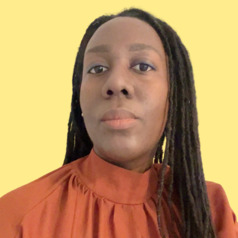
Simone Holligan
Lecturer, College of Social & Applied Human Sciences, University of Guelph
Simone Holligan holds a PhD in Applied Human Nutrition from the University of Guelph. She was previously an NSERC Visiting Fellow with the Public Health Agency of Canada, and a Research Fellow at The Hospital for Sick Children.
Less
Simone Pedrini
Lecturer in ecological restoration, Curtin University
Simone Pedrini is a lecturer in environmental restoration at the School of Molecular and Life Sciences a Curtin University. His primary focus is optimising the native seed supply chain for ecological restoration, from seed collection and production, seed processing, quality testing, dormancy treatment, seed enhancement, and seed use in the field. He was co-founder and managing director of the first Italian native plant nursery and seed supplier, Flora Conservation (2012 to 2015). He obtained a PhD in "Seed enhancement technology application to native seeds" from Curtin University (2015-2019). Simone is a certified Ecological Restoration Practitioner, Chair of the International Network for Seed-Based Restoration and advisor to the European Native Seed Producers Association.
Less
Simone Rödder
Professor of Sociology, with a focus on Science Studies, University of Hamburg
Less
Simone Varriale
Lecturer in Sociology, Loughborough University
My most recent book investigates how intersecting inequalities of class, race and gender shape post-2008 Italian migration to the UK (https://bristoluniversitypress.co.uk/coloniality-and-meritocracy-in-unequal-eu-migrations).
I have published extensively on class, migration, race, globalisation and cultural taste in journals like Sociology, The Sociological Review, Current Sociology, American Behavioural Scientist, Journal of Ethnic and Migration Studies, Poetics, Cultural Sociology.
I sit on the editorial boards of the journals European Societies and Cultural Sociology.
Less
Simone Celine Marshall
Professor of Medieval Literature, University of Otago
My PhD from the University of Sydney focused on Middle English Literature by women. Since then, my interests have developed, so that more broadly, I research how our understanding of the world around us is directly shaped by texts: religious, scientific, literary, legal, historical, political. Within my research platform, I have six programmes of research: Medieval Race, Geoffrey Chaucer, Medievalisms, Medieval Women, Medieval Literary Anonymity, and Medieval Manuscripts. The programmes overlap and interconnect, but each seeks to bring to light a feature or characteristic of how texts shape our world.
Less

Simran Purewal
Research Associate, Health Sciences, Simon Fraser University
I am a Research Associate at Simon Fraser University, working on several research projects. My most recent projects include examining the re-licensing experiences of internationally trained physicians in British Columbia, and the uptake and evaluation of an equity, diversity, and inclusion community of practice within the institution.
I recently joined the Pacific Institute on Pathogens, Pandemics, and Society (PIPPS) as a Research and Engagement Coordinator, where I conduct qualitative research to examine the role of community knowledge brokers in sharing COVID-19 information with priority populations.
Less
Sinazo Ntsonge
PhD Graduate, Department of Economics and Economic History, Rhodes University, Rhodes University
Less
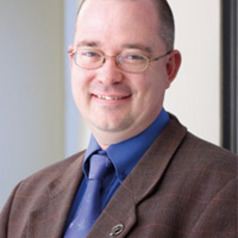
Sinclair Davidson
Sinclair Davidson is Professor of Institutional Economics at RMIT University and an honorary senior fellow at the Institute of Public Affairs. His opinion pieces have been published in The Age, The Australian, Australian Financial Review, Sydney Morning Herald, and Wall Street Journal Asia.
Less
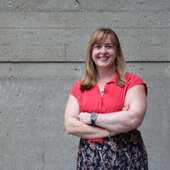
Sinead McEneaney
Senior Lecturer in History, The Open University
My research focuses on protest in the US in the post-war 20th century, and particularly on gender. I have written on left-wing movements, the counter-culture and conservatism in the 1960s.
Less
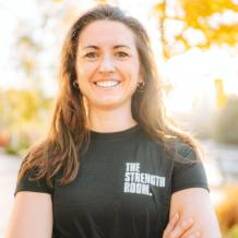
Sinead Roberts
Lecturer Sport and Exercise Nutrition, University of Westminster
The acute and chronic response to exercise depends on a complex interplay between the training stimulus, physiology, nutritional state, genetics, and environment. My research interests focus on metabolic and physiological responses to multi-modal concurrent training, namely in Functional Fitness, and how these factors impact performance potential in elite athletes, as well as health and longevity in the general population.
As a performance nutritionist, I look to practically influence acute and chronic responses to training through diet and supplementation. Athletes I have supported include international level weightlifters, British Title level boxers, World Title level BJJ competitors, and elite CrossFit athletes.
I now bring together my passion for science, coaching and education as a Lecturer in Sport and Exercise Nutrition at the University of Westminster.
My background is in cell growth and metabolism, with a PhD investigating growth factor regulation of the addition of cell mass and volume. It was here I developed a keen interest in understanding how cells respond to stress and physiological extremes. This ultimately led to my passion for understanding the acute and chronic response to exercise stress, and how we can manipulate this to maximise an adaptive outcome (and avoid a maladaptive outcome).
Less


- Market Data




