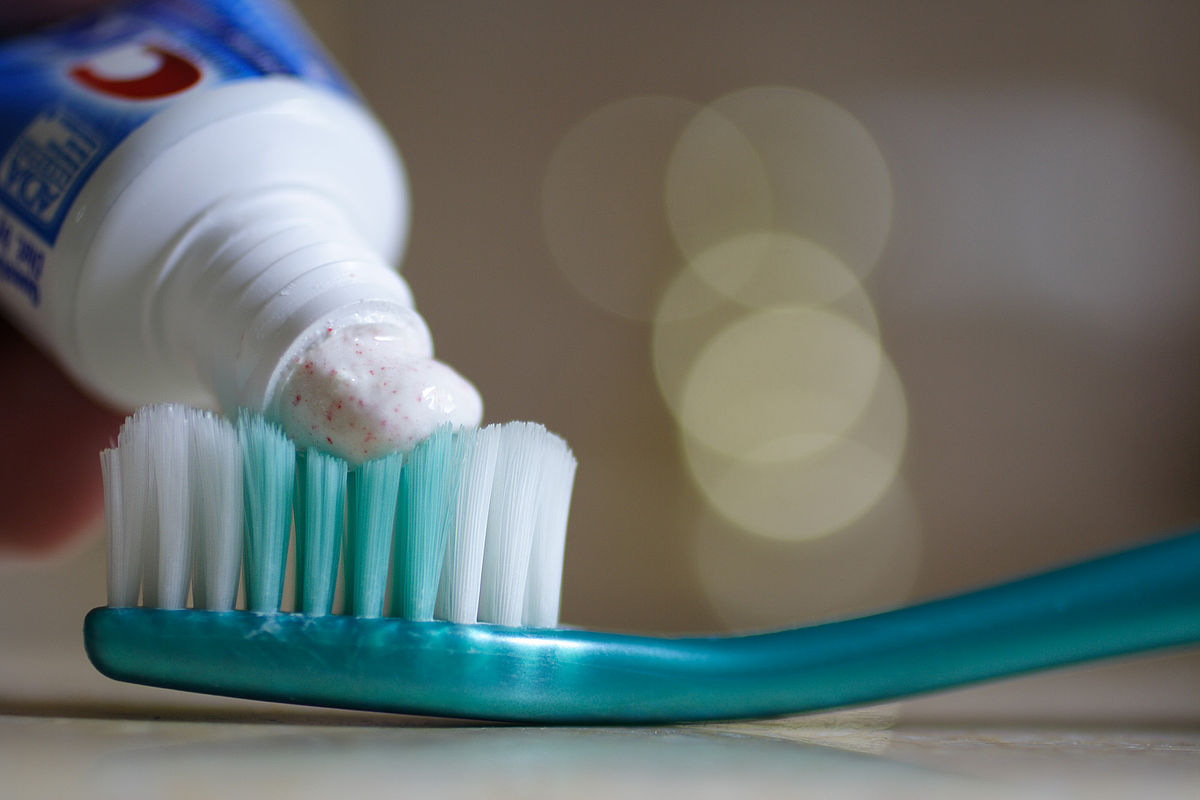
Choosing a toothbrush is relatively simple: dentists recommend brushing with a small-headed soft-bristled brush, for two minutes, twice a day. But how on earth do you decide between the 50-odd toothpastes on the supermarket shelves?
Everybody has bacteria in their mouth which live on sugars in the diet. During the day, this bacteria forms plaque on our teeth and gums. Over time, this begins to dissolve the teeth, causing dental decay (holes).
At the same time, the bacterial plaque irritates the gums and can lead to gum disease.
Here’s what to look for when choosing a toothpaste.
Fluoride
The most important ingredient in toothpaste is fluoride. Fluoride assists with remineralising (strengthening) the teeth to reverse and prevent decay. More than a decade of evidence shows using a fluoride toothpaste twice a day results in less decay.
Common forms of fluoride in toothpaste are sodium fluoride, sodium monofluorophosphate and stannous fluoride. Stannous fluoride also has an antibacterial effect which further helps prevent decay and gum disease, and may provide some protection against sensitivity.
High-fluoride toothpastes provide increased protection to those at high risk of dental decay. But they should be used only on the recommendation of your dentist or hygienist, and are only available from pharmacies.
Children’s toothpastes usually contain less fluoride, as children may not effectively spit toothpaste out. Too much fluoride increases the risk of fluorosis, mottling of the enamel, especially among children under six years old where their water supply is fluoridated.
From age six, children can use a regular-strength toothpaste.
Triclosan
Triclosan is another common ingredient in toothpaste. It’s a well-proven antibacterial agent that helps to reduce plaque buildup and therefore helps protect against decay and gum disease.
Although the US Food and Drug Administration recently banned the use of triclosan in soaps, it’s currently still approved for use in toothpaste.
Whitening
Whitening toothpastes work primarily by increasing the abrasiveness of the product. Mild abrasives help keep teeth clean and prevent staining. Abrasives might be listed as phosphates (calcium pyrophosphate), carbonates (calcium carbonate), silica compounds or aluminium compounds.
Some whitening toothpastes also contain hydrogen peroxide. Higher concentrations of hydrogen peroxide are used professionally. But at the percentages added to toothpaste, there is no strong evidence for its effectiveness.
Whitening toothpastes without hydrogen peroxide rely on detergents and abrasives to help remove and prevent staining.
Detergents (foaming agents) assist in loosening debris and staining. Sodium lauryl sulphate (SLS) and cocamidopropyl betaine are two popular foaming agents in toothpaste. SLS can contribute to irritation and mouth ulcers in some people, so you may want to use an SLS-free toothpaste.
Sensitivity
Some people experience tooth sensitivity, especially to cold foods and drinks. The most common cause is when part of the root is exposed through gum recession. This can occur through brushing too hard, gum disease or ageing, or a combination of the three. But rather than self-diagnosing, have a dental checkup to make sure there are no cavities or other causes for concern.
Sensitive toothpastes are very effective. However there is a confusing array of choices. Active ingredients are broken into two categories.
The first category includes potassium nitrate and potassium citrate. These work by stopping the nerve from transmitting signals. It takes about two weeks for these to accumulate enough to be effective. These products tend to be a bit less expensive.
The second category includes ingredients such as strontium, arginine (Pro-Argin®) and calcium sodium phosphosilicate (NovaMin™). These work by blocking the dentine tubules (the “pores” in the roots of the teeth). Strontium is an effective desensitiser, however some products may not contain fluoride, so check the box for this. Pro-Argin and NovaMin are also effective desensitisers.
There are two big players in the sensitive toothpaste market: Colgate and Sensodyne. It’s often difficult to determine the difference between their products, and many of the so-called active ingredients have not been independently proven.
My recommendation is to find a desensitising product that contains fluoride that is effective for you. If it has some additional benefits, consider that a bonus.
Mouthwashes
While mouthwashes can offer some benefit, they’re generally unnecessary as part of an everyday routine.
Effective brushing and flossing is key – no toothpaste in the world will replace the need for this. Relying on toothpaste or mouthwash to clean your teeth is like slopping a bucket full of soapy water over your muddy car and expecting it to come up shiny.
 Kelly-Anne Waters does not work for, consult, own shares in or receive funding from any company or organisation that would benefit from this article, and has disclosed no relevant affiliations beyond the academic appointment above.
This article was originally published on The Conversation. Read the original article.