


 Canada Seeks ‘Unique Alliance’ With EU, Carney Rules Out Membership
  Trump Backs United Ireland During Dublin Visit
  Russian Strikes Hit Kyiv as Ukraine Targets Russian Cities
  Gulf Ministers to Meet Iran in Oman Over Hormuz Shipping Deal
  North Korea Holds Missile and Artillery Drill
  Lula Holds Narrow Lead Over Flavio Bolsonaro in Brazil Election Poll
  BRICS Calls for Restraint as Middle East War Escalates
  Volkswagen Job Cuts Put Lower Saxony Leader Under Political Pressure
  Sweden Election Puts Far Right and Centre Left in Tight Race
  China to Push Global Security Vision at Xiangshan Forum
  Russian Strikes Across Ukraine Kill Nine, Injure Dozens
  Takaichi-Backed Koja Wins Okinawa Governor Race
  Ukraine Prepares for October Peace Talks With Russia and US
  Houthi Red Sea Gains Strengthen Iran’s Leverage Over Gulf States
  Trump Rejects Saudi Request for U.S. Strikes on Houthis
  Trump Vows to Keep U.S. Ahead of China in AI Race


 Add as a preferred source on Google
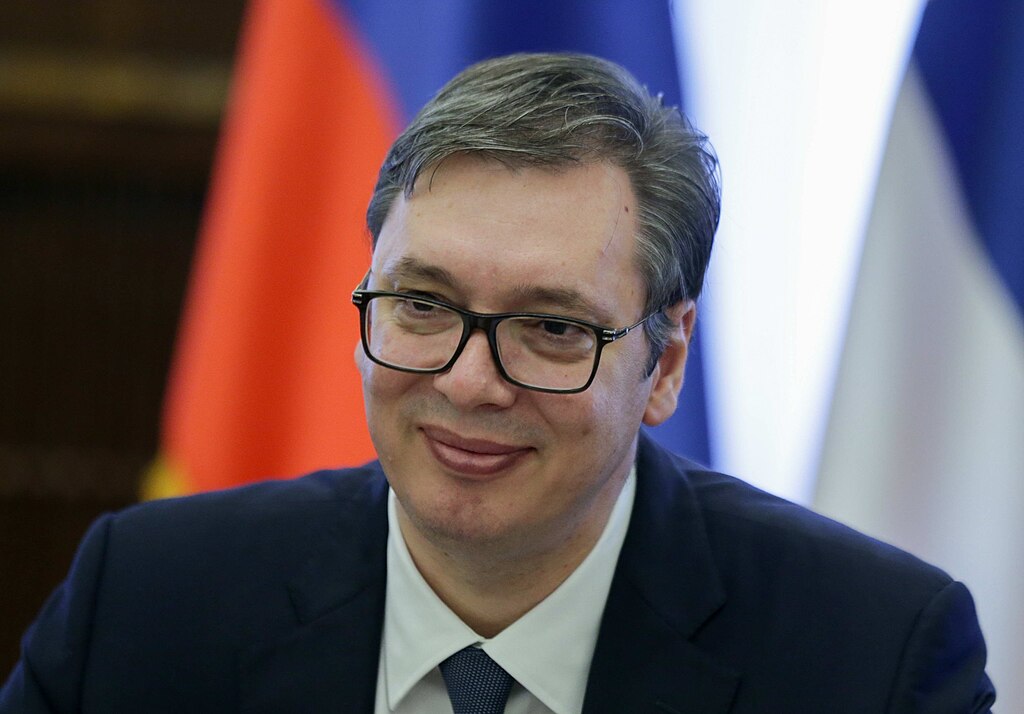
Thousands of demonstrators gathered in the central Serbian city of Kraljevo on Sunday, maintaining pressure on President Aleksandar Vucic just one day after he announced plans to resign within weeks and trigger early presidential and parliamentary elections. While the announcement marked a major political development, many protesters remain skeptical that Vucic will fully relinquish control after more than a decade in power.
The large-scale rally highlighted ongoing public frustration with Serbia’s political leadership. Protesters believe the president could seek to retain influence by running for prime minister while supporting a close political ally for the presidency, allowing him to continue shaping government policy from behind the scenes.
Marko Djokic, a 41-year-old IT professional who returned to his hometown for the demonstration, said he doubts Vucic will truly step away from politics. Similar concerns were echoed by many participants who believe genuine political change requires more than a formal resignation.
The current wave of Serbia protests began months ago following the collapse of a concrete railway station awning in Novi Sad in late 2024, a tragedy that claimed 16 lives. The incident quickly became a symbol of public anger over alleged government corruption, poor oversight, and institutional failures. Although Vucic has repeatedly denied corruption allegations, the disaster sparked the largest demonstrations Serbia has witnessed since the overthrow of former leader Slobodan Milosevic in 2000.
Despite scorching temperatures, thousands of people peacefully filled Kraljevo’s central square carrying Serbian flags and banners reading, “Students are winning.” The demonstrations have largely been driven by student groups demanding greater government accountability, judicial independence, and democratic reforms.
Protester Ilija Cordasic, who traveled from the northeastern city of Zrenjanin, said Serbia cannot continue under the current political conditions and that meaningful reforms are urgently needed. Serbian-language professor Jelena Danicic described the movement as more than a political campaign, calling it a broader struggle over the country’s future and values.
Political analysts believe the coming weeks will be closely monitored by both the European Union and Russia as Serbia navigates an uncertain transition. Brussels has repeatedly criticized the use of force against peaceful demonstrators while also expressing concerns over media freedom, judicial independence, and democratic standards.
Serbia remains an official candidate for European Union membership, but its path toward joining the bloc remains complicated. The country continues to maintain strong political and economic ties with both Russia and China while attempting to balance relations with Western partners.
Before Serbia can advance toward EU membership, it must strengthen the rule of law, improve conditions for free and fair elections, combat corruption and organized crime, and align more closely with the EU’s foreign policy objectives. Another major challenge remains normalizing relations with Kosovo, which declared independence in 2008 but is still not recognized by Belgrade.
As Serbia enters a potentially historic political transition, protesters say they will continue demonstrating until they see concrete reforms rather than symbolic political announcements.







