


 Israel Approves West Bank Measures Expanding Settler Land Access
  Trump Allows Commercial Fishing in Protected New England Waters
  Jack Lang Resigns as Head of Arab World Institute Amid Epstein Controversy
  Trump Backs Nexstar–Tegna Merger Amid Shifting U.S. Media Landscape
  Federal Judge Restores Funding for Gateway Rail Tunnel Project
  Antonio José Seguro Poised for Landslide Win in Portugal Presidential Runoff
  Trump Congratulates Japan’s First Female Prime Minister Sanae Takaichi After Historic Election Victory
  Bangladesh Election 2026: A Turning Point After Years of Political Suppression
  Bosnian Serb Presidential Rerun Confirms Victory for Dodik Ally Amid Allegations of Irregularities
  Ohio Man Indicted for Alleged Threat Against Vice President JD Vance, Faces Additional Federal Charges
  China Overturns Death Sentence of Canadian Robert Schellenberg, Signaling Thaw in Canada-China Relations
  Anutin’s Bhumjaithai Party Wins Thai Election, Signals Shift Toward Political Stability
  Taiwan Says Moving 40% of Semiconductor Production to the U.S. Is Impossible
  Trump Lifts 25% Tariff on Indian Goods in Strategic U.S.–India Trade and Energy Deal
  New York Legalizes Medical Aid in Dying for Terminally Ill Patients
  Japan’s Prime Minister Sanae Takaichi Secures Historic Election Win, Shaking Markets and Regional Politics
  U.S. Lawmakers to Review Unredacted Jeffrey Epstein DOJ Files Starting Monday


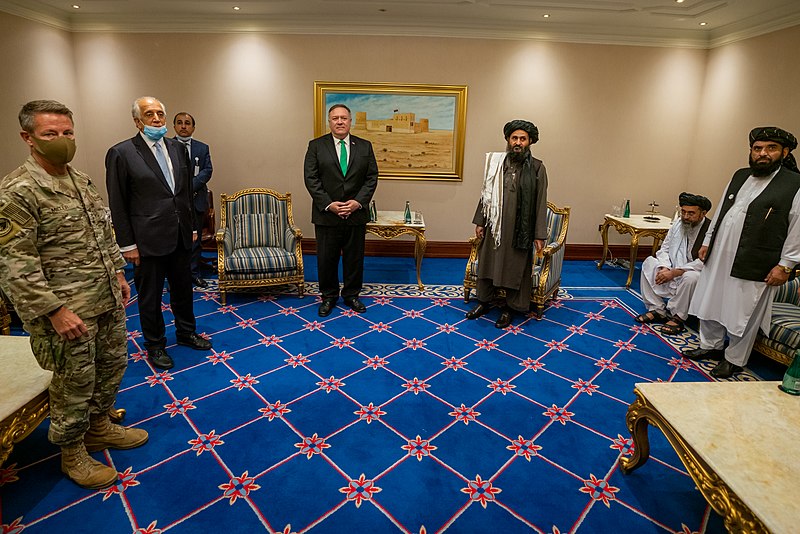
Since taking power in August, the Taliban has sought to gain international recognition as it tries to establish its government in Afghanistan. This time, the international community has been criticized for sending a male-only delegation to Kabul in meeting with the insurgent group.
Despite the international community’s demands for the Taliban to have a more inclusive government, major powers and aid groups have come under fire for not having enough female representation in their respective delegations to meet with the group. The Taliban has excluded women from its new government and even implemented restrictions on work and education, which drew criticism.
The exiled head of Afghanistan Independent Human Rights Commission, Shaharzad Akbar, called on nations to allow their senior female officials to take the lead in negotiations and meeting with the insurgent group. Akbar also called on to the global powers not to “normalize Taliban’s erasure of women.”
Speaking with AFP, Heather Barr from Human Rights Watch said that foreign governments should lead by example when asking the Taliban to have a more inclusive government.
“Foreign countries and especially aid organizations should be leading by example,” said Barr. “No one should let the Taliban think that this kind of men-only world that they are creating...is normal.”
Fawzia Koofi, who was among the officials who led the peace talks between the Western-backed Afghan government and the Taliban at Doha, Qatar, in 2020, also criticized the international community.
“As world leaders, when they talk about women’s rights, they also need to act. They need to show that they believe in it, that it is not just a political statement,” Koofi told AFP.
Meanwhile, Reuters reports US Secretary of State Antony Blinken confirmed Wednesday that he had ordered a series of internal reviews on the agency’s planning and execution of the controversial withdrawal of the country from Afghanistan back in August. Also part of the review was the relocation efforts being made to Afghan refugees who were able to flee the country. The US was able to evacuate over 120,000 civilians out of Afghanistan during its withdrawal.
In his remarks to detail the steps that would be taken to modernize the State Department, Blinken commended the evacuation but also acknowledged that the agency needed to learn from this experience in order to improve in future efforts.













