


 U.S. Lawmakers to Review Unredacted Jeffrey Epstein DOJ Files Starting Monday
  Anutin’s Bhumjaithai Party Wins Thai Election, Signals Shift Toward Political Stability
  Trump Administration Appeals Court Order to Release Hudson Tunnel Project Funding
  Netanyahu to Meet Trump in Washington as Iran Nuclear Talks Intensify
  Bosnian Serb Presidential Rerun Confirms Victory for Dodik Ally Amid Allegations of Irregularities
  Trump Signs Executive Order Threatening 25% Tariffs on Countries Trading With Iran
  Japan Election 2026: Sanae Takaichi Poised for Landslide Win Despite Record Snowfall
  Taiwan Says Moving 40% of Semiconductor Production to the U.S. Is Impossible
  Trump Lifts 25% Tariff on Indian Goods in Strategic U.S.–India Trade and Energy Deal
  Sydney Braces for Pro-Palestine Protests During Israeli President Isaac Herzog’s Visit
  Antonio José Seguro Poised for Landslide Win in Portugal Presidential Runoff
  Trump Backs Nexstar–Tegna Merger Amid Shifting U.S. Media Landscape
  China Warns US Arms Sales to Taiwan Could Disrupt Trump’s Planned Visit
  Nicaragua Ends Visa-Free Entry for Cubans, Disrupting Key Migration Route to the U.S.
  Ohio Man Indicted for Alleged Threat Against Vice President JD Vance, Faces Additional Federal Charges
  India–U.S. Interim Trade Pact Cuts Auto Tariffs but Leaves Tesla Out
  Trump Slams Super Bowl Halftime Show Featuring Bad Bunny


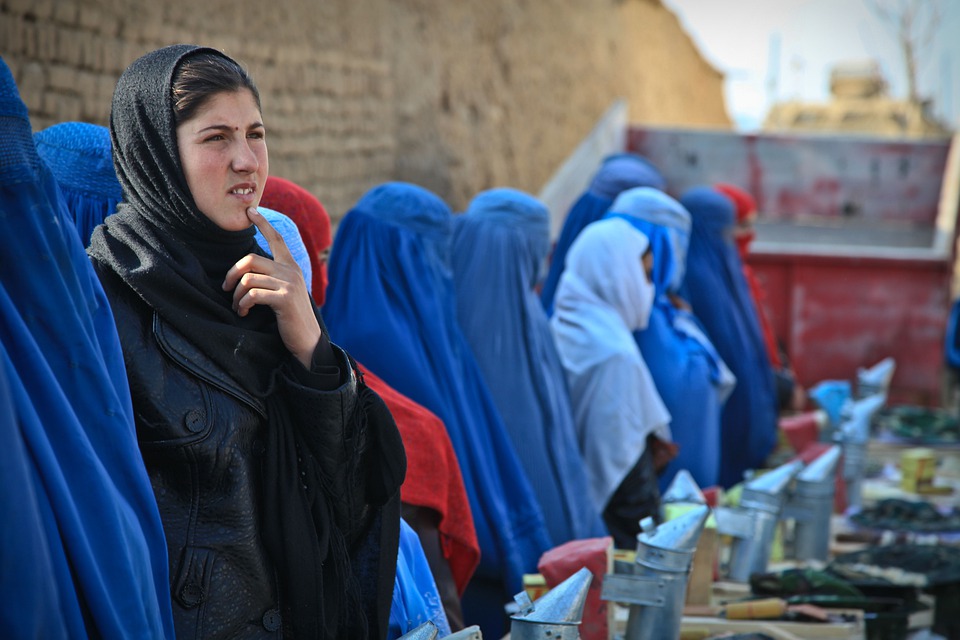
The UN special rapporteur on Afghanistan has warned of the current state of human rights in Afghanistan under the leadership of the Taliban. The expert said the country is heading towards an authoritarian regime paired with deteriorating human rights.
Speaking at the United Nations Human Rights Council meeting Monday, special rapporteur on Afghanistan Richard Bennett said that human rights under the Taliban have deteriorated, citing the increasingly restrictive policies the insurgent group has implemented on women and girls.
Bennett also said the country was moving towards authoritarianism due to the Taliban’s targeting of critics and its crackdown on the media.
“The severe rollback on the rights of women and girls, reprisals targeting opponents and critics, and a clampdown on freedom of expression by the Taliban amount to a descent towards authoritarianism,” said Bennett.
Afghanistan envoy Nasir Ahmad Andisha, representing the western-backed Afghan government, said there was “gender apartheid” in the country that fell to the Taliban on the heels of the US and the West’s military withdrawal after nearly 20 years of conflict.
Several Afghan women also echoed Andisha’s comments, including activist Mahmouba Seraj, who urged the 47-member council to take action and investigate potential human rights abuses.
“God only knows what kind of atrocities are not being reported,” said Seraj. “And I want that to be reported because this is not right. World: this is not right. Please, please, you’ve got to do something about it.”
Most secondary schools for girls in Afghanistan were shut down by the Taliban after the insurgent group walked back on its pledges to reopen them back in March.
Ilze Brands Kehris, the assistant secretary-general for human rights, said that around 850,000 girls have dropped out of the schools so far, putting them at risk for child marriage and sexual exploitation.
Bennett also touched on the attacks that have occurred against Muslim minorities in Afghanistan, saying that the Hazara and other Shia Muslim communities are being targeted in “systematic attacks” that could amount to international crimes.
Bennett explained that Hazaras and other groups have faced arbitrary arrest and detention, torture, execution, even displacement from traditional lands, discriminatory taxation, and marginalization.
The Hazaras have also been the frequent targets of Islamic State extremists, the rivals of the Taliban.













