


 Reuters/Ipsos Poll: Most Americans Expect U.S.-Iran War to Be Prolonged
  Trump Tells Congress Iran Hostilities Restarted, Citing New 60-Day War Powers Window
  Brazil Court Bars Flavio Bolsonaro From Visiting Jair Bolsonaro Ahead of Election
  Trump Administration Launches AI Cybersecurity Partnership to Protect Critical Infrastructure
  Republican Senator Lindsey Graham Dies at 71, Leaving South Carolina Senate Seat Vacant
  Trump Administration Bars U.S. Travelers From Congo Flights Amid Ebola Outbreak
  Trump Says U.S. Strikes on Iran Will Continue Until Nuclear Deal Is Reached
  UK Sanctions 24 Russian-Linked Targets Over Cyberattacks and Election Interference
  Trump Administration Hands Over Key Evidence in Minnesota Immigration Shooting Investigations
  HHS Watchdog Reports $5.56 Billion in Healthcare Fraud Recoveries as Enforcement Actions Decline
  EU Weighs New Trade Restrictions on Israeli West Bank Settlements
  Israel-Lebanon Talks Resume in Rome as Ceasefire and Troop Withdrawal Remain Elusive
  US-Iran Strikes Escalate as Strait of Hormuz Crisis Pushes Oil Prices Higher
  Trump to Deliver National Address on 2020 Election Intelligence, Voting Machine Security
  Russia Launches Missile and Drone Attacks on Kyiv, Zaporizhzhia, and Kharkiv
  Iraq PM Visits Washington as U.S. Oil, Gas Deals Take Center Stage
  Israeli Strikes Kill Six in Gaza as Ceasefire Talks Continue in Cairo


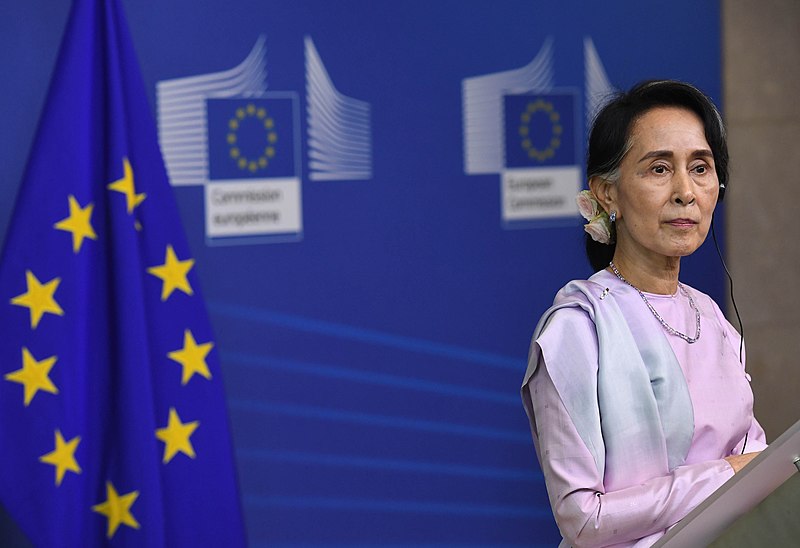
Ousted Myanmar leader Aung San Suu Kyi was convicted by a junta court on three criminal charges. From the conviction, Suu Kyi received a four-year prison sentence.
Suu Kyi was convicted of three new criminal charges Monday, receiving a four-year prison sentence according to Myanmar’s junta court. The ousted leader was found guilty of two charges in relation to illegal importing and owning walkie-talkies and one charge of breaking COVID-19 protocols.
A person familiar with the matter told AFP that the walkie-talkie charges stemmed from the day of the coup when troops raided her home and discovered the equipment.
Suu Kyi has been detained since February 1 last year when the country’s generals staged a coup against Suu Kyi’s democratic government. The coup staged by the military generals resulted in widespread dissent and unrest. This also led to a bloody crackdown that saw mass detentions and over 1,400 civilians were killed.
The latest convictions add to the sentencing Suu Kyi received back in December. Suu Kyi was charged for incitement and for breaching COVID-19 restrictions while campaigning. Junta chief Min Aung Hlaing reduced Suu Kyi’s sentencing to two years under house arrest in Naypyidaw.
The ruling Suu Kyi received back in December drew backlash from the international community and citizens of Myanmar showed their outrage through banging pots and pans. Human Rights Watch researcher Manny Maung said that any more convictions against Suu Kyi would only exacerbate public discontent. Maung told AFP that the last conviction angered the public and that the military sees the cases as a fear tactic, only to receive more backlash from the public.
Previously, Al Jazeera reported that the Myanmar military killed over 30 civilians in their vehicles on Christmas eve, leaving the burned bodies to the extent of being unrecognizable. The move by the military aimed to counter the growing resistance to the extent that they have also blocked citizens’ access to basic necessities as part of its “four-cuts” strategy that has long been used to dismantle the support for ethnic armed groups.
The recent killings added to the death toll from the crackdown staged in February, but have also led to an accelerated armed resistance to counter the military since May.







